Leadership Wisdom: Motivational Quotes for Leaders That Work
Foundamental University
Published 2026-04-30
Discover powerful leader leadership quotes from Matthias Tauber, Senior Partner at BCG. Learn his four lessons on hiring, team building, feedback, and resilience from his Foundamental University masterclass.
Unlock Your Potential with These Motivational Quotes for Leaders
The construction and infrastructure industry has no shortage of frameworks, methodologies, and management theories. What it has a shortage of is honest, practitioner-led leadership wisdom on what leadership actually looks like when the pressure is real and the stakes are high.
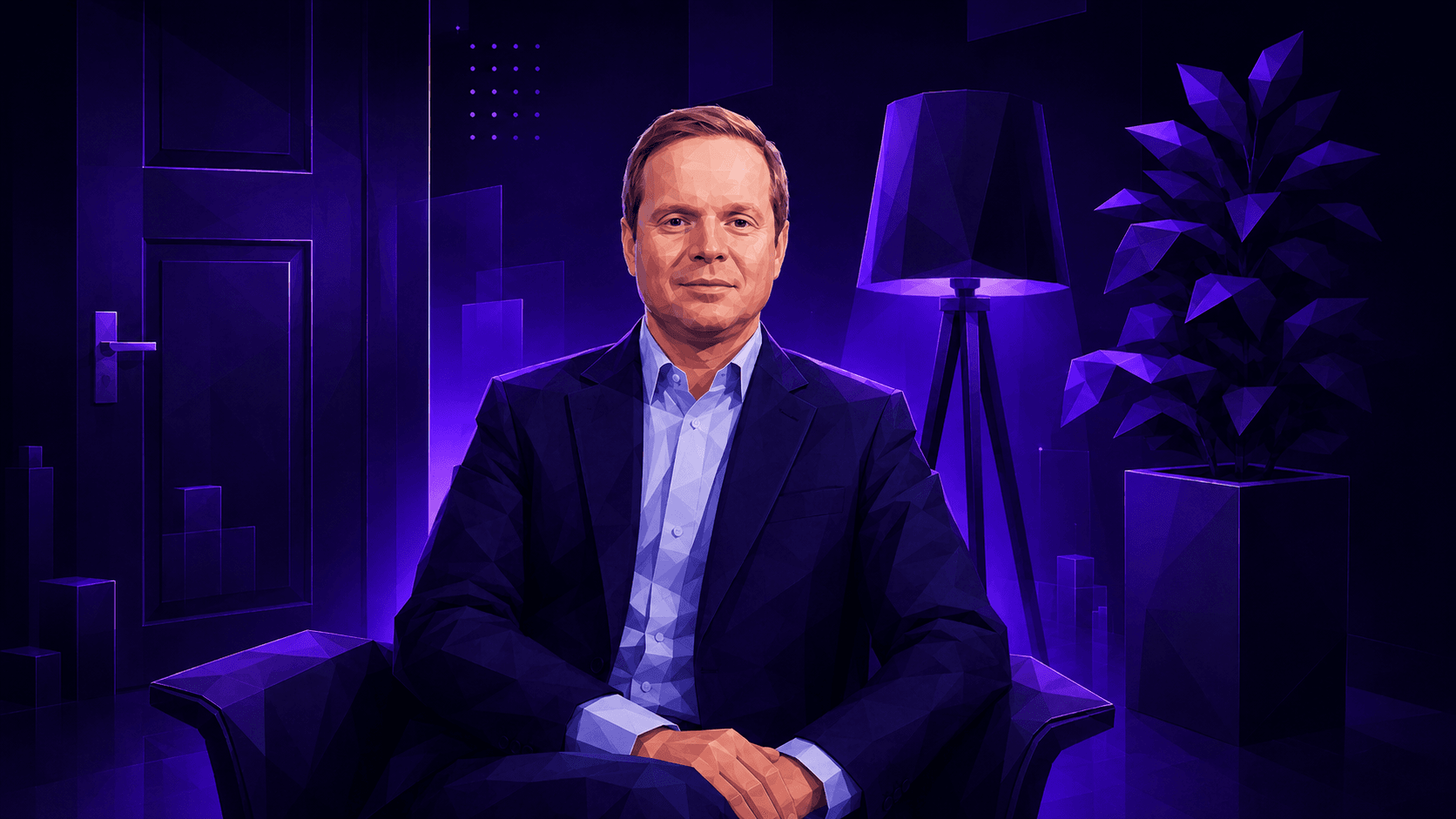
Matthias Tauber, Senior Partner at BCG and one of Europe's most experienced advisors to construction and infrastructure companies, sat down with Foundamental University to share exactly that. Over the course of an hour-long masterclass, he distilled more than two decades of leadership lessons into four concrete principles — and a set of quotes and frameworks that any founder, operator, or emerging leader in the Project Economy can put to work immediately.
Watch the full masterclass here: Leadership That Scales - Matthias Tauber
Understanding Leadership
The Importance of Leadership
For Matthias Tauber, leadership is not a personality trait or a title. It is a discipline — one that compounds over time and can be deliberately developed by anyone willing to invest in it.
"Leadership is important to me for two reasons," he says in his Foundamental University masterclass. "First: as you grow and move forward, it makes you so much more effective. Yes, you can do things alone. Absolutely. But the day has 24 hours and the week has seven days. If you truly want to have an impact that scales, you need to get others on board."
The second reason is more personal: "I genuinely care about people — my clients, the people I work with. I get energy and joy from seeing others grow. Leadership is a means to make that happen."
This dual framing — leadership as a force multiplier and as a form of genuine care — runs through everything Tauber shares in the masterclass. It is not a soft position. It is a strategic one, built on 20-plus years of observing what separates organizations that scale from those that stall.
The Role of Values in Leadership
One of the most persistent myths about leadership, Tauber argues, is that it is innate — that some people are born leaders and others are not. He rejects this directly.
"Leadership is not an art. It is a craftsmanship. You can genuinely learn it. I encourage everyone to spend time on it and refine their own skills. No good leader fell from the sky."
But craftsmanship without values is just technique. When Tauber built BCG's building materials and construction team, he defined three non-negotiables for every hire: people who take care of themselves and each other; people with a genuinely high performance bar; and people who could connect authentically to a down-to-earth industry. These weren't aspirational culture statements — they were hiring filters, promotion criteria, and behavioral standards, applied consistently over time. These choices reflect core values in leadership and turn intent into everyday practice.
"Culture is to a large degree how you think and how you go about things at work," he says. "You shape culture by shaping context — by who you hire, who you promote and for what, what you praise, and what you address when difficult things come up."
Motivational Quotes for Leaders
Top Quotes to Inspire Action
Matthias Tauber's masterclass is not a collection of aphorisms — it is a structured account of hard-won leadership lessons. But several of his formulations are worth holding onto precisely because they cut through complexity and demand action.
On why getting started matters more than getting it right: **"Don't overthink it — just get started."** His advice to leaders who know they should invest in their physical energy but keep deferring: set goals you can actually achieve, step by step, rather than reaching for a marathon before you have the habit.
On the urgency of addressing difficult situations: **"The biggest mistake you can make when it comes to difficult things is waiting too long."** What is small and correctable early becomes, if left unaddressed, the root cause of a major crisis later.
On the opportunity in front of founders today: **"This is your moment. There has never been a better moment to be a founder or a leader in the project economy."**
Quotes on Overcoming Challenges
The most demanding test of leadership, Tauber argues, is not the daily grind — it is how a leader shows up during a crisis. He illustrates this with two contrasting examples from the materials industry.
The first leader did all the right things technically during a difficult period. He pointed to controllables, managed his energy, stayed visible. But something was missing. "He failed to truly convey a sense of genuine conviction and purpose. He was doing the right things, but perhaps doing them because he knew he should, not because he deeply believed in them."
The second leader, navigating the global financial crisis, had the same work ethic and self-discipline — but something the first leader lacked: a deep emotional connection to why the company had to survive. "He wanted to make it work not just because he knew he had to, but because he deeply wanted to make a difference."
Tauber's takeaway: **"That's the big difference. The first leader did the what because he knew the what was correct. The second leader had a why that drove him to do the right things. People see through this."**
Leadership Communication Skills
Quotes that Highlight Effective Communication
For Tauber, communication in a leadership context — and strong leadership communication skills — are inseparable from feedback, and feedback, done well, is one of the most powerful tools a leader has.
"Feedback is a gift," he says. "You may not always feel that way, but it is."
That gift, however, only lands if it is delivered in a specific way. Tauber is precise about what makes feedback useful versus what makes it merely uncomfortable: "Be timely. Don't drag it out. If you observe something, address it promptly. And be specific. Don't stay abstract. Point to specific situations. Point out what could have been done differently. Make it clear and actionable."
He gives a direct example from his own experience: a team member who treated men and women differently. Tauber saw it, hesitated for a couple of days, and by the time he addressed it, the situation had escalated to the point where a female team member had already come to him feeling uncomfortable. "I could have addressed it earlier and created an inclusive environment from day one," he reflects. "Do address things early on, even when they feel uncomfortable."
The Power of Listening in Leadership
One of Tauber's more counterintuitive points concerns where leadership breaks down as organizations grow. The risk, he argues, is not incompetence — it is disconnection.
"As you grow as a company, you sometimes get a senior team that gradually disconnects from the rest of the organization. It's a terrible situation when it happens." His answer is not a communication cascade or a town hall strategy. It is something more deliberate: staying connected not just to direct reports, but to their direct reports too. Being on the ground. Occasionally skipping a level of hierarchy.
"That's easy when you're small; it gets harder as you grow. But it's a habit worth building early."
Quotes About Leadership and Teamwork
The Impact of Collaboration
Tauber is direct about a distinction that many founders underestimate: hiring individuals and building a team are not the same thing. "You hire individuals, but individuals don't automatically make a team. It is your responsibility as a leader to make them a team." These are more than quotes about leadership and teamwork — they're operating principles you can apply.
He structures team building across two dimensions. The hard side: crystal clarity about roles and swim lanes. "This sounds obvious. It very often is not. That clarity is your responsibility to create." The soft side: an environment of both psychological safety and high performance. "It needs to be safe to speak up. But it should not be safe not to perform."
His formula for team gatherings — whether monthly for a national team or quarterly for a broader regional one — follows a deliberate one-third structure: one third social, one third shared agenda, one third mutual learning. "If you spend time together outside the meeting room, you will feel safe to speak up in front of those colleagues."
Encouraging Team Spirit through Quotes
Tauber's measure of a well-functioning team is not cohesion in good times. It is the ability to resolve problems without escalating to the top.
"One of the things I look at as a sign of a well-functioning team: whether team members can resolve problems without me. If two leaders who run different units come into conflict and resolve it between themselves without me needing to get involved — that's a proof point that the team works."
He is equally direct about a common leadership blind spot: "We have a tendency to focus on low performers because they create problems that need to be addressed. But we sometimes disregard the high performers. Don't. Invest in making sure your high performers stay for the long run."
And for early-stage founders specifically: "Build the team before you need one. When you have three, four, or five people, you might think: we don't need to build a team yet, we're so small. I disagree. The moment you need a team is already too late."
Leadership Development Quotes
Inspirational Quotes for Growth
Tauber's leadership philosophy is cumulative — each of his four lessons builds on the one before it, and none of them is optional. But the through-line across all of them is a commitment to continuous development, in oneself and in others. In this spirit, his leadership development quotes emphasize craft, consistency, and investing in people over the long run.
"My mission — what keeps me going — is unlocking potential in others. That's true when I work with clients. It's true when I work with team members. It's true when I work as an angel investor with founders."
On what makes leadership development stick, he returns to the craftsmanship analogy: it is not a one-time investment. "Building a team is never done. You will have changes in the team, you will have crises in the team. This is not a one-time task — it is an ongoing investment you as a leader will always have to make."
The Journey of a Leader
Tauber's own leadership journey began in 2002, when he was a visiting associate at BCG and was managed by someone who, in his words, "truly invested in me, helped me develop, and created the space for me to ultimately join the firm and keep learning." That experience shaped everything that followed.
What has stayed consistent across more than two decades: "The one thing that has always been true is that I genuinely enjoyed learning new things — new industries, different people, different leadership styles. That was true then and it's absolutely true today."
What has changed is the depth of his conviction that learning ability matters more than domain expertise. "With everything happening around artificial intelligence, learning ability and adaptability have become much more important in a successful profile than deep expertise in one specific domain."
Transformational Leadership Quotes
Embracing Change and Innovation
These transformational leadership quotes emphasize embracing change and innovation in the Project Economy.
Tauber sees the current moment in the Project Economy not as a challenge to be managed but as an opportunity that may not repeat itself. His message to founders and leaders is direct: "There is so much going on — so much capital being deployed, so much happening in the world of technology. Just look at AI. Bringing those two worlds together — the project economy and the possibilities of AI — can create a uniquely sized impact."
The leaders who will capture that opportunity, in his view, are not necessarily the ones with the deepest technical knowledge. They are the ones who have built the leadership foundations — the right team, the right culture, the right habits of self-management — that allow them to move quickly and sustain momentum when conditions shift.
"A healthy culture — one of high performance, constant learning, and inclusiveness — is a good indicator of long-term success, independent of business model and market context. A high-performing culture will thrive in almost any environment."
Quotes that Inspire Vision
Tauber's leadership framework ultimately comes back to a single question: why? Not what you are doing, not how you are doing it, but what drives you to keep going when the path gets difficult.
"Whenever you face difficult situations, go back to your why. For most founders, the why isn't hard to find — you believe in your company, you believe in your product, you love your customers. That's a great why. Go back to it in moments of difficulty, and it will help you pace yourself, manage your emotions, and carry through even the hardest periods."
He illustrates this principle with a mountain climbing metaphor that is personal as much as it is rhetorical. Every year, Tauber climbs a significant peak — Kilimanjaro, Mont Blanc. "What they all have in common: you need to manage your energy on the way up. There are ups and downs. You need to pace yourself. That's not a bad metaphor for leadership."
Effective Leader Traits
Characteristics of Successful Leaders
Across four lessons and two decades of BCG experience, Tauber identifies a consistent set of characteristics in leaders who sustain performance over time. In short, effective leader traits include culture-first hiring, deliberate team building, early, specific feedback, and durable energy management.
They hire for culture before performance — understanding that skills can be taught and industry knowledge can be acquired, but the ability to take care of others and hold themselves to a high standard is much harder to install after the fact.
They build teams deliberately — not assuming that good individuals will self-organize, but investing in clarity of roles, psychological safety, and shared context.
They address difficult things early — understanding that discomfort now is almost always preferable to crisis later, and that feedback is only useful when it is timely and specific.
And they manage their energy — recognizing that leadership is a marathon, not a sprint, and that physical and emotional resilience are not luxuries but prerequisites.
"You might ask: which of these is most important?" Tauber says. "I don't think any one stands out. They form an integrated system."
Wisdom from Great Leaders
Perhaps the most striking aspect of Tauber's masterclass is its refusal to offer shortcuts. There is no single insight that unlocks leadership effectiveness, no one habit that makes everything else easier. What he offers instead is a framework that is honest about the effort required — and clear about why that effort is worth it.
"The very early team norms you establish will shape the culture of the company for the long term," he says. And: "If you want strong performers to stay — which you absolutely do as a young company — you need to create an environment where they can thrive. They need to perform. They need to be fulfilled and taken care of. They need opportunities."
For founders specifically, his most direct piece of wisdom concerns the people decisions that most leaders admit, retrospectively, they made too slowly: "Almost everyone says: I didn't do it fast enough. As a young founder, if there are significant issues with an early team member, address them early. It may be painful — but it's almost always better to do it early rather than too late."
Conclusion
Leadership in the Project Economy is not a soft skill. It is a core operational capability — one that determines whether a team can scale, whether a culture can sustain performance under pressure, and whether a founder can carry an organization through the inevitable difficulties of building something significant.
Matthias Tauber's Foundamental University masterclass offers something rare: a structured, honest, practitioner-led account of what that capability actually looks like in practice, drawn from more than two decades of advising and leading some of the most complex organizations in construction and infrastructure.
The full conversation — approximately one hour — is freely available at [university.foundamental.com/masterclass/matthias-tauber](https://university.foundamental.com/masterclass/matthias-tauber/).
Related Articles: Explore More Leadership Insights from Foundamental University
Matthias Tauber's masterclass is one of 13 in-depth conversations in Season 1 of Foundamental University. Other sessions explore adjacent dimensions of leadership and business building in the Project Economy:
- Scott Wolfe (Levelset) — on navigating power imbalances in construction, building a mission-driven company, and go-to-market strategy rooted in genuine helpfulness
- Jeevan Kalanithi (OpenSpace) — on building technology for real-world industries, staying customer-focused at scale, and the spatial AI opportunity in construction
All masterclasses are freely accessible at [university.foundamental.com](http://university.foundamental.com). Season 2 is in development.
Q&A
Question: What does Matthias Tauber mean by “leadership is a craftsmanship,” and how do values fit in?
Short answer: Tauber rejects the idea that leaders are “born.” Leadership can be learned and refined over time—“no good leader fell from the sky.” But technique without values is hollow. He built his BCG practice around three non-negotiables: people who care for themselves and each other, maintain a high performance bar, and connect authentically to a down-to-earth industry. Culture, he says, is shaped by who you hire and promote, what you praise, and what you address when difficult things come up—turning values into daily behavior.
Question: How should leaders handle difficult issues and deliver feedback effectively?
Short answer: Don’t wait. “The biggest mistake you can make when it comes to difficult things is waiting too long.” Treat feedback as a gift and make it timely and specific: reference concrete situations, what could have been done differently, and clear next steps. Tauber’s own example—hesitating to address a teammate’s unequal treatment of men and women—underscores why early, specific feedback is essential to create an inclusive, high-performing environment.
Question: What separates leaders who succeed in crises from those who merely cope?
Short answer: A compelling “why.” Tauber contrasts two leaders: one did the right “what” but lacked conviction; the other combined discipline with a deep belief in why the company had to survive. People notice the difference. Returning to your why helps you manage energy and emotions through hard stretches—much like pacing on a mountain climb—so you can sustain performance when it matters most.
Question: How do you turn strong individuals into a real team?
Short answer: Be deliberate on both the “hard” and “soft” sides. Hard: create crystal clarity on roles and swim lanes. Soft: build psychological safety alongside high standards—“it needs to be safe to speak up, but it should not be safe not to perform.” Structure team gatherings as one-third social, one-third shared agenda, and one-third mutual learning to deepen trust. A healthy sign: team members resolve conflicts without escalating to the top. Build the team before you think you need one, and invest to keep high performers for the long run.
Question: Why is now a special moment for founders in the Project Economy, and what foundations matter most?
Short answer: “This is your moment.” With significant capital flowing and rapid advances in technology—especially AI—the opportunity is unusually large. The winners won’t just be the most technical; they’ll have leadership foundations in place: the right team, a healthy culture of high performance and inclusion, and strong self-management habits to move fast and sustain momentum. In a shifting environment, learning ability and adaptability increasingly outweigh narrow domain expertise.