

GOLDBECK's Model: Industrialized Construction Insights
Discover insights on industrialized construction and the design build model from GOLDBECK's Jan-Hendrik Goldbeck. Learn how innovation transforms building efficiency.
By Foundamental University — Editor
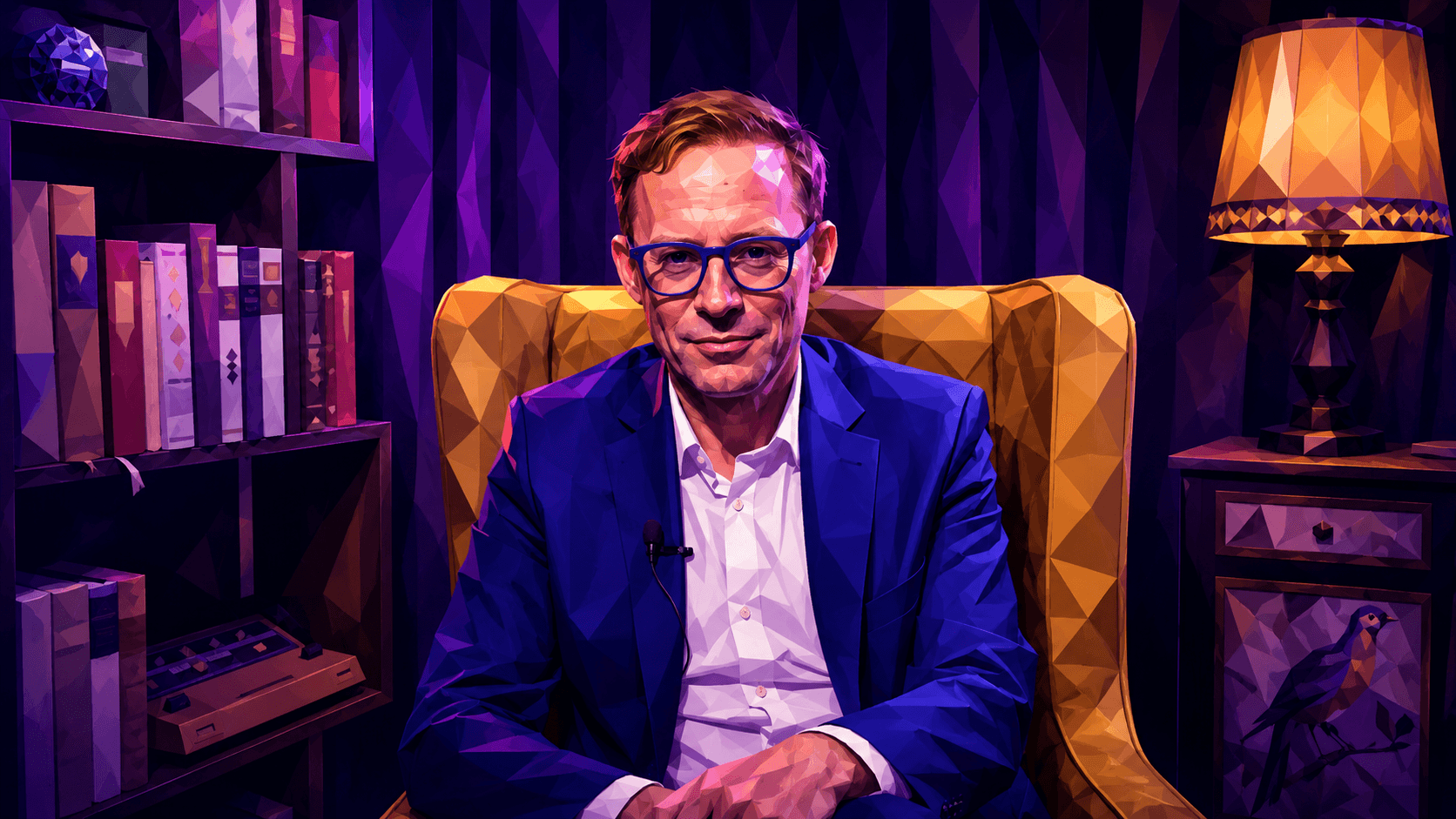
Industrialized Construction and Design-Build at GOLDBECK
Most construction companies build projects. GOLDBECK builds products.
That distinction, simple as it sounds, sits at the heart of one of the most instructive stories in modern construction entrepreneurship. Over five decades, GOLDBECK (often searched simply as "goldbeck") has grown from a ten-person metalworks shop in Bielefeld into one of Europe's largest and most sophisticated design build construction companies (sometimes shortened in searches to "design build constructio"), with 16 factories across the continent, operations in more than a dozen countries, and a fully integrated model that covers everything from design and production to assembly and facility management.
Jan-Hendrik Goldbeck, co-CEO of the company his father founded in 1969, sat down with Foundamental University to share what that journey actually looked like from the inside: the business model decisions, the international expansion mistakes, the innovation culture, and the vision for where industrialized construction is heading next.
This article draws entirely on that conversation.
Watch the full masterclass here: university.foundamental.com/masterclass/jan-hendrik-goldbeck
What Is Industrialized Construction?
Industrialized construction is not a new idea. But it is one of the most misunderstood terms in the built world, and Jan-Hendrik's masterclass is one of the clearest explanations of what it actually means in practice.
The core premise is straightforward: most buildings that get built year after year are not genuinely unique.
- A warehouse is a warehouse.
- An office building is an office building.
- A parking structure is a parking structure.
The conventional construction industry treats each of these as a custom engineering problem, solved from scratch every time. The industrialized construction approach treats them as products — designed once, refined continuously, and produced at scale using the same logic that governs automotive or precision machinery manufacturing.
"The classical construction professional takes pride in solving unique, one-off problems," Jan-Hendrik explains. "That's not what we want to do. We want to solve scalable problems — solutions that can be repeated. We do not want to reinvent the wheel every single time."
The analogy he returns to throughout the masterclass is the automotive OEM model. GOLDBECK functions as a system integrator: producing some components in its own factories, developing others in partnership with Tier 1 suppliers, and assembling the complete building on site. The advantages this creates are the same ones that have made industrial manufacturing more efficient than craft production for a century.
"Instead of buying an elevator for one project, we might be buying 2,000 elevators for 500 or 600 projects in the next year or two. That brings a completely different kind of value creation and mindset."
The result, in Jan-Hendrik's assessment, is a model that is not always better but is definitively better for a specific and very large share of the market.
"I wouldn't say our approach is always better — but for 70 to 90% of the buildings that need to be delivered anywhere in the world year after year, it is definitely better."
The Origins of GOLDBECK: From Metalworks to Design Build
The GOLDBECK story begins not with a grand strategic vision but with a practical frustration. In the mid-1960s, Jan-Hendrik's father was working in his own father's metalworks business, a small craftsman shop of about ten people run by two families. He had ideas — about production flow, about early automation, about better ways of doing things. The answer was always no.
"My father had a lot of ideas: how to change the flow of material, how to use early aspects of automation. The answer was always: no, we won't change anything. It's always been like this. It works. Leave it."
In 1969, he started his own company with a single insight: steel construction elements could be produced in a better, more systematic way. The original intention was not to build a fully integrated design build construction company at European scale. It was simply to make one part of the construction supply chain work better.
What followed was a series of logical steps, each one extending the model forward. If you produce steel elements industrially, you need to articulate their value to the customer — which means integration. If you want to reach customers early enough to optimize the building, you need design competence in-house. If you want to maintain relationships across the building lifecycle, you need service capabilities alongside the construction product.
"From steel elements in the 1970s, to more integrated structural systems," Jan-Hendrik traces the arc. "Then, in the 80s, from structural systems to fully-fledged products where you could approach a customer and say: if you're thinking of building your own production facility, think of us."
By the end of the 1980s, GOLDBECK had developed real products — the car park, the office, the production facility — each one designed to be delivered repeatedly, efficiently, and with predictable quality. The company that had started with a better way to weld steel had become one of the earliest serious practitioners of what we now call industrialized construction.
The Design Build Model: How It Actually Works
GOLDBECK's design build construction model is more integrated than most companies that use the term. Understanding what distinguishes it is one of the most practically useful parts of Jan-Hendrik's masterclass.
The conventional design build arrangement separates design from production. A design build contractor takes responsibility for both, but typically manages them as sequential phases with different teams. GOLDBECK's model collapses the distinction entirely. Design is not something that happens before production — it is the same process, conducted by the same organization, using the same product logic.
"We have around 4,000 people involved in the entire process before a single element is built on site," Jan-Hendrik explains.
This includes permitting, all phases of design, structural calculations, earthwork optimization, MEP and HVAC engineering, and sustainability engineering. Only then does production begin across 16 factories producing steel elements, precast concrete elements, steel-concrete hybrid elements, windows, and doors.
The customer relationship this enables is fundamentally different from what conventional procurement allows. Because GOLDBECK controls the design and understands the product deeply, it can engage with customers at the earliest stages of their thinking — before a brief has been written, before a site has been identified — and help optimize for time, cost, and quality from the beginning.
"To place them with the customer at the right early stage, you had to be decentralized," Jan-Hendrik explains, describing the organizational structure GOLDBECK built to support this model.
The company developed a network of regional offices that could serve as local advisors to customers, backed by the centralized design and production capabilities that made the product competitive.
The logic extends through the entire building lifecycle. In the 1990s, GOLDBECK developed what Jan-Hendrik calls the product-service ecosystem: integrating facility management, property management, car park operations, and interior fit-outs into the offering.
"The customer doesn't interact with you because you have beautiful blue eyes. The customer interacts with you because he wants to experience a great operations phase. To have a great design phase with the customer, you should know what his demands are in the operations phase."
The Role of Luck: German Reunification
One of the most disarmingly honest moments in Jan-Hendrik's masterclass is his acknowledgment of how much GOLDBECK's success depended on timing it did not control.
"I'll admit something that not many managers are willing to admit: there is a secret ingredient in a successful business model, and it's called luck."
In the late 1980s, as GOLDBECK was establishing its product-based approach, German reunification created an enormous surge in construction demand. The company was positioned to serve that demand in a way its competitors were not. By the time the construction crisis of the mid-1990s arrived, GOLDBECK already had the references and completed projects needed to compete credibly for the buildings its model was designed to deliver.
The lesson Jan-Hendrik draws is not passive. Luck creates conditions. Preparation determines whether you can use them.
"We were in exactly the right position to serve it with our business model."
That position was the result of twenty years of deliberate product development, not coincidence.
International Expansion: What Works and What Doesn't
GOLDBECK's international expansion story is one of the most practically instructive parts of Jan-Hendrik's masterclass, precisely because he is candid about the failures alongside the successes.
The first major lesson came from France.
"We treated it like we treated Germany — just copying and pasting what was successful here, ignoring all the cultural aspects of building in a different country with a different, already-saturated construction market. That was a hard lesson and eventually a hard decision to stop activities there."
The company returned to France years later through acquisition, buying GSE in 2019 and embracing French construction culture rather than trying to override it. The same acquisition gave GOLDBECK a platform in Spain, Italy, and Romania.
The UK offered a different kind of cultural friction. The British institutional standard for warehouses — not a regulatory requirement but a deeply entrenched market convention about how industrial buildings should look — resisted GOLDBECK's attempts to change it.
"At some point you realize these are windmills you're tilting at."
The solution was pragmatic: develop a system that appears to follow the institutional standard while incorporating GOLDBECK's value creation logic underneath.
The consistent principle across all international expansion, Jan-Hendrik argues, is understanding which parts of the business model are universal and which parts require local interpretation.
"Every country has a unique set of regulations, a unique culture around how projects are done, and unique technological habits. You have to understand the core drivers of your business model and interpret them for each national market."
Innovation Culture: The Mountain, the Elephant, and Getting There
Jan-Hendrik's framework for thinking about technology and innovation in a large construction company is one of the most useful mental models in the masterclass.
He describes two layers connected by a critical middle.
The base layer is the day-to-day: site managers, designers, and salespeople with real daily pain points that technology can address directly. "Finding tech solutions that make their lives easier is how startups were invented. This is hygiene. Non-negotiable."
The top of the mountain is the big vision — what Jan-Hendrik calls the elephant on the mountaintop, or Project Nexus: a fully integrated data multiverse for every project, where geometry, time, cost, communication, and on-site progress are all tracked in a single model that transitions seamlessly into operations and enables predictive everything.
The hardest part is the middle: mapping how each initiative contributes to reaching the top.
"You have to clearly map how each initiative, each intermediate project, contributes to reaching the top. Otherwise you have innovation and tech teams running hard and then being told: actually we just decided to introduce another tool that partially covers that, so we're stopping your project. Everyone is frustrated."
The pieces of the elephant, as Jan-Hendrik describes them:
- generative design tools that translate customer vision into building design;
- tools that transform agreed designs into execution and shop drawing documentation;
- fabrication automation and robotics;
- predictive analytics on the construction side;
- and finally a building operating system for the lifecycle.
"All these layers have to work together. And no single company can do this alone."
The Singularity of Construction: Where Industrialized Construction Is Going
Jan-Hendrik's vision for the future of industrialized construction is one of the most ambitious articulations in any of the Foundamental University masterclasses.
He calls it Project Nexus — the point where all construction data integrates.
"You start with the idea of a project, add layers and layers of information — not just geometry, but time, cost, communication, on-site progress. At some point you have an as-built digital twin, you transition into the operations phase, and you can on a fully data-integrated input-output level work thoroughly with the building to optimize its operations."
AI, in this context, is not a productivity tool. It is the mechanism by which the accumulated learning from thousands of projects becomes actionable for every new one.
"If you have this repeatable experience across the data multiverses of all your previous projects, you can do predictive everything — from a given set of parameters, predicting what will happen next, checking whether your assumptions are sound, whether you're overlooking something."
He also identifies what he calls the death of the front end as a critical enabling shift. Construction managers have historically resisted new technology because every new tool meant a new interface to learn.
"That time is coming to an end — largely thanks to AI. You just articulate what you want, and the AI agent understands and transforms your wish into action in the back end."
For the industrialized construction model, which depends on data flowing seamlessly across design, production, and assembly, the removal of interface friction is not a convenience. It is a structural prerequisite.
Advice for Construction Founders
Jan-Hendrik's advice to founders is grounded in the same directness that characterizes his account of GOLDBECK's own journey.
The most important question, he argues, is not whether your technology is impressive. It is whether you are solving a problem that people will pay to have solved.
"It's not about your solution — it's about whether there actually is a problem that your solution addresses. Are you really solving a real problem that people are willing to pay for? Without answering that question honestly, you might be running in the wrong direction."
His practical advice is to go and talk to the industry — not to investors, not to accelerators, but to the people running real projects.
"Extract what's really bothering them, where their real pain points are. The idea is: from pain point to payment."
On the long arc of building a construction company, he is realistic.
"It's a long journey. You have to make your mistakes, have the right level of endurance and stubbornness, and of course capital — because you have to pay your people. You might not earn money for some years while you gather the experience needed to create a market-ready product."
And on failure specifically, his perspective is shaped by experience.
"If a project does go wrong, it's your duty to make it worth something. You should extract the organizational learning from that pain."
The example he gives is a troubled office project around 2010 whose core team is still at GOLDBECK today, having since delivered one of the company's most successful office projects.
"Keep them, encourage them, get them back on track, and you gain organizational knowledge and loyalty that will pay off enormously later."
Conclusion: The Case for Industrialized Construction
GOLDBECK's story is not a template. The specific combination of family ownership, German engineering culture, fortunate timing, and decades of patient product development that produced the company is not replicable. But the underlying logic is.
Buildings that need to be delivered repeatedly, at scale, across multiple markets, benefit from the same principles that have made industrial manufacturing more efficient than craft production in every other sector. The design build construction model, when it is genuinely integrated rather than just contractually combined, creates a different and more powerful relationship between builder and customer. And the vision Jan-Hendrik describes — a fully connected data layer that makes every project smarter because of every project that came before it — is where the entire industry is heading, regardless of which companies get there first.
His Foundamental University masterclass is the most detailed account available of how one company built toward that vision over fifty years, and what the journey actually looked like from the inside.
The full conversation is freely available at university.foundamental.com/masterclass/jan-hendrik-goldbeck.
Related Articles: More from Foundamental University
All 13 masterclasses from Season 1 are freely available at university.foundamental.com. Other sessions relevant to industrialized construction and design build include:
Q&A
Question: What does “industrialized construction” mean in GOLDBECK’s context, and when is it better than conventional building?
Short answer: It means treating common building types (warehouses, offices, car parks) as repeatable products rather than one-off projects—designed once, refined continuously, and produced at scale like automotive OEMs. GOLDBECK acts as a system integrator, making some components in-house and sourcing others from Tier 1 suppliers, then assembling on site. This product logic unlocks scale advantages (e.g., procuring 2,000 elevators across 500–600 projects) and more consistent outcomes. Jan-Hendrik Goldbeck estimates it’s not always superior, but it’s definitively better for roughly 70–90% of buildings delivered worldwide year after year.
Question: How is GOLDBECK’s design-build model different from typical “design-build”?
Short answer: Instead of treating design and production as sequential, separate phases, GOLDBECK collapses them into a single, integrated product process run by the same organization. Roughly 4,000 people work on permitting, full-spectrum design (including structural, MEP/HVAC, sustainability, earthworks), before production begins in 16 factories (steel, precast concrete, hybrids, windows, doors). This deep product knowledge lets GOLDBECK engage customers at the earliest idea stage and optimize for time, cost, and quality. A decentralized network of regional offices advises locally, backed by centralized design/production. The model extends through operations with a “product–service ecosystem” spanning facility management, property management, car park operations, and interiors.
Question: What were the key lessons from GOLDBECK’s international expansion?
Short answer: “Copy-paste” failed. In France, trying to apply the German playbook without adapting to a saturated, culturally distinct market led to a withdrawal; GOLDBECK later re-entered by acquiring GSE (2019) and embracing local norms, gaining reach in France, Spain, Italy, and Romania. In the UK, entrenched institutional standards for warehouses resisted change, so GOLDBECK built systems that appeared to align with those norms while embedding its value-creation logic underneath. The overarching lesson: know which business-model elements are universal and which require local interpretation across regulations, culture, and technological habits.
Question: What is “Project Nexus,” and how does AI change the industrialized construction model?
Short answer: Project Nexus is the envisioned point where all project data integrates into a living model—geometry, time, cost, communication, and field progress—evolving into an as-built digital twin that seamlessly transitions into operations. AI turns accumulated, repeatable experience across thousands of projects into predictive capability (“predictive everything”), checking assumptions and anticipating outcomes from given parameters. A key enabler is the “death of the front end”: AI agents translate plain-language intent into back-end actions, eliminating the friction of learning new user interfaces. Reaching this requires interoperable layers—generative design, automated documentation, fabrication automation/robotics, predictive construction analytics, and a building operating system—none of which any single company can deliver alone.
Question: What practical advice does Jan-Hendrik Goldbeck give to construction founders?
Short answer: Start from “pain point to payment”: validate that you’re solving a real, paid problem by talking to people running actual projects—not just investors or accelerators. Expect a long journey requiring endurance, capital, and hard-earned experience before achieving a market-ready product. When projects go wrong, extract organizational learning and keep teams engaged to build capability and loyalty. He also stresses the role of timing: luck creates favorable conditions, but preparation—through clear product logic and repeatable execution—determines whether you can capitalize on it.