Bet Big On Yourself
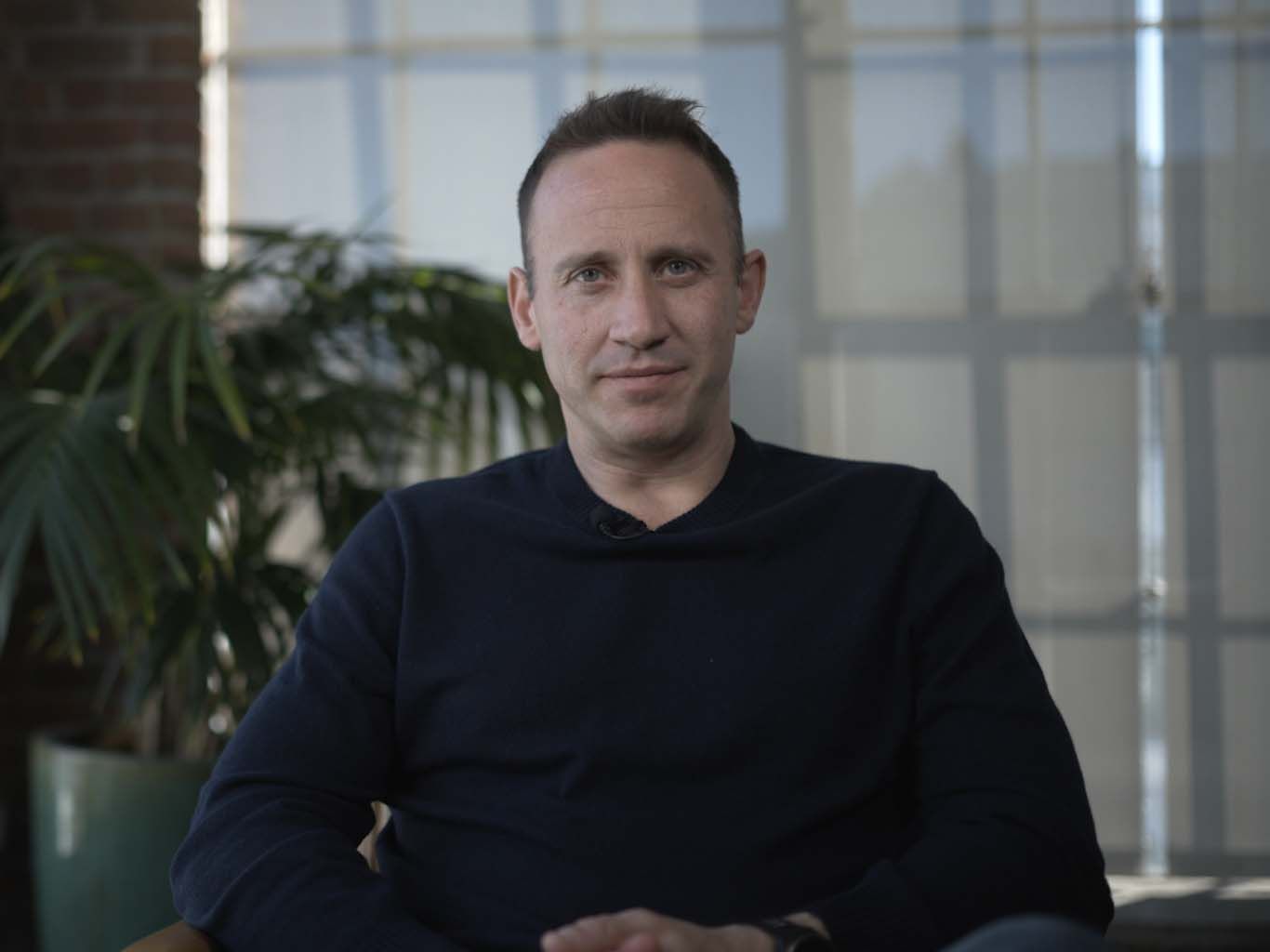
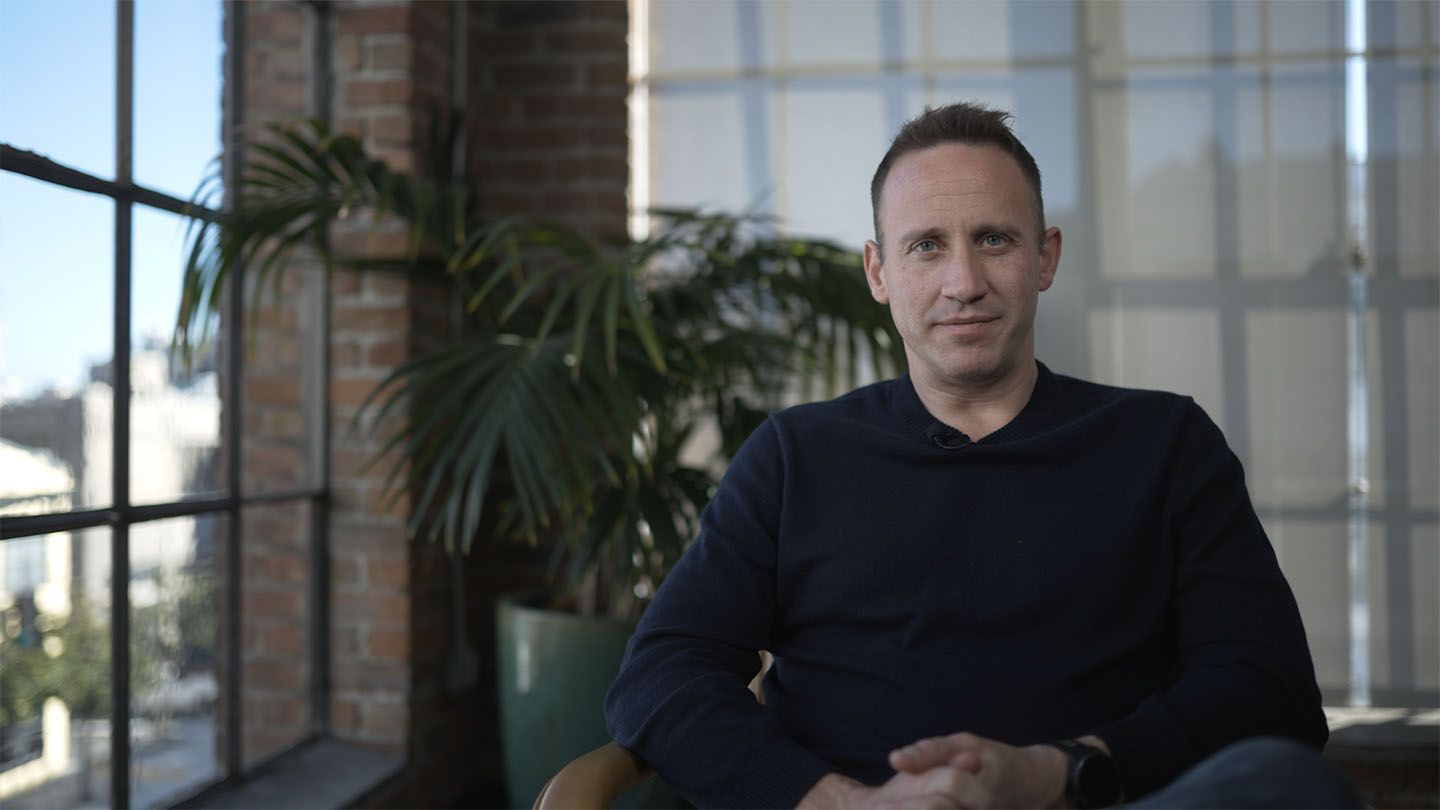
Dustin DeVan — CEO @ Ediphi
About this masterclass
Dustin DeVan is the CEO and founder of Ediphi, a preconstruction estimating platform for commercial construction. Before Ediphi, Dustin built BuildingConnected into the largest bid management and qualification platform in the US and Canada, later acquired by Autodesk. He's one of the few founders in construction tech who's done it twice.
What This Masterclass Covers
Construction spends months designing before anyone knows if the project is affordable. Dustin's thesis: what if teams could price an idea before spending a dollar on detailed design? That conviction sits at the core of Ediphi, and this masterclass is the story of how he got there.
In this masterclass, Dustin walks through what it really means to build a company twice in the same industry, and gets disarmingly honest about the highs, the lows, and everything in between:
- The brutal reality of building without a co-founder, and why he calls it his biggest mistake
- Cold-pitching strangers in coffee shops from Palo Alto to San Francisco to raise his first round
- Why his co-founder Jesse threw away the entire original codebase, and why that saved the company
- Why customer support was one of his first hires at Ediphi, and why most startups get this wrong
- What separates a first-time founder from a second-time founder: health, sustainability, team, and a completely different approach to decision-making
You Might Also Like
Level Risk Into Trust – Scott Wolfe – Advisor, former CEO @ Levelset
Build Software For The Field – Florian Biller – CEO @ Capmo
Win As The Accidental CEO – David McGavran – CEO @ Maxon
Transcript
Dustin DeVan – Bet Big On Yourself
### IntroductionMy name is Dustin DeVan. I'm the CEO and one of the co-founders of a company called Ediphi. Ediphi is a pre-construction estimating solution for companies in commercial construction — helping estimate what projects are going to cost across the pre-construction lifecycle. So whether you just have an idea, or you have some early drawings, it prices everything all the way through until you have 100% construction documents and you're able to go to contract.
Previously I was the founder of a company called BuildingConnected. BuildingConnected is the largest provider of bid management and qualification services in the US and Canada. It was acquired by Autodesk for $275 million in January 2019. I also ran construction strategy for Autodesk for a few years. And before all of that, I started my career in commercial construction — I was a general contractor for six years, working on healthcare projects, nuclear and coal-fired power plants, and I helped with CityCenter in Las Vegas. I studied mechanical and aeronautical engineering in college.
Background & Growing Up
I grew up in a town called Vacaville, California — which, while it's just 50 miles from San Francisco, is pretty far removed from technology. My father drove a train. His father drove a train. My grandfather drove a train. My mother's side of the family had been in the area for 130 years and was in local real estate.
When I was growing up, school wasn't really the priority — it was more about how well you performed athletically. So I didn't know much about technology, but my dad instilled in me and my brother an incredible work ethic through sports. And that carried over into everything else in my life.
When I went to college, I had no idea what I wanted to do. The only reason I studied aeronautical engineering is because I had to pick a major when I was applying. I was going to UC Davis essentially just to run cross-country and track, and aeronautical engineering sounded cool. Once I got there, they told me adding a second degree in mechanical engineering wouldn't cost much more, so I did it. I went through college without a real plan. I think a lot of people at that age don't have one. And college really wasn't for me — although I did fine and graduated with two engineering degrees.
Early Career: From Bechtel to Construction
When I graduated, I had no idea what I wanted to do. I took a job with a company called Bechtel — they built infrastructure projects all over the world, which sounded exciting, and they promised to move me to Austin, Texas, which appealed to me since I'd never really lived anywhere but California.
They first moved me to Frederick, Maryland. I worked there for a year as a scheduling engineer. My first project was helping develop a schedule for decommissioning a nuclear power plant. Then they moved me to Texas to work on a coal-fired power plant. And then the project manager on that job said: change of plans — they wanted me to fly out to Libya, because they were going to go build infrastructure for Gaddafi. Before we blew it all up, we were building a bunch of things over there. And it was at that point I thought: the only way to move up here is to go to really desolate places, because that's pretty much the work we were doing. I wasn't about to move to the desert in Africa to build infrastructure for a country I didn't know and that probably had questionable ethics.
So I called an executive I'd met at a general contracting firm — his name is Tim Albini, and we're still friends. I said: hey, I'm looking for a job back in California. He said — and I remember this clearly — "If I remember correctly, you studied to be a rocket scientist." I said: kind of true. He said: "I can teach you construction. Come work for me." And so I worked for him on an $80 million Kaiser medical office building. That was my entry into typical general construction, and I did that for the next four years.
They sent me to CityCenter in Las Vegas, which is not a place you send a 25-year-old with no direction in life — you get into a lot of trouble in Vegas. But I got a great experience on a massive project and learned about everything that could go wrong. That project ultimately became the subject of the largest lien filed in American history at that point — a $400 million lien. I did that for about two years, and then moved to Palo Alto.
The Idea for BuildingConnected
At that point it was getting late in my 20s. I had saved up essentially no money by the time I was 28. And when you live in Palo Alto in 2010 or 2011, you start hearing about startups and technology everywhere. I had never heard of how venture capital worked. I had no idea that you could come up with an idea and people would give you money to go execute on it.
Some of that is true — it's harder to raise capital than TechCrunch would have you believe. But I started working on a thesis for what we could change in commercial construction to make the industry more efficient. When I started thinking about how software was built for this space, I realized almost every application at the time was fundamentally flawed. Most of it was still desktop-based and hadn't migrated to the cloud — that was one thing I identified early. The other thing I identified is that none of the software was architected with the understanding that construction is highly collaborative yet highly fragmented. Every project is actually executed with a different assembly of companies coming together for one common goal. They have different financial goals, but they're all working collectively to deliver the project. Yet the software was just disparate systems that didn't communicate with each other.
The mode of communication was entirely email, which meant everyone also had to maintain their own contact directory of every company they could ever hope to communicate with. And in construction, that's a daunting task. Any general contractor at the time maintained a directory of every vendor they might ever use — not just the company, but the individuals within those organizations, their roles and responsibilities, the company's financial capacity, their safety record, in order to know which projects they could potentially use them on. If anyone opens their iPhone right now, you probably have a bunch of static contacts in there that are already outdated. Imagine what that looks like if you're managing 20,000 or 100,000 companies, which some of these businesses were doing.
I thought: we really need a network as a backbone to facilitate communication, where everyone maintains their own identity — the same way Facebook was working at that time. Because I had moved around the country, I hadn't lost a single contact there.
The challenge with building a network is that coming up with the idea is actually the easy part. The hard part is: how do you get everyone to one location? When I founded BuildingConnected, the thesis was that the common communication layer every business participates in is: someone either sends an invitation, a bid, or an RFP — and everyone in construction receives and responds to those. So we went to market with a free tool to invite people to bid or budget or respond to a project. In order to respond, they created a profile for themselves and their business. That was how we could build a network around commercial construction.
The reason we gave it away for free is that other tools were charging for this service, and it didn't make sense. We were getting so much value by onboarding every business in the industry that we wanted to make it as frictionless as possible.
Starting Out: Broke, Alone, and Figuring It Out
That went really well as a concept. But getting software to market and building a software company took a long time to learn. When I started out, I didn't have a co-founder. I found a team of Latvian developers and agreed to pay them $250,000 to develop the first version of BuildingConnected based on ten wireframes I'd created. For anyone who's developed software — ten wireframes is nowhere near enough to build something as complex as a bidding network. But I also had another problem: I didn't have $250,000. I had $5,000 in my bank account.
When I signed the contract with them, I quit my job the next day. I had been floating the idea with people and it wasn't entirely unexpected — I was closing out a project and I told them I was going to go try this. I quit because I knew I needed to raise capital. I had talked to two friends who agreed to invest $75,000 collectively, so I had one month of development fees covered. For the rest, I figured I'd find angel investors, talk to VCs — whatever it took. I raised an additional $30,000 from another friend, another $12,000 from another friend. That got me two months.
Then I took a very unique approach to raising capital, because all of my cold emails fell flat. Being from Vacaville, California — my family and friends don't have money. There wasn't a single person I could go to and say: could you write me a check for $50,000 or $100,000? That just wasn't a thing. So I thought: where are wealthy, successful people? I went from coffee shop to coffee shop between Palo Alto and San Francisco, pulled out my laptop, and randomly pitched every single person I thought might have capital. Through those conversations, I raised an additional $125,000 and started getting introductions to more VCs.
People often ask me how I came up with the idea, or why I wasn't worried about rejection. That's one thing I've genuinely never worried about — failing. I worried about not trying. A lot of people are so scared to fail that it holds them back from achieving their potential.
Once we were getting close to the deliverable from the Latvian team, I realized no one would ever use what was the worst-developed application I'd ever seen. We hadn't focused on the core thesis: create a really great way to invite people to bid on your projects. At best, I had a prototype. When we finished, I didn't have the money to make the last payment. But I had a prototype and I told them: let me use this to recruit a co-founder, and then we'll pay your balance.
Finding a Co-founder: Jesse
I was able to recruit my co-founder, Jesse Peterson, to join the company. That was the best decision we ever made. The first thing Jesse did was throw out all of the code, and we started completely from scratch on a new application that general contractors could actually use to invite subcontractors to bid.
For any founder watching this: you should absolutely find a co-founder. Doing a startup alone is far too isolating and emotionally taxing. Starting that company alone was definitely the biggest mistake I ever made — it actually cost me a significant amount of money because I was deluding myself with no one to check me. Jesse Peterson is the most remarkable individual I think I've ever met. He's the only person I know who could lead an entire product organization, be the head of product design, or the head of engineering.
Jesse and I had gone to college together. He was a year younger than me and we hadn't stayed in close contact since. We had some mutual friends, including a mutual best friend named Chris. Towards the end of 2012 — I had quit my job in March of that year — I realized I needed someone who could help me build this together rather than using contractors. I reached out to Chris, who introduced me to Jesse. When he made the introduction, he said: "You are the two smartest people I know." Jesse was working at a startup that had raised a bunch of capital but had no idea what to work on. When I talked to Jesse about the problem I was trying to solve and what I thought we could build, the logic made sense to him. We started talking right before the holidays in 2012, he quit that startup, and we joined forces.
In April, we decided to throw all of the prior code away and start completely from scratch — a clean slate, focused purely on the thesis: create a really great experience for any general contractor to invite their subcontractors to bid. Nothing else. Jesse wrote every line of code himself over the next six months. During that time, we raised some additional angel capital. Once he started writing in April, we got our first general contractor to use BuildingConnected — they invited about 100 subcontractors to bid, and all of them created profiles for themselves and their businesses.
I still remember that day. We were at a WeWork and there was a keg and I got pretty drunk, and people were like: why are you so happy, it's a Tuesday? And I was like: everything — the whole thesis of why this company could work — was just proven right. Now it was just a question of how fast can we replicate this, over and over again. If we could replicate that, we could build a business. The whole crux of what we'd been working on made sense. That was a really special time.
The Emotional Reality of Founding a Company
It's easy to discount how emotional starting a company can be and how many highs and lows you go through. Any founder will likely become very passionate about what they're working on. And if you're very passionate about it, it can be genuinely depressing to see it not go well. Very few companies don't have those dark moments. And if you don't have someone you can talk to, scream at, or cry to, it can be very taxing mentally.
I've certainly had to deal with this, and when you're especially young, you don't know how to properly handle some of these things. I've been in Silicon Valley for 15 years now and I've seen people burn themselves out and cope with it through drugs or alcohol and really hurt themselves. Having a co-founder helps you regulate and keep each other in check. Jesse was married, and I talked to Jesse almost as much as I talked to his wife during the seven years we worked together at BuildingConnected. Having that person to share the burden with, stay motivated with — it's critical. Without a co-founder, you're bottling everything up, and from just a mental health perspective, I can't imagine why someone would try to do it alone.
Before Jesse joined, I was completely broke. I moved in with friends, went home for Christmas, and I remember my mom begging me to get a real job and telling me this wouldn't work. I told her I wasn't going to quit. And honestly, part of my motivation was that I never wanted her to be right about that. When I came back, I had to sleep on my ex's floor on an air mattress. I had to sell my car to get $5,000. I had to take a part-time estimating job at a buddy's GC firm. It was extremely depressing to be 29 years old, living on someone else's floor, without a car, without money.
It also made me double down on the business because I had no other escape. For the next three years I probably worked more hours than I can imagine anyone working. That was my only path out, as I saw it. Not having a co-founder during that stretch — you can imagine being that isolated, everyone else at work, me dealing with the team in Latvia, worrying about capital all the time. You can almost make yourself spiral into: this won't work, what am I doing? It was really hard to stay positive. But every time someone signed up and said "I believe in what you're doing," it made a world of difference.
Staying Positive Under Pressure
One of the ways I stayed positive was that no one could ever give me a logical reason why what I was proposing was wrong. I remember Jesse and I pitching a very large venture capital fund, and the partner told me that what I was proposing couldn't be a business. I said: can you tell me which part specifically you don't believe in? His only answer was: "I've never seen a business like this." And I actually thought: the best businesses often have some unique element that's never been done before. I was able to stay positive because I kept telling myself: no one can actually tell me why it's wrong. I met with so many construction companies and not one of them said the idea didn't make logical sense.
My old boss at the construction company I'd left actually saved me financially and I owe him a lot for that. He lent me $50,000 and I had to sign a personal guarantee — because he said: this makes sense. Once we started getting GCs onto the platform, he just rolled it into a capital investment and made a lot of money from it. With every conversation, I was reinforcing to myself that what I was working on made sense.
Low Moments
I can remember so many low moments, because startups are a roller coaster — it's highs or lows, never a steady middle. Some stories: I had to move out of the place where I was sleeping because when the person went on vacation, their cat died and they blamed me. I did not kill the cat.
After we raised our seed round, I was so broke I genuinely didn't know where I was going to live. One of our seed investors — Darren, whose second investment this was after investing in PlanGrid, and who now runs Brick & Mortar Ventures — asked me where I was living. He called a friend who ran a property management company that was looking for an on-site manager for a dorm of foreign exchange students. So I took over managing a dorm of 60 foreign exchange students and had to do it on nights and weekends, but I got free rent, and I did that for the next year and a half. Every time I came home, it made me feel low. So I just spent more and more time at WeWork, because you'd come home to this dorm and think: where am I at with my life? I was probably 31, 32. Not exactly a situation that makes you an attractive prospect by most standards.
That dorm was also at times completely out of control. There were three separate occasions where I had to be a witness in a murder investigation because the dorm security cameras captured what happened, and I had to sign an affidavit confirming no one had tampered with the footage. I did manage that dorm until my Series A investors found out I was living there — and to their credit, they said: Dustin, whatever it takes, you need to move out and get your own place. We'll cover it.
Then there was another low moment I haven't talked about much publicly: we were sued by a competitor. One of the problems in America is you can sue anyone for anything and the other party has to defend themselves. The accusations were insulting and ridiculous, but we had to spend a significant amount of money defending ourselves. It also made raising capital difficult because we were trying to close our Series B at the same time. I had invested four years into this business and this company was trying to kill it because we were beating them. Ultimately we were vindicated — they filed a motion to dismiss against themselves. The individual who runs that company is genuinely one of the very few people in my life I really dislike.
Culture & Transparency
I believe in more transparency than most founders. When you run a company, a lot of founders don't give employees enough visibility into how the business is doing, and that never made sense to me. If you want to lead and inspire people, and you're transparent with them, they feel like they're genuinely part of the business and part of the solution.
I was very upfront about almost everything. I was upfront when we got sued. Everyone at the company knew. They were claiming I stole IP — I'm not even capable of writing code, so I'm not sure how I'd steal IP. The funny thing was, they filed their motion to dismiss right before we were going to go into discovery. And I remember the first thing we were going to send them in discovery was a printout of me emailing people on our team saying their software was terrible. So that was going to be the first thing they saw.
With our team, we shared as much information as we possibly could, unless we absolutely couldn't. People understood the business and felt like part of its success. A lot of employees at early-stage companies don't understand how the business is actually doing, and as a result feel a bit detached — they don't feel like they're part of a team and a family. That closeness and connectivity is what makes startup culture so special.
The thing I'm most proud of about the culture we created at BuildingConnected is that, to this day, years later, people reach out to me and say: "I'm still looking for another company like BuildingConnected." What we had there was something really special. And the only way you create that is by opening up and allowing your people to see how you see the business. There are things you can't share, but you can share far more than what I see most founders doing. Everyone had some equity, so everyone had a right to understand what was happening. And most of them were inspired by the fact that I was giving up so much personally to invest everything back into the company.
The right type of people are inspired by that. The culture of a startup is the founders — whatever attitude you bring, that's the attitude the company will embrace. Jesse and I brought a no-asshole culture, a work hard and celebrate wins culture, a culture of excellence and calling out excellence. None of us have all the answers. One of the things a lot of founders do wrong is acting like they do. The more transparent you are about where you need help and clarity, the better — because you want to be seen as approachable, not as the all-knowing CEO. In a startup, that makes a world of difference.
The Acquisition
We were able to exit successfully because we checked all the boxes. We had a unique perspective on the industry, a world-class product organization, an amazing go-to-market team, and a company culture that any acquirer would look at and say: this company is self-sustaining, acquiring them isn't going to be a heavy lift. A lot of people think acquisitions are all about financials, but when you acquire a company, you're also thinking about the culture, the sales team adoption, whether this is additive or subtractive.
We were fortunate that one of the largest companies in construction tech, Procore, approached us about an acquisition. Once they reached out, it set the momentum in motion, and the chain of events ultimately led to Autodesk acquiring us — which actually happened much faster than we expected.
When I called Autodesk to tell them Procore was thinking about acquiring us, they had us sit down with the CEO and CFO the very next day. We pitched Andrew Anagnost and Scott, who was still CFO at the time before he went on to Cisco. We pitched our business and why this was a unique IP asset. They called us the next day and made an offer on the phone. These deals get done quickly when people want to make them happen. The negotiation happened over the phone — it started at $250 million and went to $275 million, plus $40 million in stock, and I think we signed a term sheet three days later. I didn't know you could strike a deal of that size in less than a week.
When you get an offer and sign the deal, it's hard to get excited immediately, because there's still a substantial amount of work to make it actually happen. A team of lawyers from the acquiring company comes in, you put together your own team, we brought in a banker — and then there's an enormous amount of diligence to verify that everything we represented leading up to the acquisition was accurate. Data dumps, reviewing every single contract, making sure everything made sense, identifying any liability or risk. And just because the headline number says $275 million doesn't mean you walk away with $275 million — the deal can have clawback clauses, payment schedules, all sorts of things.
We did have a closing party, and that closing party was amazing. Friends came in from all over. The funny thing was we had it after the public announcement, but before the SEC approval closed, so no money had actually hit my bank account yet. Some friends and I went out after and one of my buddies had to pick up the tab because I technically still didn't have the money — even though my net worth had apparently just jumped dramatically.
During the diligence process, we brought in the executive team almost immediately and then slowly started letting more people into the loop. We probably made an internal announcement to everyone a few days before the public one, though more than half the company likely knew a couple of weeks out, because we needed to bring people in across all areas to support the diligence. We wanted to make sure it wasn't a total surprise, and we communicated what we expected the transition to look like, so no one felt their jobs were at risk or that they'd been blindsided.
Life After the Acquisition: Autodesk & Lessons Learned
After the acquisition, Autodesk didn't do a lot with BuildingConnected right away. They had also acquired PlanGrid for substantially more money, and there was more product overlap between PlanGrid and Autodesk's core competencies. They built a construction leadership team which I was part of, and that team — led by Jim Lynch — was mostly focused on figuring out how to position the PlanGrid asset relative to the existing BIM 360 product and assemble a coherent product offering.
The challenge when you acquire companies like PlanGrid, BuildingConnected, and Assemble is that each comes with leaders, and leaders sometimes have difficulty reporting to other leaders. PlanGrid had a new CEO who came from Tesla. Tracy and Ralph are big personalities. I'm a big personality. We had to figure out who owned what, which was incredibly contentious. Plus there were the Autodesk people who had previously owned things and now had to figure out if they were leading or reporting.
I respect Jim Lynch a lot and I consider us friends. But we disagreed on quite a lot of the business decisions made around Autodesk Construction at that time. The company ended up organizing things with PlanGrid people in charge of all the product — two individuals who were not from construction and had only been at PlanGrid for about a year. I was put into a role of construction strategy.
Our company was largely left alone for the first six months. But then, as Autodesk likes to do, they wanted to consolidate into one sales organization. It was not a smooth rollout. What was hard for me wasn't that I knew they were going to make changes — it was that they didn't listen on how to do it and kept stumbling on the same decisions. A prime example: in a leadership meeting, they proposed having every single sales rep sell every single product. I'm fairly certain I said in that meeting: "This might be the dumbest idea I've ever heard." Anyone who understands a sales organization knows that if you have different ICPs, different products, different sales motions, and different ACVs, it's very hard for someone to effectively represent a portfolio that targets completely different buyers.
BuildingConnected had a great sales motion for our products, which were sold to GC pre-con folks. PlanGrid had a great sales motion for the field team. BIM 360 sold to the enterprise. Just allowing everyone to sell everything doesn't mean they actually will. And with quota structures built around selling everything, sales of BuildingConnected dropped dramatically — because people were naturally focused on selling the high-dollar-value items to hit quota. BuildingConnected was a high-frequency, lower-ACV, rinse-and-repeat model. That mismatch didn't work.
Ultimately, I struggled because BuildingConnected was like my child. I wanted to stay. But when you see people making decisions that you know are wrong — and you can prove are wrong — and those decisions are affecting the people you care deeply about, you reach a breaking point. Add COVID on top of that, and it was a really, really tough time. I know people might say: cry me a river, you just made a bunch of money. But during COVID, you couldn't really spend it, and you were still watching your baby be mistreated. It was genuinely hard.
My last straw was being in charge of construction strategy in title, but being given no real resources to build what I actually wanted to build. They'd rather have me buy or invest in companies than give me the budget to build the team. I told them: if you want to win all of construction, you win pre-construction. They didn't do it. And now I'm building Ediphi — which is exactly what I told them I wanted to go do. My non-compete expired after three years, they still weren't doing anything in that space, and now I've been at it for two years and they're already far behind where we are — and they'll be poorly equipped to catch up with everything we're going to execute on.
That's one thing you have to love about large organizations — they go down the wrong path and there's an organizational inertia that keeps them there. Which is great for the startup community.
Ediphi: A New Thesis for Pre-Construction
I am more bullish about what we're going to do with Ediphi than I actually was with BuildingConnected. I don't see any feasible way — unless we screw something up — that we won't have a very large outcome, because we're approaching pre-construction in a way no one has ever done before.
When I was at Autodesk Universe, Andrew Anagnost shared his vision for what construction is about. His view is that everything starts with the design: you take a building, extract the quantities from the design, price the quantities, and that's how construction works. That paradigm is wrong. Ediphi approaches it differently. You should be able to price an idea — before you even have a design. If you have an idea for a hospital, what are your objectives? Do you need radiology? MRI? An emergency room? You should be able to assign a price to that. And that price can then inform the designers of what to go and detail — because the biggest productivity gains in pre-construction will come when we compress the pre-construction timeline from years to months.
The only way you do that is to stop designing projects that people can't afford. Often in pre-con, you start with designs and then spend months value-engineering them to get the cost down without reducing scope so much that you can't meet the project objectives. Our view at Ediphi is that you need a source of truth for pricing construction — and you can price construction far faster than you can design it. Theoretically, pricing and design should happen simultaneously. But since we haven't reached the point where you can price and design together in real time, why not have a lot more pricing conversations first? Because you can price things much more quickly than you can redesign something.
Being a Second-Time Founder
The greatest thing about being a second-time founder is that hiring is very easy — if you treated your last company's employees well. The people who are available and looking generally just want to come on board.
The first person I hired at Ediphi was actually someone who worked in customer support at BuildingConnected — an underappreciated function in most startups. Most startups have no real customer support strategy; they treat it as purely reactive. People don't understand that when you build a software company, you are a service — software as a service. And part of that service is delivering excellent customer support. His name is Javier — I love him to death. He actually started with me while he was still in college at BuildingConnected, then joined us full-time when he graduated. Then our VP of engineering came on board, other engineering leaders followed, and many, many more people have reached out. We haven't been able to hire everyone because we have finite open positions, but when people want to come back and work for you, it means a lot. It means they trust you with a significant part of their lives — because who you choose to work for is a big choice.
Working Differently the Second Time Around
My first company — I physically could not work as many hours now as I did back then. I was younger, and age catches up with all of us. I have to work more efficiently and more sustainably now. To be transparent: the lifestyle I led during BuildingConnected is not something I could sustain, and I suffered a great deal with depression during that time, which I would drown out with alcohol and sometimes drugs on the weekends. I don't do any of that anymore. I don't even drink.
I want to give my employees and my investors the best version of me I can possibly deliver. So my lifestyle now is a healthy one that keeps me at the highest mental level I can be, to produce the best results and be the most productive per hour I put into the business. When you're young, you think you're invincible — but all of that stuff is actually a tax. I think we genuinely have the ability to be a publicly traded company, and I think I have the capacity to lead a publicly traded company. I know that because I know some publicly traded CEOs and many of them are not exceptional. If we're going to see where we can take this, I need to be the best version of myself. And I've made some serious life changes to make that happen.
The older I get, the more I appreciate how few people actually make real, material changes to their lives and operating patterns. It takes a special kind of person to genuinely change their mode of operations. It's been hard, but I'm proud of the changes I've made to become more effective.
Advice for Aspiring Founders
For anyone who wants to do a startup: understand that the likelihood of failure is substantially high. The reason you should do this is not for money or glory — it's going to be the best learning experience of your life. If you go into it with the perspective that you're going to learn how to operate a business, how to recruit talent, how to inspire people, how to raise capital — you basically get an MBA for free. Regardless of the outcome, it's going to be positive.
If I were to think about it purely logically — the likelihood of being successful is relatively low. I think I'm more likely to be successful than most people because of my experience. But truthfully, you only have one life. If BuildingConnected hadn't worked out, my life would have been very hard. Knowing what I know now about those odds, I'm not sure I would have tried it without some kind of financial backstop. I'm extremely grateful it went well.
That said, if you do have more of a safety net — a financial cushion, a family background with resources, or a career you could easily return to — I'd still encourage you to take the risk. Because the learnings you have as a founder are unlike anything else. And if you're a founder who ends up raising capital and growing to a team of 20 or more people, you are a valuable asset to any organization, because one of the things AI is not going to take over is leadership. Very few people are truly good at leading teams — everyone thinks they are, but most people aren't. The ability to lead and inspire isn't just an inherent talent; it's a muscle you have to develop over time.
What Sport Taught Me About Business
The ability to focus and work toward a goal for a long period of time without any gratification along the way is not something many people can do. In high school I ran cross-country and track. Running is a discipline where you spend a substantial amount of time before you see any real gains. It teaches you that you have to put in the work long before you see the outcome. I credit that with giving me a lot of the discipline I've applied to business — the ability to say: I'm going to focus for a long time, measured in years, toward achieving an objective, and be disciplined all the way through.
And all the other sports — my brother ended up going to the NFL — being around that culture of competing to win gave me the ability to work really hard and measure myself not just against my own goals, but against other companies. That drives you to differentiate yourself. A lot of people don't know what it feels like to win. So it's hard to push yourself when you're not wired for competition.
I want to be considered, when I'm done, the best construction tech founder ever. I know that's a personal goal, and I think I will be — because I don't know of anyone else who will have built two successful companies in this space. I love competing with that. I love setting personal milestones and going out and keeping them. Competition, sports, a little gambling — it's all fuel. It's an adrenaline that I use to stay motivated.
On Startups, AI Hype & Building a Real Business
A lot of founders get caught up in the hype of Silicon Valley — going to networking events, sensationalizing their company. I think that's wrong. I think Y Combinator pushes that narrative too much: we are the greatest AI company solving everything for everyone. People get obsessed with: what was your valuation? But we all need to remember that those valuations are largely fictional. They're just a way to assign ownership after a term sheet is done. They don't mean anything until someone actually says they're going to buy it at that price.
And if you sensationalize your product, you lose touch with reality. You have to actually solve real problems. A lot of companies in our space say "we're AI for pre-construction." Pre-construction is vast — so what does that mean? What problem are you specifically solving? AI is, at best, a feature in a product. You need to be speaking about the fundamental problems you're solving.
One of the most important ways to differentiate yourself as a founder is to be specific instead of generic. Specific language allows you to do account-based marketing. It lets you target the right customers and tell stories that resonate with them, so they actually want to buy your product. Generic marketing means you're trying to blanket everyone, which generates bad leads, which leads to bad deals, which leads to customers who churn because they never should have bought your product in the first place. It also means you can't identify your highest-value customers and expand from there.
I see a lot of people entering the construction space right now who come purely from a technology background and have literally no understanding of the industry. They get on podcasts and talk shows, or they raise capital from VCs who have no idea what they're investing in, and they think they're solving the world's problems. Back when PlanGrid and BuildingConnected were raising capital, it was genuinely challenging — no one had ever raised for construction tech before, so investors didn't know if you could actually succeed in this space. Now people are raising from bad investors who are just trying to get on the AI train. Be very cautious about who you raise from. There are a lot of bad VCs out there. Think very carefully about the people you bring into your company, especially early on. The team and culture matter enormously.
Final Reflection
I have one tattoo on my body — the BuildingConnected logo on my calf. Building that company from scratch, with no real mentor or guide along the way, is the single thing I'm most proud of in my entire life. There are so many reasons it should have failed: lack of capital, lack of industry knowledge, not being able to write a single line of code. But it didn't fail. And I went through so much to make it work.
That's one of the reasons I do love Silicon Valley and venture capital. Someone like me — whose father drove a train — moved here, had an idea, recruited a team, raised capital, and sold it for hundreds of millions of dollars in just a few short years. There are very few places in the world where that's possible. It's still rare. It still takes an enormous amount of work. And it takes an honest assessment of yourself: there is a certain level of IQ and EQ required before you even attempt to start a company. But even if you have all of that, there are a lot of people who just don't have the desire or the mental fortitude to get through the times when life punches you in the face and knocks you over.
I feel like I've been punched in the face so many times I've lost count. But yeah — BuildingConnected, I'm very, very proud of. And I feel like I'm going to have two startups that I'm going to love a lot.
Watch the video on YouTube.