Leadership That Scales
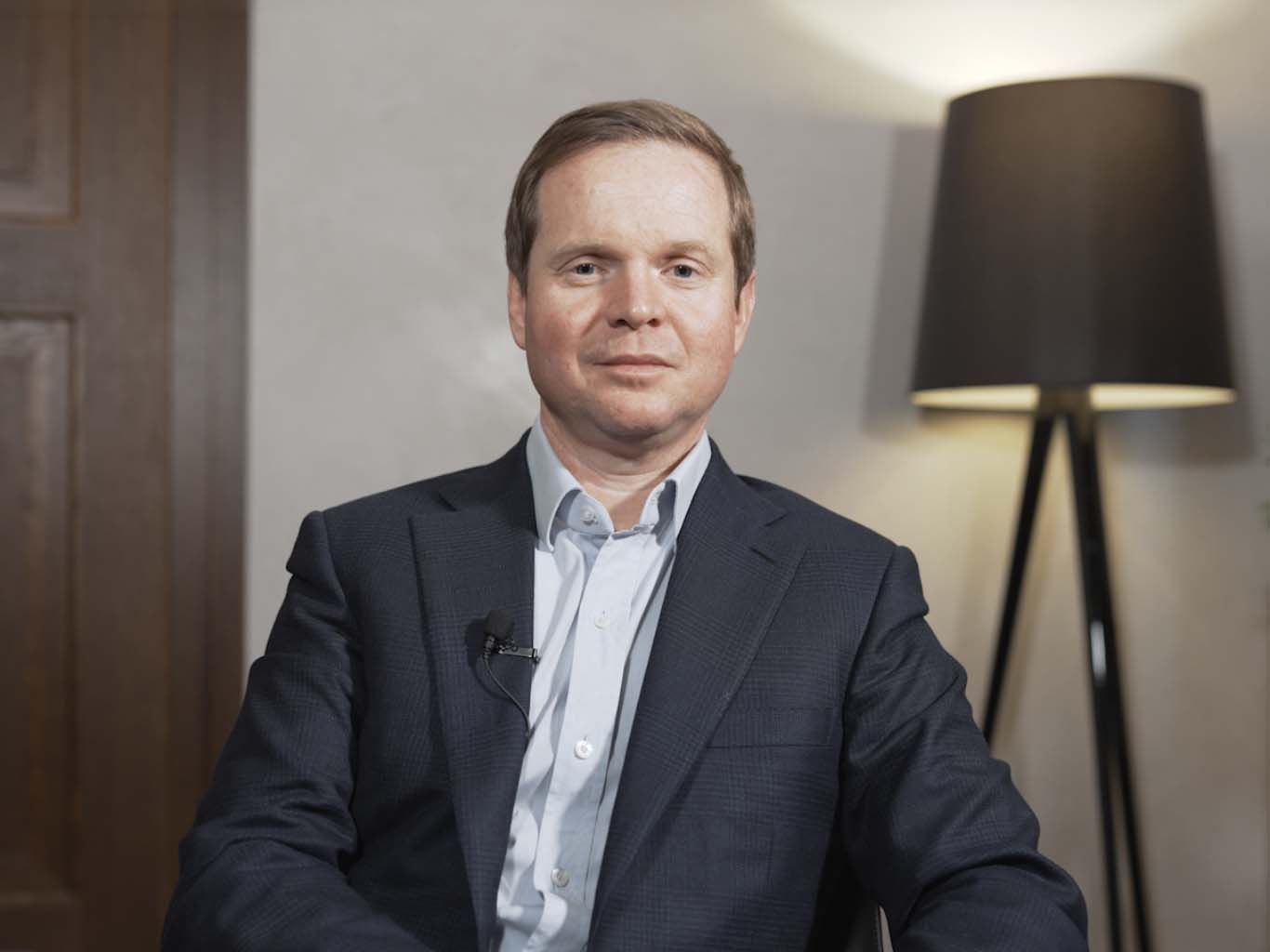
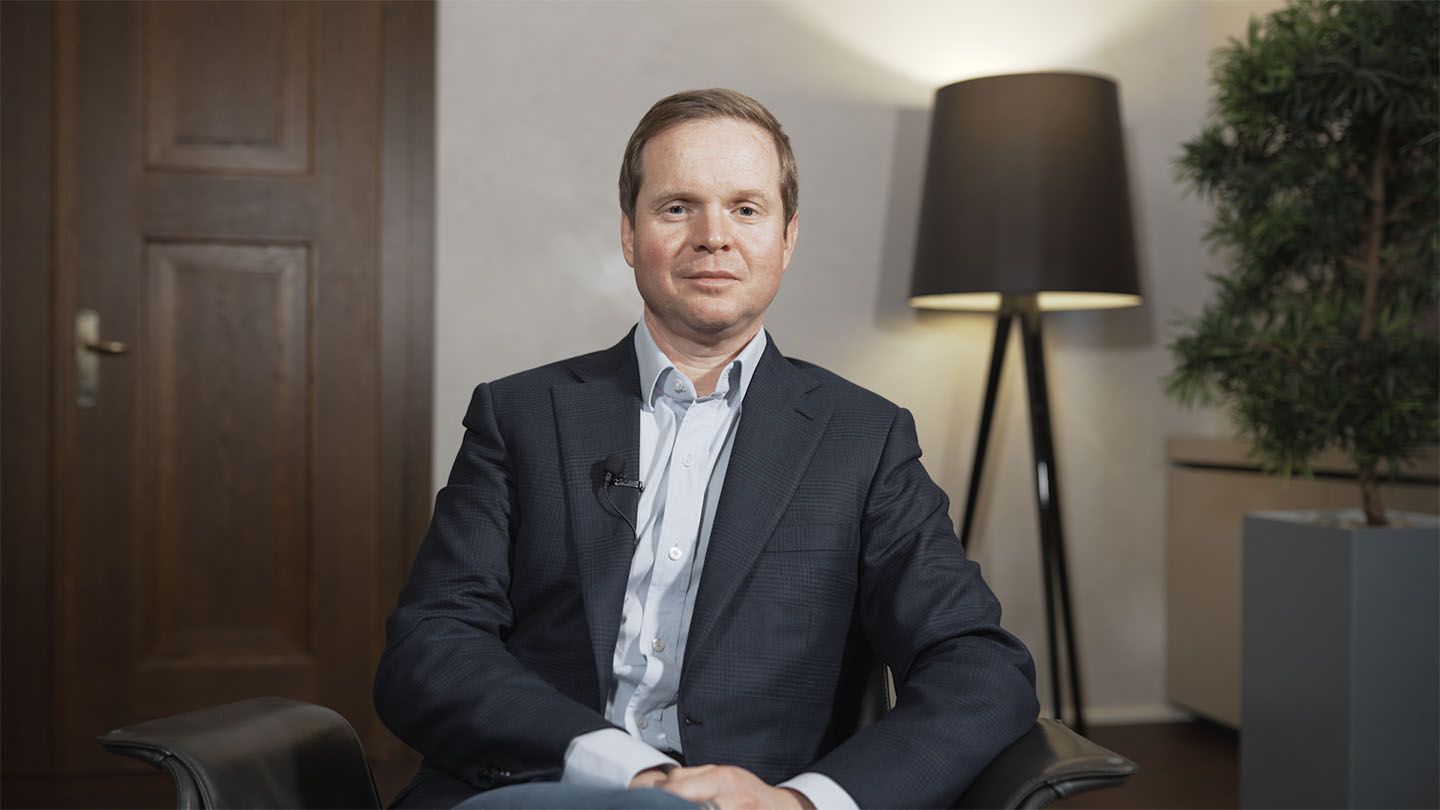
Matthias Tauber — Managing Director & Senior Partner,//Head of BCG EMESA @ BCG
About this masterclass
Matthias Tauber is a Managing Director and Senior Partner at Boston Consulting Group (BCG), where he leads the firm's operations across Europe, the Middle East, South America, and Africa. He built BCG's building materials and construction practice from the ground up, and has spent his career proving that leadership is not a talent you're born with but a craft you can learn. These leadership skills are rooted in practical construction leadership across global markets.
What This Masterclass Covers
Most people think leadership is either an art or something innate. Matthias disagrees. His construction masterclass is a practical playbook for leadership at scale, built around four themes: hire the right people, build a real team, address difficult things early, and manage your energy for the long run.
In this masterclass, Matthias walks through the frameworks and real-life situations that shaped his approach to leading organizations of thousands of people:
- Why leadership is craftsmanship, not art: something you can learn, practice, and get better at over time, just like any other skill, strengthening core leadership skills over time
- The three non-negotiables he used when building his first team, and why those early hires became the seed of everything that followed
- Why you need to build a team before you need one, even when your company is only three or four people, including in construction leadership and fast-moving environments
- Why leaders need to radiate energy, how to manage the physical and emotional side of it, and why pacing yourself matters more than pushing harder.
You Might Also Like
Match Product And Reality: Jeevan Kalanithi, CEO @ OpenSpace
Transform Culture: Dominik von Achten,CEO @ Heidelberg Materials
Mastering Growth: Sander van de Rijdt, Co-CEO @ PlanRadar
Q&A
Question: Who is Matthias Tauber and why is he leading this masterclass?
Short answer: Matthias Tauber is a Managing Director and Senior Partner at Boston Consulting Group who leads the firm’s operations across Europe, the Middle East, South America, and Africa. He built BCG’s building materials and construction practice from the ground up and has led organizations of thousands. His track record in practical construction leadership across global markets underpins the masterclass.
Question: What core principles does this construction leadership masterclass cover?
Short answer: The course is built around four practical themes for leading at scale: hire the right people, build a real team, address difficult things early, and manage your energy for the long run. Together, these principles form a playbook you can apply from early-stage teams to large organizations, including in fast-moving construction environments.
Question: What does “leadership is craftsmanship, not art” mean here?
Short answer: It means leadership is a learnable, practicable skill. Like any craft, you can improve through frameworks, repetition, and reflection. The masterclass uses real-life situations and structured approaches to help you strengthen core leadership capabilities over time rather than treating leadership as an innate talent.
Question: Why build a team before you think you need one, even if you’re only three or four people?
Short answer: The masterclass explains that early team-building creates the foundation for everything that follows—those first hires become the seed of future scale. Preparing a real team ahead of demand is especially important in construction leadership and other fast-moving contexts, so you’re ready when growth or complexity accelerates.
Question: How does the masterclass address sustaining a leader’s energy over the long run?
Short answer: It emphasizes that leaders need to radiate energy and shows how to manage both the physical and emotional sides of it. Rather than simply pushing harder, the course advocates pacing yourself so you can lead consistently and effectively over time.
Transcript
Introduction
My name is Matthias Tauber. I'm a senior partner at BCG, here in Munich today. Right now I'm leading BCG across Europe, the Middle East, Africa, and Latin America. I'm a civil engineer by background and passionate about the project economy. I'm really happy to be here today and share thoughts about leadership that scales.
I love Munich. It has many great traits — the Oktoberfest, of course. But most importantly, it's not too far from the mountains. I grew up in the very north of Italy, in the Dolomites. Mountains are part of who I am. I love them, and the fact that Munich is quite close makes it a great place for me.
I started at BCG back in 2003, and my second project was actually in the construction sector. I really enjoyed serving an industry I knew from my studies, and I've stuck with it ever since.
Why Leadership Matters
There were many defining moments in my career at BCG. One of the first was my very first placement as a visiting associate — a summer internship back in 2002. Given that I'm a civil engineer, I started off strong on the analytical side. But I had work to do in other areas. What really stuck with me from that time was the project manager leading me — someone who truly invested in me, helped me develop, and created the space for me to ultimately join the firm and keep learning. That was a defining moment very early on in my career that made a big difference.
Looking back, there are similarities between who I am today and who I was back in 2002. The one thing that has always been true is that I genuinely enjoyed learning new things — new industries, different people, different leadership styles. That was true then and it's absolutely true today. What's changed is that over the past 20-plus years, I've gone through a number of important lessons on the leadership side. And many of them do resemble the building of a venture, which I hope makes them useful for founders too.
Leadership is important to me for two reasons. First: as you grow and move forward, it makes you so much more effective. Yes, you can do things alone. Absolutely. But the day has 24 hours and the week has seven days. If you truly want to have an impact that scales, you need to get others on board. You need to build a team. You need to make sure the team works. And all of that has a great deal to do with leadership. Second: I genuinely care about people — my clients, the people I work with. I get energy and joy from seeing others grow. Leadership is a means to make that happen.
Leadership that scales is something I'm passionate about because only through that can you create massive impact. If you want to achieve something beyond yourself, you need to be an effective leader who is able to motivate others to bring that vision to life.
There are many myths about leadership. One is that it's an art and not a science. I actually believe leadership is a craftsmanship. You can genuinely learn it. I encourage everyone to spend time on it and refine their own skills. No good leader fell from the sky. People don't get born as leaders — maybe a very few do, but most leaders acquire their skills over time. Good craftsmanship can be learned.
Lesson 1: Hire for Culture First, Performance Second
The first lesson I want to talk about is hiring. When you start a new venture, a new project, a new endeavor, you need to get others on board. You need to hire. And the one point I most want to make is this: hire for culture first, and only for performance second.
Let me give you an example. Early in my career, I built the building materials and construction team at BCG. I had to hire both from within BCG and from outside — and people at BCG have many options. If you want them on your team, you need to offer something. As a civil engineer, I'm passionate about the industry, but I quickly discovered that not everyone is. So my idea was to create a team that attracted others because of its culture.
I identified three non-negotiables for everyone I brought on. First: people who take care of themselves and of each other — real people, real leaders. Second: people with a very high performance bar. Everyone at BCG is performance-oriented, but there are nuances, and I wanted people who genuinely held themselves to that standard. Third: people who could connect to the building materials and construction industry — a down-to-earth industry. I wanted people who were down to earth themselves, capable of connecting with the real world in an effective way.
Those were the three non-negotiables. I brought people on board who matched them. And with that, I believe we built a very unique culture that ultimately attracted strong people and became a flywheel in itself.
My advice on hiring: spend time on it. And think about hiring for culture — especially early on. Whenever you interview people, it's important to connect their answers to the facts on their CV or in their track record. If there are inconsistencies between what someone says in an interview and what's on paper, that's a signal — and not a good one. Connecting those dots is super important.
Culture is obviously a broad concept, but I don't necessarily think it's just about social activities outside of work. Culture is to a large degree how you think and how you go about things at work. You shape culture by shaping context — by who you hire, who you promote and for what, what you praise, and what you address when difficult things come up. Those things will be interpreted by your team, by the broader organization, and by the outside world. They will ultimately define how your culture behaves.
On the question of industry knowledge: we debated this extensively. Deep industry knowledge is sometimes important, but for the most part, I concluded it's probably not the most important criterion. It can be learned. And prioritizing it would have significantly limited our talent pool. Looking back, I would do it the same way again — and actually even more so today. With everything happening around artificial intelligence, learning ability and adaptability have become much more important in a successful profile than deep expertise in one specific domain.
One thing I learned early on from a senior partner on my very first projects: my main task on this project is to get the best people working on it. He would spend enormous amounts of time assembling the right team — not just getting individuals, but making sure the right people were in the right roles for that specific context. At the time, I didn't fully understand why. But that message stuck with me.
Lesson 2: Build a Team — You Get Individuals, But You Have to Make Them a Team
The second lesson: you hire individuals, but individuals don't automatically make a team. It is your responsibility as a leader to make them a team.
I always think about team building in two dimensions. The first is the hard side: you need to be crystal clear about roles — who does what, where the swim lanes are. This sounds obvious. It very often is not. That clarity is your responsibility to create.
The second dimension is the soft side: you need to create an environment of both psychological safety and high performance. It needs to be safe to speak up. But it should not be safe not to perform. You need to instill both of those things in the team. And the more senior the team gets, you also need to give people the context to make independent decisions.
A concrete example: when I had my management team for BCG Germany, and as I do now with the broader EMEA and Latin America operations, I always make a point of bringing the team together physically. In Germany, that was every month. Now, with people more dispersed, it's several days together three times a year. And when you design those gatherings, you need to craft the agenda deliberately to address the things I just mentioned — especially the softer side.
My rule is one third, one third, one third. When we get together: one third of the time goes to the social side, because that is the root cause of psychological safety — if you spend time together outside the meeting room, you will feel safe to speak up in front of those colleagues. One third goes to a shared agenda of topics I need to drive together with the team. And one third goes to learning from each other and understanding each other's context — because the more senior people get, the more important it is that they have shared context, that they trust each other, and that they can act independently in driving things forward.
I also had to learn something about myself: I need to balance between being supportive and being directive. Sometimes team members need support; other times they need direction. And it depends both on the situation and on the individual. I have one country head who is a strong leader overall but is facing a difficult situation — with her, I lean toward being more supportive. I have another leader in a different geography who is very self-confident, does his work well, but has a tendency toward independence — with him, I tend to be more directive. I adapt my style to the situation and to the individual.
There is no perfect team. A team can always get better. One of the things I look at as a sign of a well-functioning team: whether team members can resolve problems without me. If two leaders who run different units come into conflict and resolve it between themselves without me needing to get involved — that's a proof point that the team works.
Building a team is never done. You will have changes in the team, you will have crises in the team. This is not a one-time task — it is an ongoing investment you as a leader will always have to make. When you get questions like "do we really need to spend time on the social side, or should we just focus on getting stuff done?" — I would argue that getting stuff done involves investing in the team. If you want strong performers to stay — which you absolutely do as a young company — you need to create an environment where they can thrive. They need to perform. They need to be fulfilled and taken care of. They need opportunities.
And one more thing: we have a tendency to focus on low performers because they create problems that need to be addressed. But we sometimes disregard the high performers. Don't. Invest in making sure your high performers stay for the long run.
My advice to early-stage founders: build the team before you need one. When you have three, four, or five people, you might think: we don't need to build a team yet, we're so small. I disagree. The moment you need a team is already too late. Spend time together. Establish trust. Create a culture of psychological safety and high performance. Clarify roles. Because if there are overlapping responsibilities, those will create big problems down the road.
The very early team norms you establish will shape the culture of the company for the long term.
Lesson 3: Address Difficult Things Early On
You hired the right people. You made them a team. And then the first crisis will hit. Difficult things will happen. Your role as a leader is to address them — and my advice is to do that early on.
A couple of examples from my own experience. When I built the building materials and construction team, one of the non-negotiables was a down-to-earth attitude in interactions with clients and with each other. Sometimes I discovered that behavior wasn't always living up to that expectation — people occasionally behaving in a slightly arrogant way. My lesson: whenever I saw something like that, I had to address it right away, directly, even if it felt uncomfortable. If you don't, behavior won't change. It will perpetuate.
Similarly, as a leader at BCG, when I see high-performing colleagues who prioritize delivery over taking care of their people — who let individual performance goals overshadow the wellbeing of those in their teams — I address it early on in their careers. Feedback is a gift. You may not always feel that way, but it is. Giving feedback early, timely, and specifically is a duty.
The biggest mistake you can make when it comes to difficult things is waiting too long. What might be small and easily correctable at the beginning becomes, if left unaddressed, the root cause of a major crisis later.
Let me give you a specific example. I once had a team member who treated men and women on the team differently. I saw it, and I let it go for a couple of days because it felt uncomfortable to bring up. At some point it had escalated to the point where a female team member came to me and said she didn't feel comfortable. I addressed it — but I knew it was probably a couple of days too late. I could have addressed it earlier and created an inclusive environment from day one. Do address things early on, even when they feel uncomfortable.
Two things are critical when giving feedback. First: be timely. Don't drag it out. If you observe something, address it promptly. Second: be specific. Don't stay abstract. Point to specific situations. Point out what could have been done differently. Make it clear and actionable. That's what makes feedback truly useful — and truly a gift.
As you grow as a company, you sometimes get a senior team that gradually disconnects from the rest of the organization. It's a terrible situation when it happens. How do you avoid it? By staying connected not just to your direct reports, but to their direct reports too — by being on the ground, staying genuinely involved in operations, and occasionally skipping a level of hierarchy. That's easy when you're small; it gets harder as you grow. But it's a habit worth building early.
When I ask leaders what is the one area where they probably haven't acted fast enough, almost everyone gives the same answer: making people decisions — whether reversing a hire, or exiting someone where the performance or cultural fit isn't right. Almost everyone says retrospectively: I didn't do it fast enough. As a young founder, if there are significant issues with an early team member, address them early. It may be painful to exchange a founding team member or bring someone else in — but it's almost always better to do it early rather than too late.
A healthy culture — one of high performance, constant learning, and inclusiveness — is a good indicator of long-term success, independent of business model and market context. A high-performing culture will thrive in almost any environment.
Lesson 4: Manage Your Energy — Lead for Resilience
You hired the right people. You built a great team. You addressed difficult things as they came up. But it's still a marathon. You need to go all the way to kilometer 42. There will be ups and downs, and you will have to manage your personal energy. This is super important — because if you as a leader and founder don't radiate energy, the rest of your organization won't have energy either.
Radiating energy has multiple components — physical and emotional.
Starting with physical energy: you will need a lot of it. Make sure you sleep. Eat healthy. Exercise. It will give you more energy and make you much more effective as a leader and as a founder. I had to learn this myself. I worked hard throughout my career, especially early on. But I learned that the more I manage my own energy, the more I'm able to radiate. Taking care of myself — sleeping enough, eating well, exercising enough — is fundamental to what I do.
Physical energy, though, is only part of the equation. Emotional energy is at least as important. Successful founders and leaders are very good at managing their emotional energy through periods of crisis — and you will have periods of crisis.
Let me give two contrasting examples. The first is a CEO of a materials company going through a crisis period. He tried hard: he pointed to the controllables that were going well, he stayed in there, he managed his physical energy. He did many of the right things. But ultimately, he failed to truly convey a sense of genuine conviction and purpose. He was doing the right things, but perhaps doing them because he knew he should, not because he deeply believed in them.
The second example is another leader, same industry, during the global financial crisis — a super difficult period. He also did all the right things in terms of work ethic and self-management. But he had one thing the first leader didn't have: a very deep emotional connection to the company. He wanted to make it work not just because he knew he had to, but because he deeply wanted to make a difference — he wanted to keep the company independent, he wanted to make sure it would thrive after the crisis. He had a why.
That's the big difference. The first leader did the what because he knew the what was correct. The second leader had a why that drove him to do the right things. People see through this. They sense whether you're acting because you've learned to act that way, or because you're acting from a place of genuine purpose. A true why gives you more energy, deeper energy, and makes you more effective.
Whenever you face difficult situations, go back to your why. For most founders, the why isn't hard to find — you believe in your company, you believe in your product, you love your customers. That's a great why. Go back to it in moments of difficulty, and it will help you pace yourself, manage your emotions, and carry through even the hardest periods.
Now, everyone knows physical health is important. And yet many people still don't prioritize it. Why? Because it's hard to create the right habits. My advice: don't overthink it — just get started. And don't be overly ambitious about it either. Many leaders I work with, when we discuss exercise, immediately say: I'm going to run the Berlin Marathon this year. Very often, not a good idea — it may not even be that healthy, and it's just a stretch goal you may never reach. Set yourself goals you can actually achieve, step by step.
For me, the mountains are my way of calming my mind. I love being outdoors, ideally with my children. I grew up in the Dolomites and I've carried that love of the mountains throughout my career. It gives me energy and balance. Every year I climb one larger mountain — Kilimanjaro last year, Mont Blanc the year before. What they all have in common: you need to manage your energy on the way up. There are ups and downs. You need to pace yourself. That's not a bad metaphor for leadership.
We also do many team events in the mountains. My team members would probably say: oh God, not another mountain climb. But I feel it's a great format — you can talk, you get to know each other, you get physical activity and therefore energy management, and you create memories together.
Summary: An Integrated System
Going back to where I started: leadership is not an art. It is a craftsmanship that can be learned. I've focused on four elements of that craftsmanship. Hire the right people. Build a great team. Address difficult things early on to keep the team functioning. And manage your energy and your pace — both physically and emotionally.
You might ask: which of these is most important? I don't think any one stands out. They form an integrated system. If you don't hire the right people, there's no point in building a great team. If you hire the right people but they don't work together, it still won't work. As you continue, difficult situations will arise — if you don't address them, the team will fall apart. And if you're not managing your energy as you move along, even with a great team and the right people and well-addressed challenges, members of your team will burn out, people will leave, and ultimately you'll fail too. So the answer is you need to do all of them, and address all of them constantly.
What Keeps Me Going
My mission — what keeps me going — is unlocking potential in others. That's true when I work with clients. It's true when I work with team members. It's true when I work as an angel investor with founders. I love seeing others succeed, and I love being part of that. Sharing the lessons I've personally learned on how to lead and how to make leadership scale is a genuine passion for me.
Many young people ask me: what's your one piece of advice right now? My answer for founders and leaders in the project economy: this is your moment. There has never been a better moment to be a founder or a leader in the project economy. There is so much going on — so much capital being deployed, so much happening in the world of technology. Just look at AI. Bringing those two worlds together — the project economy and the possibilities of AI — can create a uniquely sized impact. This is your moment. Seize it.
Watch the video on YouTube.