Transform Culture
Dominik von Achten — CEO @ Heidelberg Materials
About this masterclass
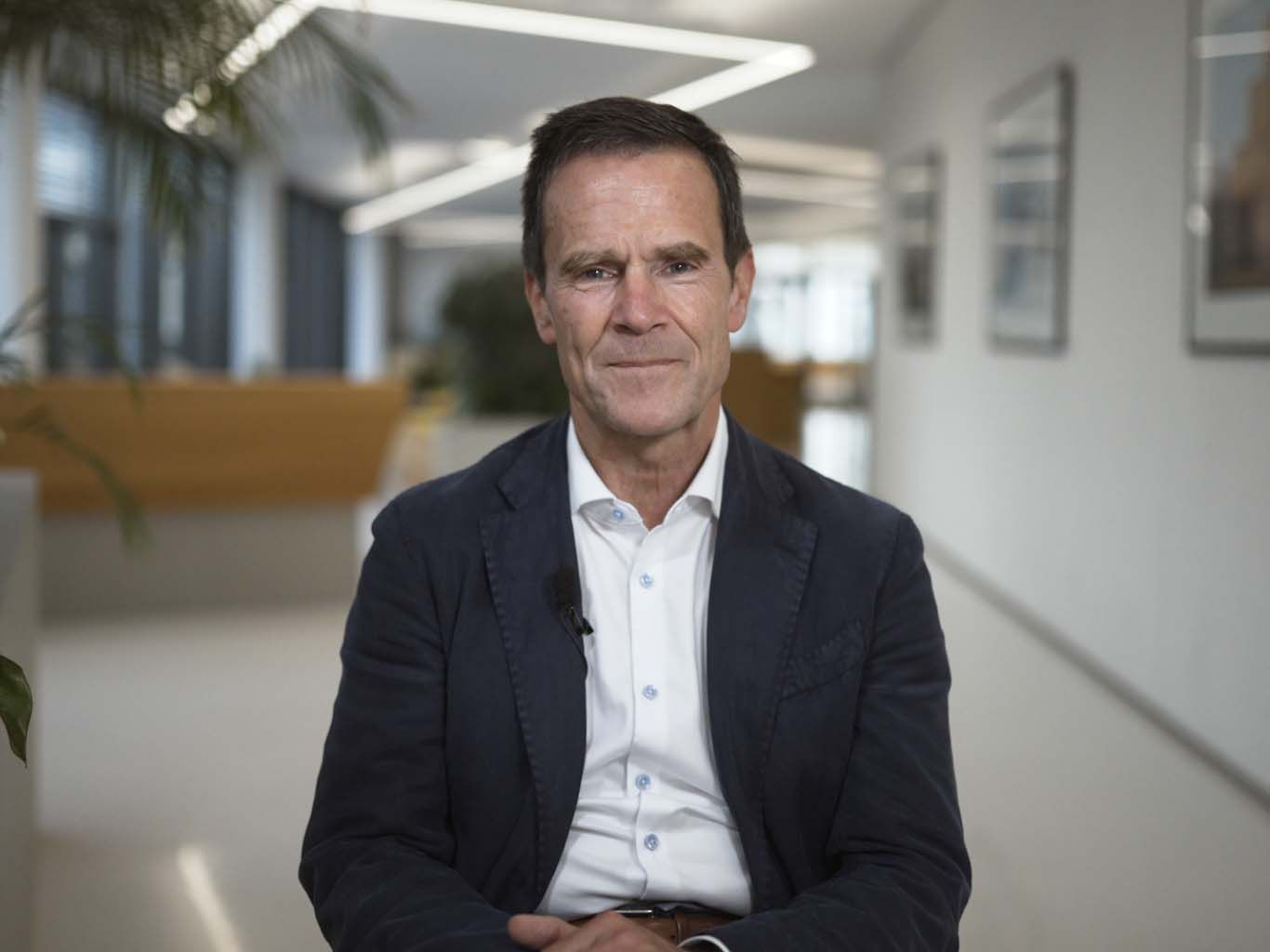
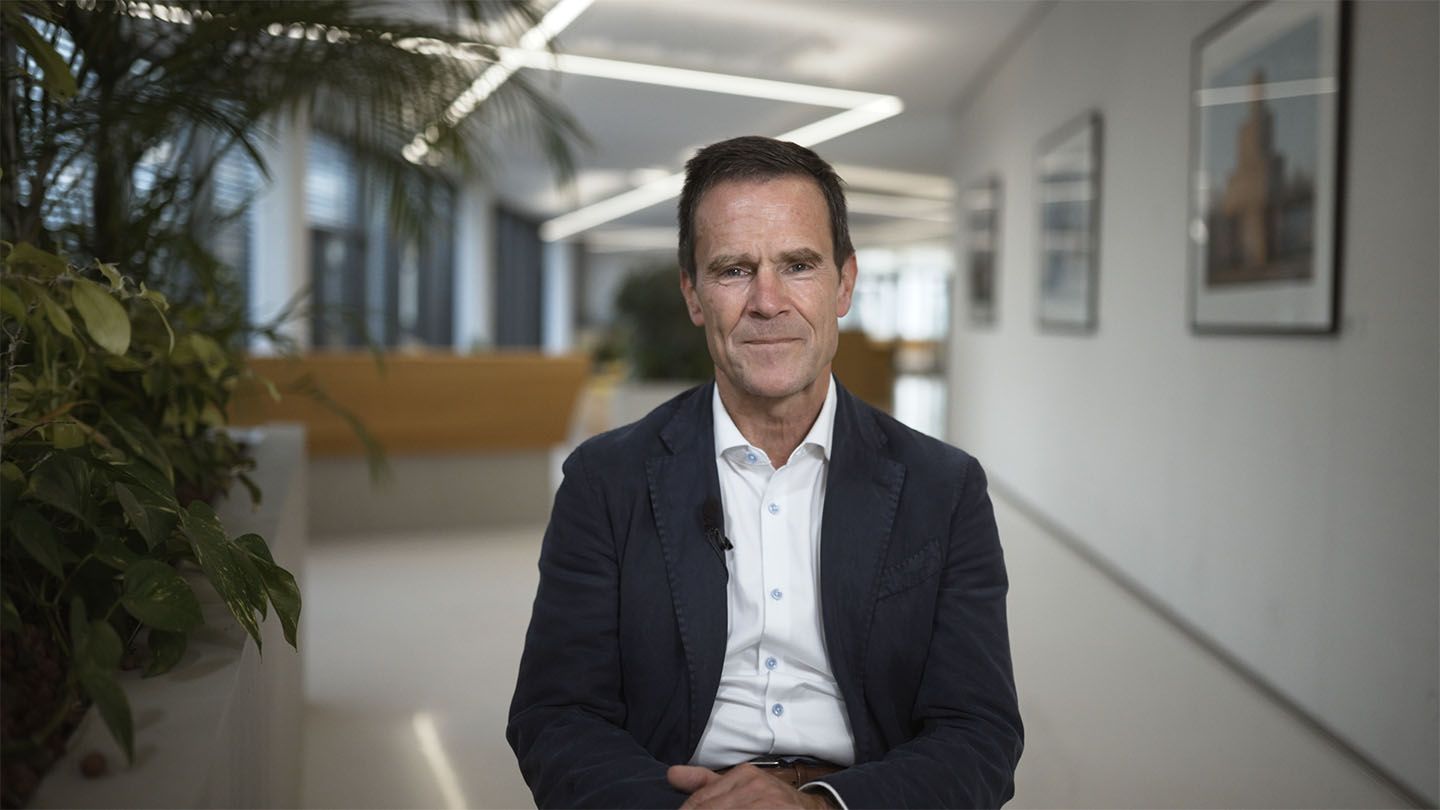
Dr. Dominik von Achten is the CEO of Heidelberg Materials, one of the world's largest construction materials companies. Before joining Heidelberg Materials, Dominik spent years in consulting before making the leap into corporate leadership, driven by the conviction that real impact comes from execution, not advice.
What This Masterclass Covers
Cement is one of the most widely used materials on the planet, and one of the biggest emitters of CO2. Many people saw that as a reason not to want the CEO job. Dominik saw it as the biggest lever for real transformation. That mindset sits at the core of this entire masterclass. In this masterclass, Dominik walks through his path from consulting into industrial leadership, and shares what it takes to drive transformation at the scale of a global materials company:
- Why he saw cement's carbon footprint not as a problem to avoid but as the biggest strategic opportunity in the industry
- Why innovation needs to be thought end-to-end, from capture to transport to storage, and why it has to work as a business case, not just as technology
- The difference between giving advice and actually getting things done, and why that distinction defined his transition from consulting to corporate leadership
- Why big innovation projects need both allies and persistence, and how he navigated years of skepticism from shifting governments, partners, and internal debates
- What it means to lead a company where the transformation agenda is both the biggest risk and the biggest opportunity at the same time
You Might Also Like
Leadership That Scales – Matthias Tauber – Managing Director & Senior Partner @ BCG
Turn Construction Into Product – Jan-Hendrik Goldbeck – Co-CEO @ Goldbeck
Make Decisions That Stick – David Rockhill – Global Head of Advisory @ Arcadis
Transcript
Introduction
6 to 8% of the carbon emissions globally come from cement. You can see this as a problem, but if you turn the coin, it can also be a massive opportunity — because obviously, if you solve the problem, you have the biggest lever for real change and real transformation. Because in the end, we all want to leave a footprint. We all want to leave something where we can look back and say: this is where we really shaped an important topic.
My name is Dominik von Achten, CEO of Heidelberg Materials. I was born in Munich, but then moved with my family up north to a place called Dortmund. And then, about 20 years ago, I moved back down south and joined Heidelberg Materials. I'm now living in Heidelberg.
Entrepreneurial Background
I come from a family with an entrepreneurial background. Both on my mother's side and my father's side, there are a lot of entrepreneurs — smaller and mid-sized. I think that's something I took away from home, from my upbringing. As an entrepreneur, you're always on — 24/7. That's something I certainly learned at home, and it's very similar to my CEO job today.
The other point I think is important — and this I actually learned from my grandfather, who was also an entrepreneur — is to never be satisfied with what you have reached the day before. That's quite an interesting quote that I still carry with me.
Education: Law & Economics
I studied law and economics in Freiburg, which is about an hour south of Heidelberg. You can argue: why both? Honestly, I felt economics alone was more about practical application — something you can do later. On the legal side, you learn structured thinking and some focus. That's why the combination was quite intriguing to me. To then actually practice law was not my favorite thing — the content was interesting, but from a people-interaction perspective, it was pretty dry. That's why I turned back toward economics.
Studying economics gives you some useful foundations — the maths side of things, financial accounting, some good basics to carry along. But to a large extent, in the end, it's practical experience that really fills the gaps. That's why I very much value and remember all the internship stages and learning-on-the-job experiences I did during my studies. Those were probably the most formative moments of my time as a student.
Career Path: BCG & the Move into Corporate
Once I finished my studies, the question was what to do. One idea was to become an assistant to a board member at a larger company — something I'd gotten a taste of through an internship during my studies. The other path, as someone with a legal background, was to find the fastest possible learning curve. That's how I ended up in consulting — at BCG.
Even within consulting, you run very different types of projects. Some are very long, and those taught me the lesson that at some point you need to be diligent and really see things through. The shorter ones taught me to switch on quickly and deliver fast results under serious time pressure. The combination was an interesting training ground for a corporate career later on.
After quite some time at BCG, you inevitably ask yourself: do you want to do this for life, or do you want to make a different experience? That's when the opportunity at Heidelberg Materials — then still HeidelbergCement — came along. During my BCG years, especially my time in New York, I did a lot of post-merger integration work — combining large companies after acquisitions. And one of my clients at the time was HeidelbergCement, which had just completed a public takeover of one of the largest construction materials companies in the UK. It was a fantastic chance to transfer my know-how from BCG into a corporate career — because one thing is not so easy: stepping out of consulting into a corporate role. There are good examples of it working, but culturally it's not always straightforward.
I had already done a couple of construction and construction materials projects during my BCG time. That's how I, as a young partner, ended up with Heidelberg Materials as one of my first major clients. When they came along and asked whether I'd like to join their board, it felt like a natural opportunity to take. It's always a very personal decision. You get soft knees — leaving a ten-year consulting career, a successful one. You don't exactly know what's on the other side, especially going into a large corporate. But I found it genuinely interesting to just be exposed to something new. And so I went.
As a consultant, you always ask yourself: are you really burning to give advice, or are you burning to get things done? In a corporate career — especially in a CEO position — you can focus much more on getting things done, driving impact, driving scale. That's something that really intrigued me, perhaps also going back to my entrepreneurial background from home. And that's how Heidelberg came along as one fantastic opportunity. I'll be honest: from the outside — gray powder, dusty, rusty business — you could argue this wasn't the most glamorous corner of the corporate world at the time. But it has certainly turned into something super exciting over the years.
Consulting vs. Corporate: Key Differences
There are clear differences between consulting and corporate careers, alongside some similarities. Both are economically driven environments, both vibrant in their own way. But there are at least three meaningful differences.
First: P&L responsibility in a corporate job is something you don't necessarily have in consulting. Second: the difference between giving advice and really taking action — seeing the implementation and being responsible for the impact. That's the second clear distinction. And third: in corporate jobs, you're working with people from all different backgrounds and nationalities, and you have to get results together with them. That's something I genuinely love as an exposure to people — and it's something you can probably find more of in a corporate job than in consulting.
Taking Over as CEO in 2020
I actually found out about becoming CEO at the beginning of 2019 — in corporate jobs you typically know a year in advance. And I thought it was very important to use that year-long run-up period before formally taking over. Because remember: in this case, it was a very special takeover, one I'll probably remember all my life — because three years into the job, Corona came up.
I took over on February 1st, 2020. The first Corona case had already happened at the end of January. And then it really broke out two or three weeks into my new role. That was a fantastic welcome. When I started, we had one open town hall at the beginning of February. But when the lockdown came, thankfully we had introduced Microsoft Teams about a year earlier. That really enabled all of us to communicate — not only internally within the management board, but globally with our employees. Sometimes you get lucky, but that was critically lucky and critically important to be able to steer the company through those difficult times.
During 2020, I remember in the summer we ran a very drastic cost reduction program, because it wasn't clear what was coming. 2020 was rough. But already in the second half, things came back a little. And the most important thing for us as a company — and for the industry — was that construction sites never closed, because construction mostly happens in the open air. Politicians helped us keep construction sites open, and that was basically true around the world, which kept our business running.
We then decided in the summer of 2021 to announce our strategy running through to 2025. That strategy laid the foundation for the transformation from HeidelbergCement to Heidelberg Materials. The change in name was only the outcome of a deeper transformation — with two key drivers: decarbonization and sustainability on the one hand, and digitalization on the other. Those were the two legs the transformation was built on.
The Decarbonization Opportunity
When I took over as CEO, everybody said: Dominik, are you really sure you want this job? The lemon has been squeezed, efficiency has been done. And here you go — you're in a polluting industry. 6 to 8% of global carbon emissions come from cement. Former colleagues from BCG told me I was crazy.
But here's the interesting thing: you can see this as a problem, or you can turn the coin. If you can solve the problem, you have the biggest lever for real change and real transformation. That's perhaps a natural tendency of mine — I look at opportunities rather than problems.
In 2021, we committed to deep decarbonization — no offsetting. That was an interesting strategic decision: we explicitly decided not to allow certificate buying or any form of offsetting. We want to deeply decarbonize. Yes, you can reduce the carbon footprint of cement by adding secondary materials and replacing fossil fuels with alternative fuels — and everybody in the industry does that, some faster than others. But for me personally, it was really important to plant a flag at net zero. Because once you've done that, it's just a matter of time and resources to solve the problem at very large scale.
The Brevik Carbon Capture Project
One of my very first major decisions in 2020 was to back what became a landmark project: the carbon capture and storage facility at our cement plant in Brevik, Norway. The project had already been going on for 16 or 17 years, but it had been lingering along. During 2020, we got serious momentum around it. By the end of 2020, we took the final investment decision — one of the largest CapEx decisions the company had made at that point — with significant funding support from the Norwegian government. The project was truly kickstarted. For me, that was — in the language of my kids — a mega-exciting moment. It pointed the industry in a fundamentally different direction, and I was proud to be a driving force behind that.
Our idea now is to scale up: to increase the number of carbon capture projects, bring this to larger scale, and grow our evoZero product — our cement produced with carbon capture. That's my nature: to try and do things at scale, at pace.
This was the first facility of its kind — essentially integrating a chemical plant within a cement plant. Carbon capture as a process was already well known in other industries: chemicals, steel, power generation. But it had never been integrated into a cement plant. The integration between the carbon capture unit and the 24/7 cement production process — in a plant that's more than 100 years old — was the genuinely tricky piece.
The political process was remarkable. The energy minister of Norway told me at the opening ceremony that he had been involved with this project 20 years ago, in a very different role. The project went through three different Norwegian governments — two socialist, one conservative. Any one of those governments could have killed it. Any person inside our company could have killed it. And yet here we are. That tells you something about the diligence, focus, and ambition needed to carry a project like this through. I have the highest respect for our project team on the ground who navigated that entire journey.
These large projects come with a lot of opportunities, but they also come with a lot of risks. Although we had a funding agreement with the Norwegian government, we all — as project partners — had the responsibility to bring this in on time and within budget. That's easier said than done. As always in these projects, there are tough discussions with project partners and with different people internally. But in the end, the idea of making this moonshot project happen together is what glued everybody together and made it happen.
Building Allies & The Digital Twin Training Center
As always with innovation projects of this scale, there are a lot of fans — but at least as many skeptics. Within our company, there were people who thought this was a great idea, but I would argue the majority was very skeptical at the beginning. You have to build allies, one by one, over time.
I remember very well when we integrated the digital twin and training center in Norway. That's where we started bringing in young talent — people who called themselves "carbon capture nerds." We hired the first 30 or 40 young talents to drive the plant to the finish line and get it operational. The training center was critical, because the carbon capture unit is a completely new type of integration with the cement plant. We needed to bring in know-how from people experienced in running carbon capture operations — but there was nothing for them to train on in the real world. So we built a digital twin and essentially ran a simulation — almost like a computer game — with them, to learn the process, understand the ups and downs, the risky parts, and the opportunities. I think it was a really smart decision by the project team to establish that early on.
Thinking End to End
There is no secret sauce for everything. In many startups, and it's no different in corporates with very innovative projects, you pivot your way to the end. But what has helped me personally is to really think the project end to end.
Keep in mind: this is a 24/7 material flow — both in terms of cement production and CO2 production. If you don't manage that 24/7 material flow, there is no path to Rome. So we started very early to think this project through both end to end and at scale. Just proving that something can technically be done doesn't really get me out of my seat. That's a necessary first step, but that had already been proven before I arrived at Heidelberg Materials. For us, the chance was to say: it technically works, we have the funding in place, we have the end-to-end process set up — now it's about execution: getting the project running, getting it producing, and then scaling it to additional projects.
It's a little similar to what we all learned during Covid. There was an interesting example: a couple of companies had no idea how to produce the vaccine, but go back and look at who succeeded and who didn't. To the best of my knowledge — and I have no medical background — it was very much driven by which companies were able to pull off the full supply chain. That's very similar here. If you capture the CO2 but don't know what to do with it afterwards, it doesn't help you at all. In our case, we have to put it into a pipeline, onto a ship, from the ship into a pipeline, to pump it below the seabed — together with our partners at Northern Lights. If you don't think end to end, you can spend €300 or €400 million on the carbon capture unit and the CO2 still evaporates into the air.
I really learned a lot in terms of focus: in the end, results depend not only on a great technical idea, but on thinking all the way from the original idea through to customer delivery. And ideally, that means a solid business case — because if innovations are not a viable business case, from my perspective, they will be very hard and much slower to scale.
Commercializing evoZero: A New Product, A New Customer Base
One of the details that was particularly important was the end-to-end commercialization piece. I remember many investors asking me at the very beginning: Dominik, have you put an IP on the carbon capture technology? My answer: I don't want an IP, because I'm pretty sure the industry is so large and the technology will evolve so fast that we basically can't keep up with it. And frankly, the right owners for that IP are probably elsewhere — it's a technology that lives in the chemical plant world.
The second critical piece was the commercial side of things. Remember: for centuries, we came out of commodity sales. In commodities, you sometimes don't even sell — you distribute. Now the team really needs to sell. They need to explain the value we are driving with this product to our customer base. That's a completely different skill set — it needs a lot of internal training, and in some cases, new people added to the team to drive the commercialization. Because only the technical solution plus a real commercial approach will make a solid business case.
I'm never fully happy with what's been achieved — it can always be better than yesterday. But in this case, two things needed to come together: first, is the project technically working? And second, is it commercially working? That's what we came up with by developing evoZero — a completely new product. Traditionally, Heidelberg Materials was not known for strong branding or marketing. But we created a completely new product, gave it the name evoZero, and marketed and sold it to a completely different customer base than we were traditionally used to.
We deliberately pivoted to a different customer base — because we didn't want to sell evoZero only to our existing customers, but to open up new customer bases who could be interested in and benefit significantly from this product.
Moments of Pushback
That's what really gets me going — pushing through when people push back. I remember a couple of particularly rough moments. First: before the investment decision at the end of 2020, there were some very tough discussions within the management board to get going. Second: the commercialization debate — because a commodity sales force comes with completely different arguments than what you need to actually explain and sell the value of this kind of product. And third: once you try to scale the learnings from Brevik into other carbon capture projects, you have to fight end to end for each business case, one by one. Yes, Brevik is moving in the right direction. Yes, Brevik has proven it can be done at scale. But every new project will again face challenges — internally and externally — before it gets going.
Technology is Only 30–40% of Success — People Make It Happen
It's clear that for these projects, the technology needs to work. But technology, I'd argue, is only maybe 30 or 40% of the success. In the end, it's the people who make it happen — or don't.
We were very deliberate about picking the right people internally for this project. We picked very experienced people who had the knowledge and track record, but also — and this is crucial — an open mind to do something genuinely new. That combination is not always a given. And secondly, we brought in people from the outside. If you try something new, you have to be open enough to say: we don't know everything — we need external know-how to complement our team. That's why we started hiring experienced project managers from the oil and gas industry, which had already proven that carbon capture can be done at scale.
The third element is forming a real team out of those individuals — because one great individual alone will never do the trick on a project like this.
Whenever you try something new, it always comes with risk and uncertainty. And those two things are typically things that human beings don't really like. Engineers, without any disrespect, don't necessarily like to take risks or live with uncertainty. So that combination needed to be actively overcome — by bringing in outside perspectives, but also by constantly giving our internal colleagues the opportunity to prove to themselves that this can be done. That's the ground you have to prepare to make a project like this a success.
Leadership: Questions Over Answers, Energy Over Micromanagement
As a leader, you have to ask yourself: how much risk do you want to take? If you're a very risk-averse leader, it's not good advice to push people into roles they don't want. But if you're a risk-taking individual, the upside is enormous — if you find people who are genuinely burning for the job, even if they don't yet have all the experience, they can go a very long way.
I've had great experiences putting very experienced people into new tasks and turning them around for something different. That's one important piece — particularly in a corporate environment. And on the other hand, bringing in very young talents who don't have the experience but nudge the experienced ones to move in different directions, at different speeds, using different processes to arrive at the finish line.
The easiest tool for me as a leader is to ask questions rather than give answers. As a CEO — as any leader — you can sometimes feel you need to have all the answers. But if you ask the right questions, it sends a signal to your people: now I need to get going, now I need to come up with my ideas, I feel empowered to contribute. It starts with that simple thing.
I'm not a micromanager — I'm certainly in the other camp. But you still have to check regularly: are your core team members on the right track? If they're not, you help them get back on track. And if they can't find their way, you have to snap your fingers and say: this doesn't work — we need to turn around or even stop. Because otherwise, the whole momentum goes in the wrong direction.
Energy and Curiosity as Leadership Principles
In the end, for a team to move mountains, it's all about energy. You need to give people the right strategy — that's clear. But then they need the energy. You all know those meetings where, after half an hour, everybody is looking at their laptops or drinking coffee. The body language tells you: zero energy in the room. But if everybody after 45 minutes is still genuinely excited about what's happening — that's where energy is created.
The second ingredient is curiosity. Going back to my very early point: fast learning, but learning every single day — and that includes me. If we are both energized and curious to get better every day, that's good enough.
My mantra for Heidelberg Materials — what we say in our new strategy — is: this is where you make the material difference. Because in the end, we all want to leave a footprint. We all want to look back and say: this is where we really shaped something important.
And again: this product we produce — cement — is the second most widely used product in the world after water. It's fully recyclable, but it has a carbon footprint. And if we can solve that as a team, as the first company to do so globally — that's an exciting story. One that we can tell, and make happen.
Pride, Responsibility & What Gets Me Going
I lead a team of 51,000 people around the world. That is a responsibility — but it's a great honor. And going back to energy: it energizes me more than anything else. I don't feel a burden of responsibility on my shoulders. I feel the pleasure of being able to crack that big nut, at the helm of Heidelberg Materials.
What makes me really proud is laying the foundations for the generations to come. I have four kids — and in the end, that's what gets me going. The two pillars of our strategy — sustainability and decarbonization on one side, and digitalization on the other — are something super exciting. We haven't talked much about digitalization, but I can tell you that what we have created as a digital platform for the industry — together with our partner Contimod — is the foundation for the generations to come to stand on and drive this industry truly forward.
What I Would Tell My Younger Self
If I could whisper something into my own ear, going back to 2007 when I was at the start of this journey: there is much more opportunity than you think. Very often in a corporate job, you come across a point where you think: this is about it. Everybody is pushing back, this doesn't work anymore. Here's a challenge, here's something that couldn't work. But in hindsight, the learning curve — especially through the decarbonization journey and the digitalization journey — is so damn fast. Much faster than we would have thought at the very beginning. That's what I would tell myself.
What really gets me going as a leader is cracking the biggest nuts. If you can say that after a long career, I think that's what really gets you out of bed.
Would I Do It Again?
This may sound a little crazy, but absolutely — I would do it again. Would I do it exactly the same way? Probably not, because I have learned so incredibly fast throughout this career journey. But I'm really thankful for having gotten to the position I'm in, and for having a fantastic team of 51,000 employees around the world shaping the future together. I have no regrets whatsoever. It's a lot of joy when I look back at it.
Watch the video on YouTube.