Mastering Growth
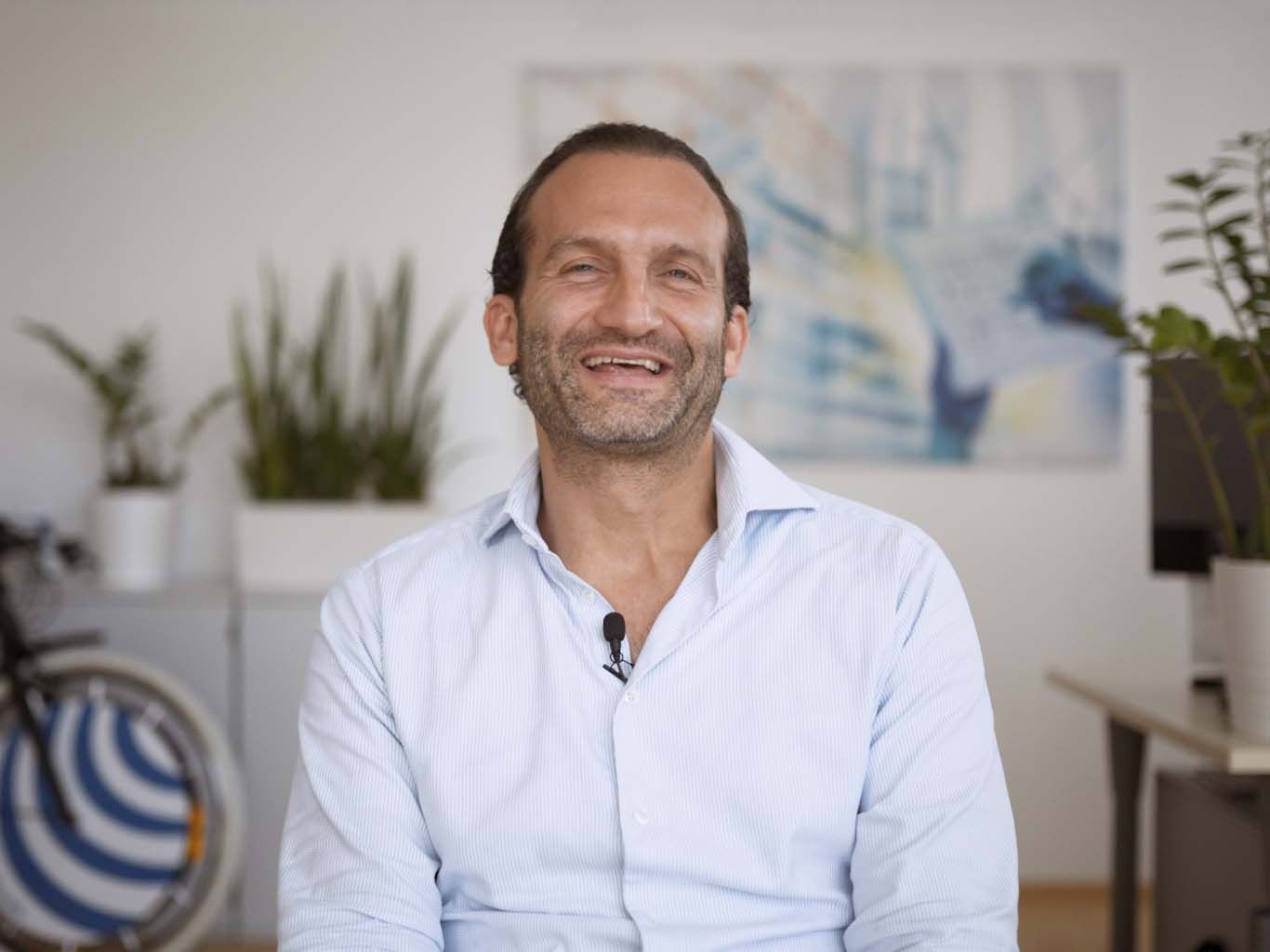
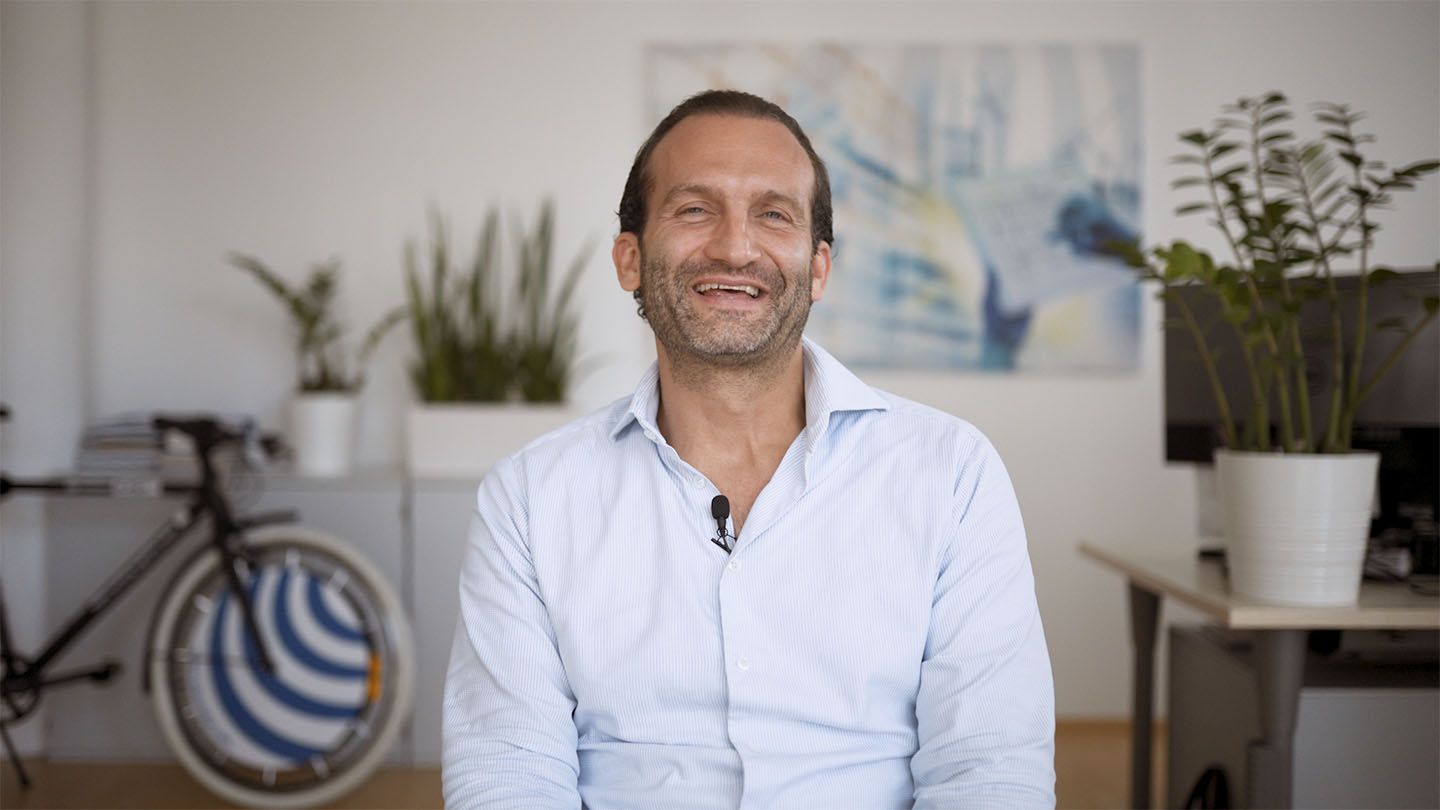
Sander van de Rijdt — Co-CEO @ PlanRadar
About this masterclass
Sander van de Rijdt is the Co-Founder and Co-CEO of PlanRadar, one of Europe's most widely used construction and real estate software platforms. Together with his co-founders Domagoj Dolinsek, Ibrahim Imam, and Constantin Köck, who spent more than ten years as a construction site manager, Sander built PlanRadar around a simple observation: the construction industry was still running on pen, paper, voice memos, and Excel lists that nobody trusted.
What This Masterclass Covers
When Sander first saw the problem, his reaction was: this must already exist somewhere. It didn't. That gap between what seemed too obvious to be real and what turned into a massive opportunity is at the heart of this masterclass.
In this masterclass, Sander walks through the full PlanRadar journey, from first insight to scaling across markets, and shares what he's learned about building B2B SaaS in an industry that wasn't asking for software:
- Why the best opportunities sometimes look too simple to be true, and how a problem that "must already be solved" turned out to be wide open
- How to build a product around a very specific operational pain point instead of abstract innovation language
- What founder-led sales looks like in construction, and how to transition from doing everything yourself to a real go-to-market engine
- How having a co-founder with 10+ years on construction sites shaped the product, the pitch, and how customers responded from day one
You Might Also Like
Leadership That Scales – Matthias Tauber – Managing Director & Senior Partner @ BCG
Turn Construction Into Product – Jan-Hendrik Goldbeck – Co-CEO @ Goldbeck
Build Software For The Field – Florian Biller – CEO @ Capmo
Transcript
Introduction
Hi, I'm Sander, one of the co-founders of PlanRadar. I'm sitting today in our headquarters in beautiful Vienna — if you ask me, the most beautiful city in the world. At least the city itself, that you can discuss. But yeah, I'm really happy to have the possibility to share with you today all the things I've learned, all the mistakes I've made, and what drives me and PlanRadar right now.
Entrepreneurial DNA & Early Beginnings
My career started very early. Already as a young boy, I tried to earn a little bit of money — collecting and selling golf balls or tennis balls. I somehow had this entrepreneurial DNA. And thinking about my family: my father was an entrepreneur, my two grandfathers were entrepreneurs, my mother as well. So we somehow have this DNA in the family.
The business model behind selling tennis balls or golf balls is simple: when you're on the courts, the shop is always a little bit away, and people are lazy — they don't want to go there and buy. But if you're young and sitting there selling to them with a little markup, they'll do it. The golf ball thing was even better because I was running around with my cousins, collecting all the balls that people didn't always hit in the right direction. You could sell them for about 10 to 15 shillings — roughly €1 nowadays. I had a lot of cousins, so I sent everybody out collecting, and I placed the youngest one at the first holes because they looked sweet and people would buy from them. I was doing roughly €100 a day, which was really good business for a young kid. Unfortunately, my cousins became mad because I was keeping 90% and only giving them 10%. So I also learned very early that communism is not good.
First Startup & Early Lessons
When I first told my parents I was founding a startup, they were very positive — okay, what are you going to do? My father challenged me a lot and asked the right questions. When you come from a demanding environment, a little bit of pushback is motivating. But in general, there were no big concerns — they knew me and understood that I was going to go in that direction.
The first real startup I founded together with Ibrahim, who is also one of the co-founders at PlanRadar. What we were doing was an e-procurement, e-tendering, and e-sourcing platform — basically in the area of procurement. At the time we called it "Demand Solution" because it was online; words like "SaaS" didn't exist yet. We created a platform where the cheapest or best supplier would get the order — something like eBay, but with falling prices. And we were doing this not only for commodity goods where only price matters, but also for higher-value goods where many different factors are important for decision-making. We built a system that could measure the preferences of procurement people and automatically evaluate incoming offers, so suppliers could compete on many factors — not just price, but also quality, service levels, and so on. We created this kind of dynamic and automatic pre-negotiation system. That was our first startup.
It was completely different times — there was no VC capital or business angels, at least not in Austria. So we founded two other companies on the side to fund ourselves and the software company. We had a sales agency with around 70 to 80 people selling everything — B2B, B2C, door to door, point of sale, pretty much everything. This was very good for cash flow. We also founded a software development agency, because on one hand we were developing our own stuff, and on the other hand we started acquiring software developers from Egypt. We had that resource and said: okay, we could also do projects for other companies. That was additional cash flow.
We also developed a content management system, which we sold, then bought back — and it's still there today, running a lot of the websites for the Rewe Group, even though it's quite old by now. What's important here is that yes, we did a lot of different things. We learned a lot, always driven by cash flow and revenue. But at the same time, this was also a distraction — because if you're not focusing on one thing, it's always hard to really grow and drive it forward.
I see this challenge with a lot of entrepreneurs: when you have this DNA, you see a lot of opportunities, and sometimes you jump on too many. Sometimes you need to say no. In our first startup, we never said no. Revenue? Yes, let's take it. And then there was the problem: our target was to build a product — an e-procurement platform. Then our first big customer came in, OMV — something like Shell in oil and refining. They said: that's nice, but we need a little bit of this and a little bit of that. So we ended up customizing the product for different customers, and the entire company ended up being a service company. Don't get me wrong — we were doing good revenue, selling our hours. But the product was no longer able to scale.
This is something all software founders need to understand. The target is to find the right product where you can earn money while people are paying license fees regardless of what you're doing — that's where you need to go. With a service business, yes, you can earn good money, but there's always project risk, you need more people to scale, and so on. This was a very important lesson, because later at PlanRadar, we also had big requests early on from large listed companies who said: yes, it's good, but we need this additional service, this customization. And we just said no. They were even surprised: "Look, price doesn't matter — you can see what the costs are, but we need this." And you know, the only reason we were able to say no is not because we're so smart, but because we had already experienced that mistake in the past and seen how it limited our first company.
How PlanRadar Started
The first time I heard about the idea for PlanRadar, I think it was around 2014 or so. Ibrahim and I had been in Silicon Valley with one of our previous companies, where we met Franz — who is the best friend of Domagoj, one of the other co-founders at PlanRadar. Back in small Austria, Franz connected us to Domagoj, and in a small country like Austria, not many people had already done B2B sales at that point.
Domagoj was the one with the idea. Having worked for more than ten years as a site manager and construction manager, he really understood the pain — seeing every day how inefficient the tracking of information was, with all this pen-and-paper-driven stuff going on. At the same time, smartphones and apps were becoming popular. So he had the idea and started pitching it to us.
The first time I heard it, I thought: okay, this is nothing more than a ticketing system. We've had those in IT for 20 or 30 years. I couldn't believe there was nothing like that in construction and real estate. But there was nothing. So we started to build it.
We discussed regularly with Domagoj and agreed: let's build an MVP first. He brought in Klemens, who's from the same village — a very innovative village with a lot of entrepreneurs, by the way. And then Konstantin, who was working with Klemens at Pfizer at the time, came in as well. They built the first version. Then Ibrahim and I stepped in — we had sold one of our previous companies and were in that waiting period for the second tranche to come through. The timing was good. So all five of us went all in and started building the company.
Originally, the product was even called "Defect Raider" — we were just targeting one niche in construction: defect management, also known as snagging or punch lists. It was only later that it became PlanRadar and we expanded across the full building lifecycle.
What PlanRadar Does
On a high level, what we are doing is exchanging pen and paper, voice recordings, and photographs for mobile devices. But when you look in detail, what we're changing is the entire approach to how people track information, how they create documentation, and how they communicate and collaborate with each other.
When we started, the entire industry was heavily driven by pen and paper — 60 to 70% of the companies we were talking to were covering the processes we solve using pen and paper. As stupid as it sounds, just pen and paper. Even today, it's still 50% or more, depending on the region.
The process we were replacing looked like this: people have these very large blueprints where they take notes, take pictures, do voice recordings, then they build an endless list which they share via email — and then nobody looks at it, and you see the same issue every week. We said: look, we put all of this into an application. You have your smartphone or tablet in your pocket at all times. Everybody works on the same plan version, the same level of information. You can reduce mistakes, miscommunication, and all of that.
From a high level, it sounds really perfect and you can save a lot of money. But for the users themselves, the first reaction was often: why should I do it? We heard a lot of: "I don't believe in that," or "What is this strange internet thing? That will never work."
Early Sales & The "Silverback" Moment
In the early days, all five co-founders were doing sales. We did everything ourselves. And when you're in a sales pitch at the time, you're sitting in a room with four or five construction guys listening to you. You always see that one guy with a lot of experience, sitting back and nodding — I used to call him the silverback. That's the one who needs to say yes. You can feel throughout the entire presentation that he's not really into it.
Then we found a key trigger. In construction, project managers and quality managers walk the sites all week long. On Thursday evening and Friday, they're back in the office and they start typing up reports and protocols — a very annoying task. So we always showed them: look, you walk the sites, you track all the information, you create the tickets — and now when you need to create your report, you just press this button and everything is done.
And then we'd ask: Mr. Schneider, what would you prefer on Friday afternoon — to drink a beer with your colleagues or to do your reports? The answer is pretty obvious. And then the magic happened. They'd say: wow, this saves so much time, we need this. So the trigger for them wasn't all the sophisticated workflow optimization we were building — it was just the automated PDF report generation. Maybe not rocket science, but it was the thing that converted a lot of people in the very beginning.
Market Validation & Early Traction
Even though we believed in the company from the start, we wanted to validate the market properly. After the beta phase with around 40 to 50 companies — nearly all of whom stayed on as paying customers — we said: okay, let's do a broader market test. We started calling around 400 different companies in the construction industry via cold outreach. We had our SDR process supporting that, drawing on our background with the sales agency.
I still remember the results: there was a 69% positive response rate. I thought: how is this possible? There must be an error. Normally you'd expect around 10% to be good. The 69% didn't mean 69% bought — it meant 69% said yes, they had no solution in place for this challenge, and they were willing to talk. We even converted 11 or 12 customers directly from that campaign. That was one of the first moments where I said: okay, the market is really there. The opportunity window is open. Even construction guys — who aren't typically used to being contacted through outbound — were responding.
Another trigger was when we set up the website and online payment system, and suddenly people from South Africa, the UK, and Australia were signing up on the website, swiping their credit card, and starting to work — without us ever having spoken to them. That's the real proof of market, because it means you can scale. In the beginning, when you sell in person, people buy partly because of you, because they trust you. But when someone signs up having never met you or spoken to you — that's purely because of the product. And for us, it also showed that the problem we're solving is an international one.
We also set our early targets at the start, and in 2019 we reached them. You could say: wow, that's really successful. But if it had stopped there, all of us would have been very disappointed — because by then you really understand how big the market is, how big the potential is, and how much more you can scale. It's always about changing your perspective as the journey evolves.
Business Model: Bottoms Up
One of the key reasons for our success, in my view, is our business model. Against what a lot of other software companies were doing, we went bottoms up. Most companies in our category went top down — selling big tickets to decision makers, then pushing it through and forcing the people to use it.
We took a different approach in two ways. First, we didn't want to sell project-based licenses — we wanted to go user-based: named user licenses, monthly or yearly, regardless of how many projects you run. And second, we were going bottoms up.
What does that mean? We focused on the user. We always tried to start small, learn, and expand. We built our champions — people who started using PlanRadar individually. In the very early days, one license cost around €25 per month. You could put it on your expense report. We made people start using it, love it, and then they became our influencers and champions inside their companies. It's the maverick buying thing — their licenses start growing, and very often before procurement or IT even noticed, we already had 20 or 30 users. Then you start the framework contract negotiations, which take maybe six to nine months. But in our case, we already had traction and cash flow coming in. If you go top down, it can take one to two years to close a big ticket — and then you can't even be sure users will adopt the system, because very often they never start using something the C-suite decided to implement.
This is pretty much the Atlassian playbook — the way Jira and similar tools grew — and we adapted it for our market.
In our pricing model, not all users pay. The paying user is the one who is actively setting up an information point, a task, a defect — whatever. If they assign it to someone who just reacts or views, that person is free of charge. So there are no barriers for other stakeholders. It works on any mobile device and is free for passive users: okay, let's try it. And then people get in touch with the system and understand: hey, this makes sense for my project, for my tasks, for my team. Then they upgrade to the full feature set.
Every project in our platform has on average 14 different companies involved. Of course, some smaller projects have 2 or 3, some big ones have 300 — but the average is 14. That was a very good mechanism for us to scale and grow and make all of them our customers.
The key for us was always: easy to use, easy to learn, and very convenient. We told people: you can set up a project in PlanRadar in less than ten minutes. Just drag and drop your blueprint, add the emails of your stakeholders, and you're ready to go. 30-day full-feature trial. If it's good, buy it. If not, don't use it. And for all the others you're worried about? It's even free for them — they just react. No cost, works on any mobile device, including cheap Android devices. That matters in construction, because not everyone has the newest iPhone. The technical challenge was working with those very large blueprint files and transforming them so they load fast on all kinds of devices. But everything comes down to convenience.
Right now, in 2025, we're also adapting our go-to-market because the bigger customers are doing better than SMEs in the current tough environment for construction and real estate. When you talk to the really big players, you sometimes need to do a bit more top down. But in general, I think when you can create real value for the user and build your champions, it always pays off — because those champions will promote you, fight for you internally, and drive very strong retention.
Fundraising & Bootstrapping
We actually didn't discuss our business model with our VCs before building it, because we built the first traction before we brought in investors. At the time of our seed round, we already had around €500,000 to €600,000 in ARR, which we built ourselves through cash flow and our own money. The only reason we brought in VC money was because we recognized that the problem we're solving is international, and there's an opportunity window — if you want to do everything at the same time, you need more capital.
The way I framed the entire fundraise was: look, this is working. We have traction, we have revenue, we're growing. The only question is: you put €1 in here and you get €10 out at the bottom. Do you want that? Yes or no? Due to our traction and the fact that we weren't first-time founders, the investors had a lot of trust in the business model. So we brought in investors at a relatively late stage.
In the beginning, it was basically bootstrapping. We put in a little of our own money, and then everything was about revenue and cash flow. Due to our business model — monthly and yearly licenses, with more than 90% of customers taking yearly licenses because it's a bit cheaper — when someone takes a yearly license they pay upfront. That meant we were generating cash flow one year in advance. You spend it, and then you're forced to keep selling new customers every month to maintain that momentum. That's how we grew in the very beginning — slowly adding people, not paying ourselves too much, and keeping that bootstrapping mentality.
This mentality has also helped us a lot since 2022, when the environment changed significantly. A lot of founders who raised a lot of money when capital was cheap hadn't experienced the discipline of bootstrapping. For us, having managed other companies purely on cash flow — thinking about every euro, knowing that every euro saved in procurement goes 100% into your profit — meant we could manage the downturn much better. I remember in 2018, 2019, and 2020, every time we were cash flow positive, I got complaints from our American investors: "You're leaving growth on the table. You're only growing 10% month over month — why not 14%?" Nowadays, those same people applaud every time we're cash flow positive. Times have changed.
Not being a first-time founder makes a big difference. You've seen a lot already. You've made mistakes and — hopefully — learned from them. It also means you're more confident going into discussions with your investors, and more able to stay calm, because yes, there are always problems, but there are also always solutions. One of my direct reports once told me he couldn't imagine a situation where I step outside my comfort zone. I said: at work, that's an opportunity. It won't bring you forward to lose your mind over challenges.
Sales: Building the Function from Scratch
In the very beginning, all five founders were doing sales. It's very important because you learn what your customers need, what you need to tell them to make them buy, and what the real challenges and pain points are. You need to understand and really master this before you can train or teach other people. We did it ourselves. We built the first roughly 250 customers before our seed round.
If the founder can't sell the product, then the product must be really bad — because as a founder, you should be able to sell anything. People buy because of you, because they trust you. If you can't sell it, and you also can't sell it to investors, maybe you shouldn't do it.
Even though I'm now responsible for operations, finance, investor relations, and HR, I still think of myself as a good salesperson. All of our founders are. Because in the very beginning, you always need to do it. And at the end of the day, it doesn't matter whether you're selling to customers or to investors — it's the same mechanism. You build the pipeline, you build the relationship, you exchange, and then finally you close.
The magic that every good salesperson needs is emotional intelligence. You need to understand your counterpart. What are they looking for? That means you need to listen. It's not about pitching your own idea — it's about understanding what they really need and how you can help them. If you can do that, people will trust that you're not just trying to sell, but that you're actually trying to solve their problem. And then everybody wins.
When selling, you also don't need to be too shy. The first version of PlanRadar that we were selling — around late 2014, early 2015 — was basically just an MVP. You could create a ticket for a defect, add a picture, and assign it to someone. Really pure MVP. And still, we were able to convert more than 8% of our beta users into paying customers.
Our first big customer was Porr — I think it's the oldest publicly listed company in Austria and one of the most successful construction companies in Europe. Did we celebrate it? I would say not really. We were entirely focused on delivery and going out to build new customers. The first really big celebration was after our seed round, when we already had 250 customers.
Building the Sales Team
As we grew, we started hiring sales people — these were actually the first hires in the company next to the founders. We established an assessment process early on: every applicant gets the same challenge. They need to sell PlanRadar to us. Find the information on the website, prepare a sales pitch, look at the product, and go. Then 2 to 3 people from our team listen and score them across around 20 different criteria: how they sell, how they talk, the soft skills. We even ask questions they simply cannot know the answer to — because what matters there is not the answer but how the person reacts. Do they just bluff, or do they say: "I don't know, but I'll find out and get back to you"? That's the right answer. Because you build trust — you don't need to know everything. The most important thing is to build trust.
With this system, we can now even predict whether someone is junior, senior, or executive level, and how much revenue we can expect. It's quite sophisticated. We also have a full onboarding program — around three months where we share all the knowledge, let the new person start selling and talking to customers, and learn by doing. It wasn't like that from day one — we developed it over time.
When we hired our very first sales person, we had to choose between two profiles: a young, skilled person with no network and no experience in construction, or someone with a well-established network who already knew the construction industry and had worked for another solution provider. We chose the person with the skills and the ambition over the experience and the network. This was one of our first decisions: what's more important — skills or experience? Normally of course you ideally want both, but when you have to choose, we went with skills.
We trained that person by having them join Ibrahim, Domagoj, and me at exhibitions and sales pitches — just learning our pattern and our approach. That person had previously been selling glasses to opticians — something completely different to construction software. But he was a really good salesperson, and he started closing deals even without fully understanding the product. Learning by doing.
Nowadays with 60 to 70 account executives, you need a highly structured process with clear requirements, milestones, and defined outcomes at every step. What was special in our case is that we always pushed for the close. At exhibitions, people come by, see the solution, and sign the contract on the spot. This is possible with small deal sizes. And for some salespeople, closing on the first meeting was completely new. But trust is the most important thing — especially for a startup, because you don't yet have years of history and thousands of customers building your credibility for you. In the very beginning, you are the one who needs to build that trust.
And that's also why I don't believe in overpromising or telling customers whatever they want to hear just to get them to sign. That's not sustainable — within a year they won't be your customers anymore, and they won't create good word of mouth. But if people can trust your word and trust you as a person, you can grow and do a lot of different things — and that's not just about the company you're at right now, but about you as a person for the rest of your career.
We also created a "gold rush" effect internally. We pay a solid base but with very high commissions — people could earn between 5 and 15% of the revenue they generate. If you're a good seller, you can triple or quadruple your base. I remember when one of our team leads bought one of those fancy Mercedes with the gull-wing doors. That's the best thing that could happen — the entire sales team standing outside the office looking at that car and calculating in their heads: how many licenses do I need to sell to buy that? Then everybody's selling, everybody's competing, nobody's watching the clock. Even while on holiday, if a customer calls — you close the deal.
We also have yearly sales competitions — a Presidents Cup — where the best sellers are recognised in front of the entire company. In 2019, we set very high targets. And at the Christmas party, we gave all the sales people who achieved those targets a weekend with Jordan Belfort — the real Wolf of Wall Street. He does conferences and training seminars. That was the gift.
A Lesson in Integrity: The Contract Story
We never had truly dark times at PlanRadar — things always went generally in the right direction. But of course there are setbacks and challenges. I remember one customer where we had created the entire pipeline together, everything was prepared for the deal. And then they shared a very strange contract with us — not a typical SaaS contract, but essentially a software development contract. I refused to sign it. We had very hard negotiations. I even told the customer directly: nobody who reads this contract will ever sign it.
Another solution provider signed that contract and got the customer. And about a year or two later, that company went bankrupt. We actually tried to buy their assets — we were even in front of a court bidding against other companies for those assets. During that process, I spoke with the general manager and the owners of that company and asked them: how were you even able to sign that contract? He said: it was done through a sales partner. We never read it — we just signed. And I said: that's exactly what I told the customer.
I'm very proud of the entire PlanRadar team — not just sales, but all departments. Sales is one thing, but then you need to deliver. You need your tech team, your product team, operations, customer success — everyone working together to make the customer happy. Sales can't promise things the team can't fulfill. Everybody needs to be aware of what the customer needs, where we stand, and what we need to do. If you do that right, the customer stays forever. And that's always the target.
Internationalization
We had two major inflection points in our internationalization. The first was when we were well established in the German-speaking area, already had customers coming in through online channels from around the world, and decided to deliberately expand into other regions. We discussed it a lot and decided to run a test: let's pick two very different types of markets.
First, a market where digitization is already present and the region is large and important — we chose the UK. Second, a market where digitization is not as advanced, where selling is more about educating people on what digitization can do for them — we chose Southeast Europe: Croatia, Serbia, that region. We set up a legal entity in each country and started applying our go-to-market pattern. There were a lot of learnings: what do you need to change, how do you adapt? But it turned out to work in both types of regions. Based on those learnings, we said: okay, let's now bring in more capital to scale into more countries.
Our target was to raise €12 million. We ended up raising €30 million, because there was a lot of investor interest. The round was led by Insight Partners from New York. We took that money and set up local entities in 12 countries across Europe.
Our approach was intentionally different from most: we decided we needed local entities with local people speaking the same language as our customers, sending offers in the same legal and taxation system, making it very convenient and easy to buy from us. Yes, this means a slightly higher G&A compared to benchmarks — but this is what helped us. Looking back, this is one of the main reasons why, from my point of view, we are one of the few proptechs or contechs that have genuinely managed to go international and scale internationally.
After owning Europe, in 2021 we decided to go global — the same approach but worldwide. We set up entities in the US, Mexico, Brazil, UAE, Singapore, and Australia. We raised our Series B, again led by Insight. Then things changed in 2022, so we shifted our strategy towards efficient growth rather than pure top-line growth. But we kept our commitment to going global. While a lot of other startups were cutting headcount and costs, we said: strategically, this is still the right thing to do. We just didn't go full speed — we added people step by step, not all countries at once: UAE, GCC, Australia, Singapore, Malaysia — a little slower, but we did it.
Looking back, this international diversification has actually protected us significantly. The German-speaking area has been hit hardest by the current real estate and construction crisis. Because we now have customers and revenue across the world, we've been able to balance that out. Some regions are still growing 60 to 80% year over year. Others are slower. But together it works well.
One important thing we've learned about building local entities: at first, we tried to hire locally — finding good local people who knew how things work in their country. That worked in some countries, but not all. What we've learned now is that the best approach is to send someone from our existing management team — someone who fully understands the PlanRadar pattern and knows who the go-to people are — to build the new market and build the local team around them. That's turned out to be our most successful model.
Every country has its own challenges. For example: in the German-speaking area, more than 80% of companies have more than 20 employees. In France, more than 80% of companies have fewer than 20 people. So your go-to-market needs to be quite different. Legal and administrative systems vary enormously as well. Austria already felt complicated to me — but when you look at countries like Romania, or even Russia where we used to have an office before relocating our team to Dubai and focusing on Central Asia — the requirements are incredibly different. In Mexico, founding a company can take over a year due to notary requirements and government regulations. You really need to understand the local environment.
And there's something simple but powerful: people like to buy from companies they perceive as local. Austrians prefer buying from Austrian companies, Germans from German companies, French from French companies. And in some regions like the GCC, being local is not just a preference — it can actually be a legal requirement.
The Nordics were a market where things didn't work as well for us. Two main challenges: first, companies there were very used to all-inclusive, project-based pricing models, while our model is user-based. And second, the work culture is very different — from mid-June to mid-August, you simply cannot move much in the Nordics, because everyone is on summer holiday. Italy, on the other hand, has worked extremely well. I also learned that there is no country in the world with more architects per capita than Italy. Not all of them are practicing architects, but the knowledge base and construction culture is very strong, and PlanRadar fits perfectly.
For us, Europe is still the most important market and our home base. But equally important are the US, UAE, and GCC — they're still growing, with no sign of crisis. The US is also a huge strategic market. Our investors pushed us to go there early, but we said no — we didn't want to go too early, because I've seen too many startups fail by expanding to the US before their base was strong enough, and it killed them. We said: first let's build a sustainable base. Then we go to the US — and if we lose a few million in the attempt, it won't kill us. We started it with our Series B.
Right now, our focus is on growing in our existing 16 regions before opening new ones. The market environment is tough for our customers, but it will change. The demand is there, the backlog of projects is huge, and sooner or later the flow will start again. Then it will be the right moment for us to push hard. And eventually, we'll think about additional regions like China, India, and Japan — they're on the agenda, just not in the near term.
Team, Culture & The PlanRadar Family
The first time I really felt that PlanRadar was an international company was post-COVID. We'd built all our entities during COVID, mostly meeting people only online. After the crisis, we brought the entire company together for a gathering at the Red Sea. Two full planes of PlanRadar people flying in from all over the world. Standing there, seeing nearly 500 people — so many different faces, languages, backgrounds: Australia, Egypt, the US, everywhere — was something incredible. How could the five of us have ever imagined getting to that point?
We call ourselves the PlanRadar family. Of course, when you have that many people, you can't be familiar with everyone in the same way as when you were 100 people or fewer. Back then, everybody knew everybody, you all knew the culture, the targets, the direction. As you grow and add more locations, it becomes much harder to keep everyone on the same page. Today, we have two people dedicated entirely to internal communication, building the culture, sharing the values, and making sure everyone is aligned. And I would still call it the PlanRadar family. Some family members are very close to me. I also notice it with newcomers — sometimes they're surprised when they see how other employees talk to me as if I'm just a friend. I can see on their faces: what is happening here? I can't talk to the CEO like this. But at a certain point, they adapt too.
One of our founder shurfixes — our monthly meetings where the five founders sit together and discuss the most important things, because each of us has their own area — became legendary in the office. When we were around 40 to 50 people, everybody in the office knew when a founder shurfix was happening, because we'd start at 4pm and then the screaming would begin. The team would hear us fighting and discussing loudly, and they'd say: yep, it's founder shurfix again. Especially in the early days, there were always very heated discussions.
But afterwards, we'd go for a beer together. And it was easy — because when you're fighting about something, you always have to remember: this person is saying what they're saying because that's their honest opinion about what's best for the company. Not because they're stupid or wrong. If you keep that in mind, you can fight as hard as you want, scream at each other, use strong words — and then afterwards everything is gone. Everybody understands we're all going in the same direction, no matter how loudly we're disagreeing. And that's also one of the reasons why all five of us are still here after ten years.
Delegation & Founder Mode
The hardest thing about having employees is learning to delegate and give away responsibility — especially for founders. You always have your own standards. You see your own version of 100%, and that's the way you think it should be done. But maybe for other people, your 90% is already their 100%, and you need to build that understanding. You need to let other people make mistakes — mistakes that maybe only look like mistakes from your perspective. You need to find the trade-off: do I have everything done perfectly exactly the way I want it, or do I scale and have a team? That's the only way to grow.
Getting out of founder mode is a challenge for many founders. At the same time, even in a big organization, it can be an advantage to slip back into founder mode when you recognize something isn't working the right way or fast enough — you just step in and solve it. But you need to be careful, because it can also create misunderstandings and challenges in a big organization.
Reflections & What Makes Us Proud
What we're most proud of is our team. When you think about it: five co-founders, and now nearly ten years later, close to 500 people — that's crazy. And behind each of those people is often a family. All of these people are dependent on PlanRadar and on our success. They're all looking in the same direction. That makes me really, really proud.
Would I do it the same way again? For sure. And as I mentioned, this is not our first startup — we had learnings and also failures before. That's maybe one of the reasons why with PlanRadar things are going well: we try not to make the same mistakes again.
For a founder, it's sometimes hard to be proud of yourself — because you're always driven, you always want more. And I think people need a little bit of that dissatisfaction, because otherwise it won't drive you forward. But it's also important to have moments where you look back and say: okay, we can be proud of what we've done. For me, those moments come especially at company events — when you see how big the team has gotten, how many people are there, what's already happening across all the different regions and languages right now at PlanRadar. Those are the moments where I'm proud.
But as I said: normally, as a founder, you're always a little bit unsatisfied and driven. And I think that's exactly what's needed.
Watch the video on YouTube.