Make Decisions that stick
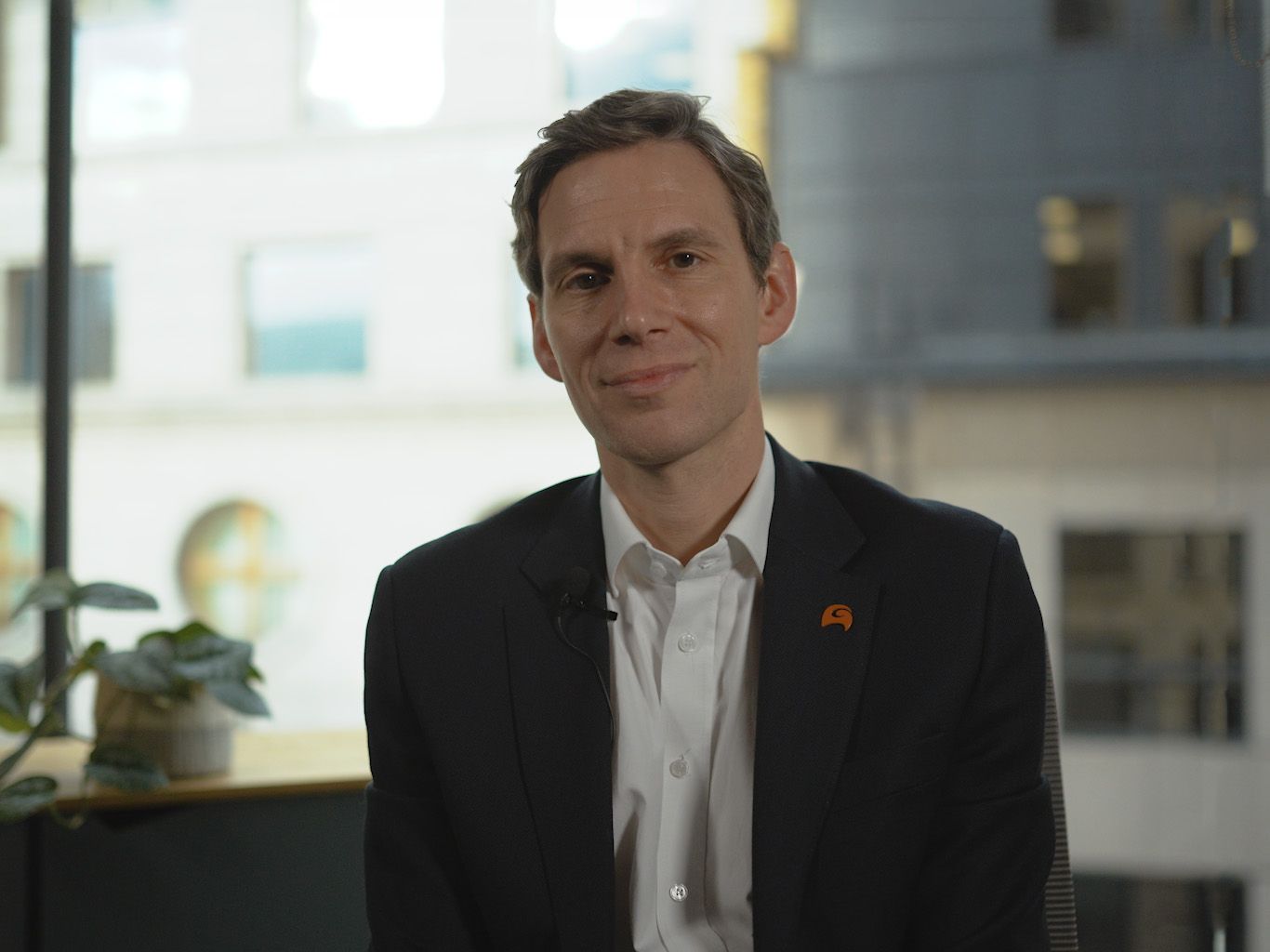
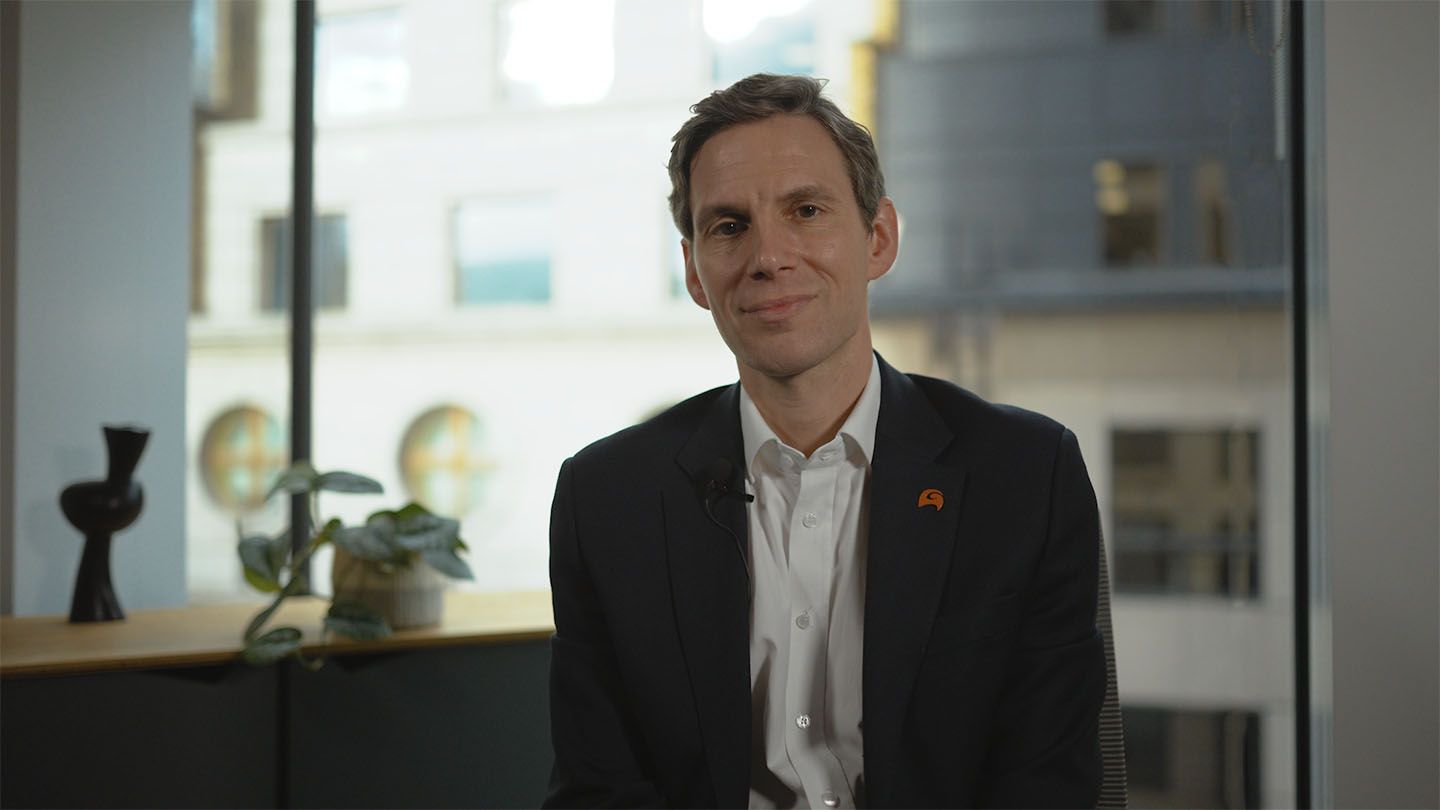
David Rockhill — Global Head of Advisory @ Arcadis
About this masterclass
David Rockhill is the Global Head of Advisory at Arcadis, one of the world's leading built and natural environment consultancies with around 36,000 people across architecture, engineering, project management, and environmental work. David's career has spanned engineering, consulting, operations, strategy, and transformation, all held together by one mission: helping get important projects built.
What This Masterclass Covers
David's masterclass is about something most people in the built environment never talk about openly: how to build a career with real impact in one of the world's most complex industries, and what it actually looks like to lead at scale across disciplines, geographies, and decades. In this masterclass, David walks through the lessons that shaped his approach to leadership, client impact, and personal sustainability over a career spent shaping the built environment:
- Why mission is the anchor: how one consistent thread, shaping the built environment and helping deliver meaningful infrastructure, gave him freedom to move across roles without losing direction
- The case for straying outside your lane: why bringing an illustrator into engineering work or pairing service designers with builders and craftspeople led to some of his most valuable client breakthroughs
- Why clients don't care about your input or how elegant your method is, they care about outputs: procurement savings, delivery reliability, lower downtime, better safety
- The difference between leaders who simply add pressure and those who sit down, roll up their sleeves, and solve the problem with the team
- Why leaders are always on show, whether in how they problem-solve, give feedback, spend time with clients, or behave when things go wrong
- Practical self-management advice: know what gives you energy, know what drains it, and plan your week accordingly
You Might Also Like
Win India – Andreas Hettich – Family Shareholder @ Hettich Group
Transform Culture – Dominik von Achten – CEO @ Heidelberg Materials
The Infra.Market Story – Shubhankar Bhattacharya – General Partner @ Foundamental
Transcript
Introduction & Arcadis
I'm David Rockhill, I'm Global Head of Advisory at Arcadis, based in London. Arcadis is a consultancy working in the built and natural environment with about 36,000 architects, engineers, project managers, and scientists — all with one mission: improving the quality of life through infrastructure, the built and natural environment. Pretty cool stuff around the world.
We do a ton of work in water, for example, working with the City of San Diego on identifying new water sources and reducing water consumption. We're working with the City of New York on flood protection of the downtown area. We're building the first tunnel under the Hudson in 100 years — the Hudson Gateway Tunnel. We're also doing a ton of really exciting environmental remediation work: remediating old gas fields to make them habitable again, cleaning up old industrial sites. And then some pretty iconic transportation and real estate projects as well. Just recently I was out at Amsterdam Central Station, where we've renovated this incredible 150-year-old building. So hopefully you can tell I'm excited about what we're doing at Arcadis and about the built environment.
My Role & Background
I lead our consulting business. That means helping clients make really tough decisions and solve tricky problems around getting infrastructure built and getting their organizations fit to deliver it. That might be about figuring out the investment case or the funding behind a particular piece of infrastructure, figuring out the organizational model needed to deliver a huge capital program, or figuring out how to build the supply chain capacity to deliver a whole new type of infrastructure. It's all about helping clients make the difficult decisions around infrastructure.
A bit about me and my background. I have a pretty typical origin story when it comes to engineering and construction. As a kid, I loved building stuff — Lego, science and maths. I also, somewhat strangely, loved making structures out of spaghetti and hot glue. I remember a model of the Eiffel Tower I built when I was about ten years old, which I think I still have somewhere. I've always had that passion around getting stuff built.
I started my career as an engineer — trained as a structural and geotechnical engineer. The amazing thing about that is you get a lot of responsibility very early. I worked on some really cool projects, spent a lot of time out on site, and really learned my craft. For me, that was the way of achieving this goal of building cool projects and doing good stuff in the built environment.
The Shift from Engineering to Consulting
As I moved up through that path as a technical engineer, I started to feel a bit of frustration. I felt that there were decisions and trade-offs being made that I wasn't party to and didn't have a voice in. I'd find myself in meetings with the project manager, the investor, the risk manager, the architect — and I would be listened to on a very narrow range of topics: how long should this beam be, or what should this connection detail look like. But I was really interested in the other discussions that were happening to actually get infrastructure built.
I recognized that engineers have a crucial — and maybe the most important — role in delivering infrastructure, but there are so many other things that need to be in play to get projects delivered. And so I moved into consulting. I spent about 12 or 13 years in consulting work, including at McKinsey, and that really broadened my mind and allowed me to experience all elements of the business world — different functions, different industries — and figure out all the different capabilities that come together to support an industry to deliver infrastructure: supply chain, corporate finance, M&A, talent. It was a really great school to learn about all the ingredients you need to make a successful business in this sector.
Subsequently I moved to Arcadis, where we now have the opportunity to really reshape the industry and do what we need to do to deliver a pretty big ask on the global infrastructure sector over the next few years.
Lesson 1: Have a Mission
The thing I keep coming back to across that whole experience — starting off very technically, moving into consulting, and now leading an engineering advisory business — is that my mission has been the same throughout. I've always been excited about delivering projects and getting stuff built. Whether at one point in my career that meant figuring out how to design a connection detail, or at another point figuring out a talent strategy for a capital projects organization, or figuring out how to merge two building material companies — it's all underpinned by the same mission about delivering cool projects.
That's the hard-learned lesson I've had in my career so far: no matter what you do, wherever you go, it's always really helpful to have a mission. And then you can be relaxed about what you're doing at any particular time in your career, because you're anchored on that mission and you can come back to it at any time.
Having a clear mission gives you a lot of freedom. Although I've explored many different areas of my career, it's always anchored me on something. I've always made sure that even if I go left and right at different parts of my career, I'm generally going in the direction I want to head in.
This applies equally to being a founder and a business builder. You'll find that your product evolves over time as you get deeper into customer needs and product-market fit. But it's always helpful to have that mission. Your product may change and your strategy may change, but if you're anchored on a mission, it helps you check in that you're actually heading in the right direction and achieving what you set out to achieve.
Family Influences
My family were always very supportive of my career choices. I come from, in some ways, a family of engineers — my grandfather was a mining engineer, and several of my uncles as well. So it was quite a natural path for me.
But the thing I actually took from my parents was something a bit different. My father ran small businesses — you'd call him an entrepreneur these days. He taught me the importance of being a generalist: being able to cover a whole breadth of topics, because when you're running a small business, you have to cover all the bases. And both he and my mother — who was an English teacher for many years — taught me the power of simple, effective communication and how powerful that is in business and in all walks of life.
So it was an interesting combination of influences as I grew up and went into the workforce: the technical discipline of engineering, but also this broader perspective about the importance of a breadth of capabilities and strong communication — and the impact you can have if you combine those two things.
Lesson 2: Stray Outside Your Lane
Being a generalist is important — and this doesn't apply to everyone, but it's a trait that I think is very useful. Throughout my career, I've always tried to stray a little outside of my lane. And what I find is that when you work in areas outside your direct experience, interesting things happen.
A couple of examples. When I was an engineer, I had a friend who was an illustrator, and I actually hired him into the engineering firm I was working in. We started developing our reports and deliverables for clients with illustrations in them, rather than the traditional 2D drawings. We found this was incredibly powerful as a communication device and as a marketing tool. It elevated our reports and created a much more dynamic relationship with the client. It helped us communicate our designs through these sketches and illustrations my friend and colleague brought in. At the time, people just didn't get it — but when clients started responding to it, we saw it worked really well.
Other examples: as I moved up through different consulting businesses, I started exploring different topics. One of the luxuries of working in a global consulting business is that they do many different things and you can explore. I worked on the post-merger integration of two multi-billion dollar organizations in an industry I didn't know at all. You have to learn fast, but you also learn a lot — about supply chain, manufacturing footprints, distribution — which is useful business context to bring back to your work in the industry.
Another great example: one of my favorite things to do over the years has been to bring experience designers into client engagements. I remember one particularly well. We were working with small builders trying to understand how they buy building materials. We brought in experience designers together with a bunch of small builders and craftspeople, and we really started to understand how these people think about sourcing materials and the pain points in their daily work.
Our client — a builders' merchant — was emphasizing to us the importance of over-the-counter sales and being in person. They believed craftspeople loved coming into the store to buy materials. But when we explored that with the craftspeople themselves, we found they actually didn't like coming to the store. They only came because they didn't trust the home delivery or site delivery from the merchant — it missed dates, didn't arrive on time, you never knew when it was going to show up. So they had to come into the store to pick things up themselves. They also came in because they knew they could negotiate prices between different branches of the same merchant — a form of price arbitrage.
The point is: when you bring these groups together, when you stray outside your lane and bring in new skills and experiences, you discover new things and often learn a lot about yourself. My Lesson Number Two is: always stray outside your lane sometimes.
Straying outside your lane is particularly important in our industry. I've been in the industry for 25 years, and when you look at what we need to deliver over the next decades — a 20 to 30% increase in capital spend annually versus what we've seen over the last decades, to address the resilience of existing infrastructure, decarbonization, energy transition, demographic shift, affordable housing — there's so much we need to deliver as an industry to improve quality of life. And to do that, you need a productive, innovative, growing, and healthy construction industry. For all its strengths, we don't have that as an industry at the moment.
My mission is to improve quality of life. We need to transform our industry. And you can only do that by combining new ideas from outside with the incredible experience and abilities we already have in the industry. I love that moment where you bring someone in who takes a different perspective and you create something really new for a client. We need more of that.
Lesson 3: Be Ambitious, But Not Reckless
The third lesson is about ambition. What I've learned is: be ambitious, but not reckless.
As an industry, as an infrastructure sector, you have so much to deliver to transform. Transformation is really, really hard. And what I've learned from working in transformations across industries — chemicals, basic materials, construction, infrastructure — is that you need ambition, because it's going to get hard. If your ambition is to improve by 1 or 2%, or take half a percent out of your procurement costs, you're never going to get there. You need to set the goal high. If you want to achieve 10% growth, you're going to have to target 20% growth.
Setting an ambition is so important, and it's important not to confuse ambition setting with forecasting. In setting ambition, we're not saying this is exactly where we're going to get to — we're creating a target that's going to motivate, move, and inspire the whole organization to go towards it. You may overshoot it, you may not quite reach it — who knows. But too often I've seen organizations fixated on trying to predict where they're going to get to, rather than sticking an ambitious target on the wall and saying: we're going after this.
Ambition is important — but it also needs to be underpinned by an extremely clear plan. You need to know where the value is coming from: whether that's growth of your business, margin improvement, customer outcomes, or ESG outcomes. You need a clear plan that includes where you are now, where the value is going to come from, what initiatives you're going to drive, and — most importantly — who's going to be responsible for capturing that value.
Big ambition is important, but a clear plan and clear accountability underpinning it is what it takes to actually deliver on that ambition.
The importance of being ambitious but not reckless is about striking the right balance. You need to inspire the organization with a bold target, but they need to believe and trust that there's actually a route to achieving it. I remember one client I was working with — an extremely ambitious new CEO who set some super ambitious targets — but the organization simply didn't believe them. They wanted to be inspired, they wanted change, but they couldn't see a path to achieving those targets. That's why it's so important to have the baseline and the initiatives that clearly show people how you're going to get there, so they can understand how they contribute.
Ambition setting, at the end of the day, is a leap of faith. You can do all the analysis you want — the market analysis, the forecasting — but at some point a leader needs to stand up and say: this is the number we're going after.
I remember one chief executive, an owner-operator I worked with years ago, who was looking at improving productivity in the maintenance operations. He said: we're going to improve productivity by 15% over the next three years. I asked him how he came up with that figure, what analysis or forecasting he had done. And he said: we just picked a number. It has to be a number. And of course after that, we figured out the build-up beneath that number and what initiatives needed to be put in place. But at root, there was a leader who set an ambitious target — one that he knew the organization would go after.
Building High-Performing Teams
Over the last 20 to 25 years, I've worked in a lot of very high-pressure situations, and I've been lucky enough to work with some amazing teams. That's taught me a lot about assembling and motivating a high-performing team.
Probably the most important thing is role modeling — recognizing that as a leader, you're on show the whole time. It's so important to role model the behaviors you want your people to follow: the amount of time you spend genuinely problem-solving with your team, engaging in the content; being visible and giving feedback to people; the amount of time you spend with clients and customers; the way you talk about health and safety. People look and they listen and they pay attention. So role modeling is absolutely critical.
The other thing I'd say is that it's so important to recognize that your teams are the engine of your organization — the real heroes. They're the ones doing the work, under your leadership. Celebrating that, recognizing that, and making the teams and team leaders the heroes in your organization is so important.
And the final thing: you need a pulse check. You need to be close to your team and have some kind of mechanism — whether it's in your one-on-ones or a survey for larger teams — to know week in, week out, what the temperature in your team is. Are people overworked? Unhappy? Do they have unclear direction? How is the energy? Knowing that frequently and taking action on the results — having discussions around what you're hearing — is so important. Not only does it help you get ahead of issues early, but it also sends a very strong signal to your team that you're listening, you're taking action, and you're working out solutions together.
What I've also learned is that team performance and team engagement are two sides of the same coin. You're never going to get sustainable high team performance without the right level of engagement and ultimately happiness in the team. And the only way to know if you're getting that is by staying close to the team, listening, and taking action when things aren't working.
The most formative moments for me in team leadership have been when things are going really wrong — both as a team member and as a team leader. Occasionally things go really wrong: there's an error in the design, an analysis doesn't land with a client, clients are unhappy about something. Things go wrong all the time. And the way leaders behave in those situations is so telling.
I've had situations in my career where leaders just applied more pressure: if it's not working, just fix it and make it happen. I remember how that felt as a team member — helpless, without support. But I've also been in environments where a team leader comes in, sits next to you, rolls their sleeves up, and gets it done. And that's always what I've tried to embody: the person who, when the going gets tough, sits down and does the work with their colleagues. For me, that's hugely important for building confidence and trust in the team, but also for showing others how leaders should behave and what kind of leaders they should grow into.
When you put in place the right transparency and the right steps to check on team health, you become incredibly resilient as a team and as a business. When stuff happens — someone goes sick, there's a client issue — the team just rises to the challenge and there's always energy around it. The worst thing you can do as a leader, I think, is to sit in the corner and try to figure out a problem yourself. There's nothing like coming to a great team with an issue and sitting down together to figure out how to solve it. And more often than not, your team will surprise you with the energy and ideas they bring to resolving even pretty stressful situations.
Lesson 4: Impact as the North Star
Impact is something that's always been central to everything I've done — as a consultant, as an engineer, as a leader. Whatever world you're in, having a clear idea of what impact you're trying to achieve in the world is so important.
Many times I've seen organizations just not be clear on that. Whether they're planning a transformation or building a product, they're not clear on what impact they're actually trying to drive. And that matters because when you're working with clients and customers, you need to be speaking in their language and in terms of impact that they will understand and value: reducing the time it takes to pay an invoice, reducing procurement costs, reducing downtime on construction sites, reducing wastage of construction materials. You need to talk about what you're doing in terms of the impact it's going to have on the customer.
This is particularly important in our industry because we are by nature somewhat skeptical of technology and slightly resistant to change in some places. And we run on such thin margins that you need to be able to talk in terms of real business impact. Throughout whatever you're doing — product building, advisory work — always reference back to that impact and demonstrate the value you're going to deliver. If at any point you're not clear on what impact you're delivering, you know something's wrong, and it's time to take a step back and figure out: what exactly are we doing here and what are we shooting towards?
Impact is the North Star that should be at the center of any piece of work or any company.
When I talk about impact, it's important to be really specific and really relevant to whichever area or client you're working with. I've worked with clients where it's all about reducing the cost of procuring certain materials — the percentage procurement saving would be the impact measure. I've worked in product development where the key measure for the client was on-time deliveries — the percentage improvement of on-time material deliveries to a construction site. Your impact might be the reduction of health and safety incidents. The key question is: how does the client think about impact? What does impact mean for them? And how does our product or service create impact for the client in a language they'll recognize?
It's interesting how my view of impact has changed over the years. As a young engineer and project manager, impact was about inputs: is this structure stable, is the documentation complete, is the specification correct? As I moved through different areas of the industry, I came to understand impact more as an output: what's it going to do to the bottom line? What's it going to do to health and safety performance? What's it going to do for the industry at large?
The shift I've made in my career is thinking less about impact in terms of inputs — how cool the thing I'm doing is — and more in terms of output: what's the impact I'm going to have on a client or someone else in the industry? Because clients don't really care too much about the inputs. They care about the output, the impact on their business: growth, margin, health and safety performance, the revenues they're going to generate from the new building they're developing. You need to be speaking in terms of what impact means for them, rather than what impact you think you're creating with your inputs. That shift in how I think about impact has been pretty formative throughout my career.
Managing Your Career & Yourself
My final reflection is about managing your own career and managing yourself.
The first point is about goal setting. When I left university and started in engineering and construction, I had very specific long-term goals. What I realized over time is that things change — your preferences change, you learn new things. I made a bunch of left and right shifts over the years, whether into consultancy, across industries, or doing different things — but always with a short-term focus and a long-term mission.
My point is: it's important to have a long-term overarching mission or goal, but not to get too hung up about exactly what your 10-to-15-year journey to that goal is going to look like. My experience is that it's much more important to have short-term goals — maybe 2 or 3 years — go after those with a ton of energy and enthusiasm, and as long as those things are taking you roughly in the right direction towards your long-term goal, you'll be good. That also makes you more flexible to whatever might change in your external circumstances. Commit to what you want to achieve in the next 2 to 3 years, really go after them, then lift your head up and think: what's next, and is it going to take me towards my goal?
On a related topic: managing your network has also been really important to me. When I was a relatively young professional, the whole concept of networking felt awful — going into a room and meeting a bunch of strangers. What I've recognized over the years is that's not what networking is. Networking is staying in contact with the people you really enjoy working with and being purposeful about that. Over the years, as people move into different positions, they introduce you to other people. For me, it was about staying in touch and building long-term relationships with people I genuinely enjoyed working with — colleagues, clients, customers — and cultivating that over the years. Super important.
When I think about managing my career and managing myself, the thing that has been particularly important to me — and only really comes with experience — is knowing yourself. Knowing what you're good at and not good at, and knowing what gives you energy and what doesn't. Knowing what I'm good and not good at means I can collaborate with the right people so we complement each other. And knowing what gives me energy versus what saps my energy is important for planning my week and my day — mixing up the things I know I'll bring a ton of energy to, and preparing for the things that are going to take my energy.
As you go through your journey as a founder or entrepreneur, just be conscious of what you're learning about yourself: what you like, what you don't like, what you're good at, what you're not good at, what gives you energy, what drains your energy. And then build your own personal operating model around that.
A very practical example: I have most of my energy in the early mornings and through the morning. So if I know I have complex thinking to do — drafting, planning — I protect that morning time for it. After lunch, I typically have an energy dip like most people. But speaking to people — clients, colleagues — gives me energy. So I usually plan client calls and client meetings for after lunch, because I know that's going to bring me energy. Even at that micro level, planning what you're doing and when is a great way to make sure you're bringing your best to every situation and managing those dips and peaks in your energy.
When I think about my personal operating model, one of the things I'm continuously working on is the balance between meeting people — which gives me a lot of energy — and making sure I also protect time to reflect and consolidate and build a plan, whether for a particular client or for the business overall. I also get a lot of energy from learning new things, so making sure I carve out time in the day for reading or for conversations about a new proposition. The thing I have to keep working on is that balance between being out there speaking to clients and colleagues, and having that reflective time to make sure I'm developing and thinking ahead — not just for today.
The Opportunity in the AEC Sector
When I look at the AEC sector, there's just opportunity everywhere — which is why I'm in it. The sector is around 12 or 13% of global GDP. Look at the amount of infrastructure that needs to be built or upgraded over the next years — transport infrastructure, climate resilience, energy transition. We have this huge, tall task ahead of us. We have an industry that is incredibly skilled, and that I'm incredibly proud of in many ways — but that also needs to transform.
We have this huge addressable market, this huge burning platform, and this need to change. The opportunity is enormous. If I had to pick one area I'm particularly excited about — because of where I live and where I come from — it's engineering design and engineering design workflows: how we can cut out a lot of waste and use AI and other technologies to genuinely innovate in the way we do engineering design.
From my own experience as an engineer, there's a lot of time spent in document management and workflows that maybe don't add a huge amount of value to the finished product. Engineers are a scarce resource. We need engineers working on the difficult, complex, value-added things — not on document management and admin. I'm really excited about creating that capacity in the engineering workforce to do very cool stuff with technology: to build smarter assets, to get more out of our existing assets, and — as I said right at the beginning — to deliver our mission of improving quality of life.
Final Reflection
Of all the lessons I've shared, probably the most important one for me is ambition. When we think about the AEC sector — the scale of challenge and change we need to deliver, the social and economic value we can create — we're only going to get there with a huge amount of ambition. Wherever you're playing in this industry, my reflection is that being ambitious and being bold is almost the most important attribute. And it's certainly something I hold close to me as I think about how Arcadis — and I personally — continue to drive transformation in the industry.
When I think back over the last 25 years, the thing I've loved about working in this sector is the breadth and variety you get exposed to: the variety of industries — energy, water, real estate — but also just the challenges and the difficult questions you have to solve: organization design, talent, growth, engineering detail, regulatory issues. There's always something interesting to work on. That's what keeps me passionate about the industry and continuing to want to work in it — hopefully for another 25-plus years.
And I think this is something we as an industry need to be better about: publicizing and infusing into young people coming into the industry. If you're a school kid leaving school or university — what's more exciting than shaping the future of the infrastructure that we touch and use every day? It's a fantastic challenge, and we can all be better about shouting about that and encouraging others to come and join us.
Watch the video on YouTube.