The Infra.Market Story
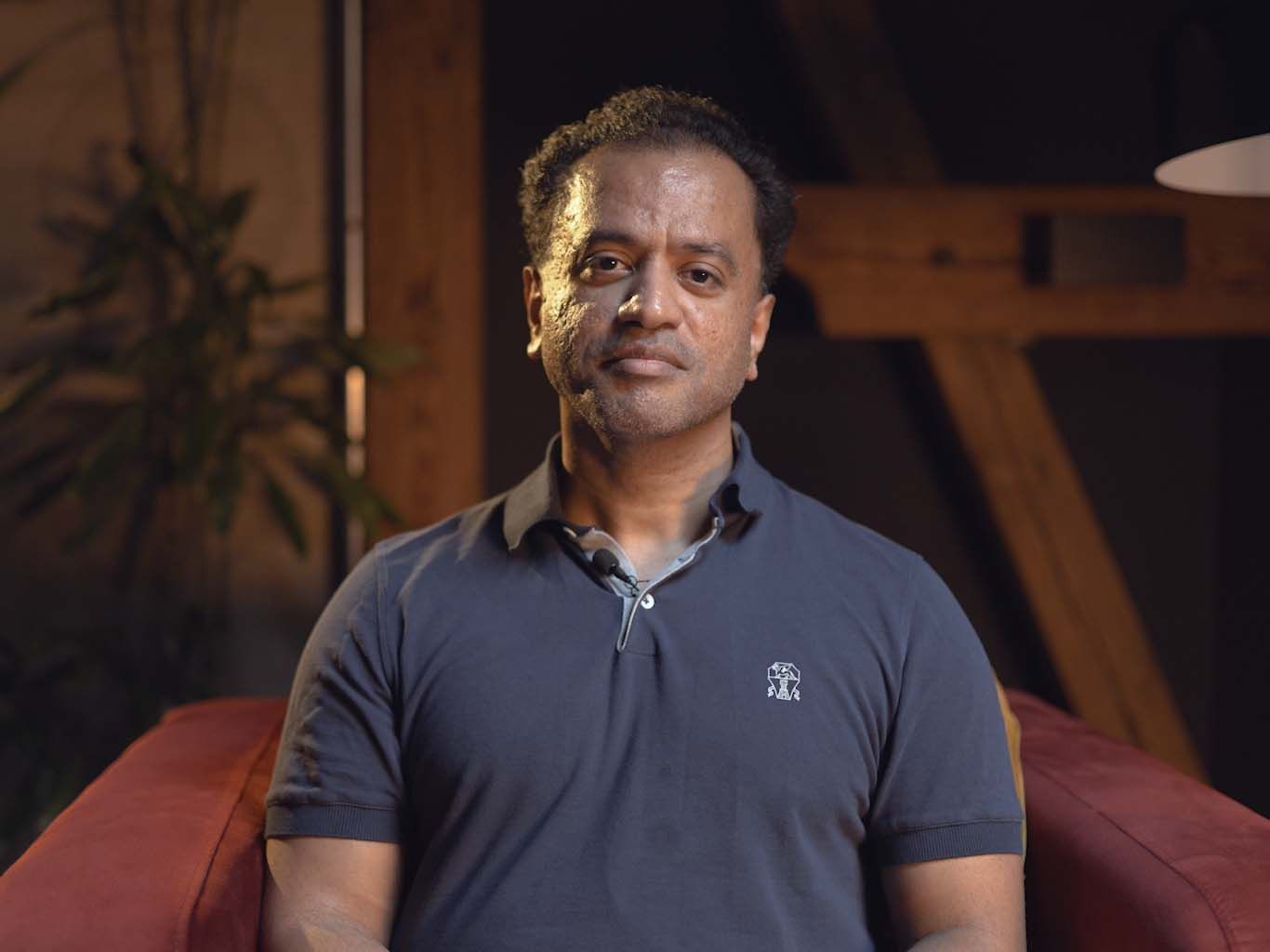
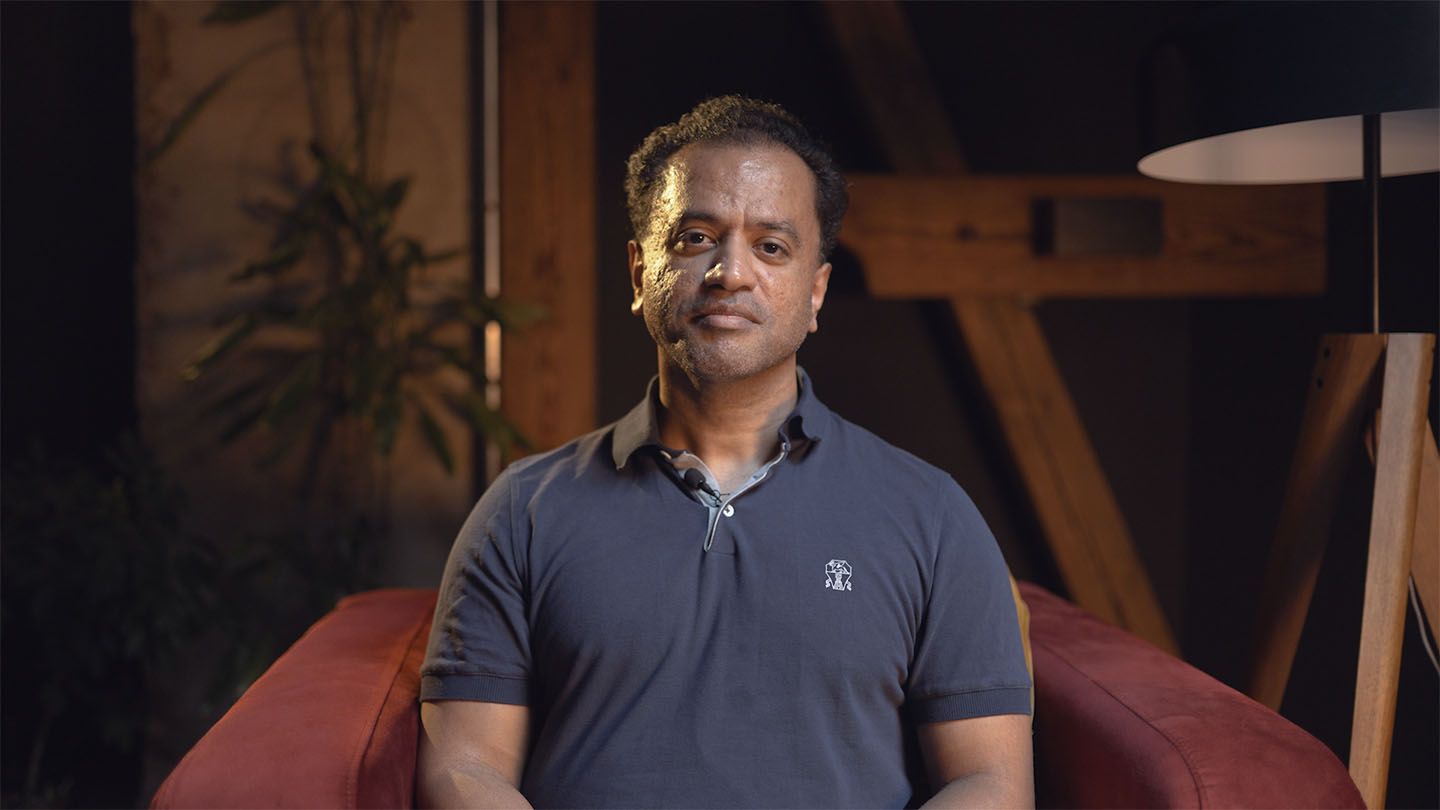
Shubhankar Bhattacharya — General Partner @ Foundamental
About this masterclass
Shubhankar Bhattacharya is a General Partner at Foundamental, the venture capital firm dedicated to technology for the project economy. Before co-founding Foundamental, Shub built a career across technology and venture investing with a deep focus on the built world.
What This Masterclass Covers
This masterclass is different from the others. It's not a founder story. It's an investor case study, told with unusual honesty, about how Shub first encountered Infra.Market, one of the most remarkable companies in the building materials space, and what the journey taught him about recognizing exceptional founders.
In this masterclass, Shub walks through the full arc of the Infra.Market investment, from first meeting to deep conviction, and shares the lessons that changed how he thinks about backing founders in the project economy:
- Why InfraMarket didn't impress him with a grand vision pitch but with an Excel spreadsheet, clarity, and profitability
- What InfraMarket actually is: not a marketplace, but a house of brands in building materials built through an asset-light "cloud manufacturing" model
- How the founders responded to COVID by expanding into exports and construction chemicals instead of waiting it out, and what that revealed about their character
- The investor lesson at the core of it all: don't underestimate founders who think in numbers, precision, and predictability instead of slogans and big narratives
You Might Also Like
Win India – Andreas Hettich – Family Shareholder @ Hettich Group
Commitment To Community – Dimitrie Stefanescu – CEO @ Speckle
Make Decisions That Stick – David Rockhill – Global Head of Advisory @ Arcadis
Transcript
Introduction: What Is Foundamental?
About seven years ago, we came together with an idea. At that time, it was just a crazy hypothesis: so much had happened in the world of startups and venture capital, and yet so little had happened in construction. In most economies, construction represents ten to maybe even 12% of GDP, and yet the amount of funding going into construction tech was not even 0.1% of total venture investment. So we had this idea — which at the time seemed quite crazy — of what if, 10 to 20 years from now, the amount of funding in construction tech starts to look somewhat similar to what we see in other sectors? What might that future look like? And in being a part of this revolution, if we could partner with a handful of tremendous, iconic, enduring companies, it would be a tremendous legacy for ourselves and a very rewarding journey for everyone associated with Foundamental. Not too many people gave construction tech — or a fund investing in construction tech globally — much of a chance at the time. I'm very glad I took the plunge. Seven years later, it still feels like day one.
How We First Found Infra.Market
The story of how we found Infra.Market is an unusual one. Going back about six years: the founder Souvik randomly visited my LinkedIn profile. No connection request, no message — just a visit. And I thought: okay, what is this firm Infra.Market? I've never heard of them. So I went and checked out the website, and it was unlike anything I'd ever seen.
What the company used to show on their website was the amount of sales they had done in the last day, the number of deliveries made, and the quantity in tons of cement, aggregates, and concrete they had delivered. I thought: that's a crazy level of transparency and confidence. What I did not realize at the time was that this wasn't just a cool marketing choice — it represented the deep ethos of the firm. It's very deeply ingrained in the DNA of the company to be extremely numbers-centric. But coming back to that first interaction: it piqued my curiosity enough to set up a meeting.
Interestingly, the first meeting ended up being scheduled for Valentine's Day — something we still joke about. The founder jokes that he actually had plans with his fiancée that day and had to instead spend time with me. I like to say it was a beautiful start to a wonderful love story and relationship between Foundamental and Infra.Market.
The First Meeting: Angel vs. Devil
The first meeting was very different from most startup pitches I had been to before or since. Compared to a typical early-stage founder pitch, Souvik did not try to embellish anything along the lines of bold vision or what might happen if things went extremely well. It was an extremely numbers-driven meeting — and I cannot emphasize this enough. A surprisingly large portion of the discussion went through spreadsheets. And keep in mind, this was our very first meeting.
The company had always been net profitable — which in itself is extraordinarily rare among startups, especially a bootstrapped one. The plan laid out was: if we do these things, this is how we'll grow, and we will stay profitable. It felt less like a description of a bold vision and more like a very certain, very predictable plan. With the benefit of hindsight, I would look at such a meeting very differently. Back then, when I was a bit greener as a venture capitalist, it took me some time to adjust to this style — an extremely numbers and facts-driven pitch, where everything is toned down and presented along a very predictable path. What I did not realize at the time is that this is actually perhaps the greatest superpower these founders possess: the ability to lay out a highly predictable path, driven by numbers and an obsession with profitability and execution.
So after the meeting, there were two voices in my head — let's call them the angel and the devil.
The angel was saying: what a cool company, what a game changer. Already profitable at significant scale — more than $1 million a month in revenue, consistently growing. Perhaps this is going to be a very new kind of business that creates a new paradigm for how building materials get made in an asset-light way. I really wish that had been the only voice.
Unfortunately, there was a second voice — the devil. And what this voice latched onto was one line that Souvik had mentioned in the meeting: that after raising this round, he would only stay in the city of Mumbai for the next three years. And the voice in my head kept saying: which ambitious founder decides after raising a venture round to only stay in one city for the next three years? Surely that isn't the making of a future unicorn.
I found myself battling these two voices for the next few days. Sadly, the devil had the final say. I decided that, while a lot of things were being done right and the company would probably compound well from where it was, it might stay at a relatively small to medium scale for the next few years because of the choice to remain in one city. That turned out to be a very costly mistake — as I learned the hard way.
The Second Chance: COVID and a 50% Discount
After the pain of passing on the seed round, another opportunity came along at the Series A and Series A+ stage. We saw enough in the company at that point, and felt they were doing extremely well. But we couldn't build full consensus on the valuation — the round was priced at a level that felt slightly stretched. It still didn't sit right with me, though.
And then, in a very bizarre way, we got our opportunity from the most unexpected of situations.
This was March 2020. COVID struck. One day, while we were in lockdown, I had a brainwave: what if, in all this chaos, the round that was supposed to happen in Infra.Market had fallen through? Could that be the opportunity we had been looking for? I reached out to Souvik that day and said: I know you already had a Series A+ round stitched together. If by any chance it's fallen through because of COVID, I would love to discuss an investment at a lower valuation.
To my surprise and great delight, Souvik replied immediately and purposefully, saying: actually, the round did fall through, and we'd be happy to talk.
That got us talking. And this time, I am glad to say, there was only one voice in my head — clear and singing as loudly as it could. We had seen enough of the company by now. We knew what it was. And we grabbed the opportunity with both hands. As a result of the unique circumstances of that moment, we got in with a 50% discount to what had previously been proposed in the failed round. That turned out to be one of the greatest investment entry points of my career. And in this very weird situation, a beautiful relationship with Infra.Market was born.
The Defining Moment of Our Partnership
Our partnership with Infra.Market and the founders Souvik and Aaditya encompasses many different things. Given that we had already known the company for more than a year before investing, it already had many complex layers to it. It's hard for me to distill it to a single defining moment — I would rather describe it as an episode.
This episode stretched over a few weeks. We needed to get certain additional documents and paperwork done in India to actually complete the investment under the applicable regulations. The process took much longer than expected. The contractual closing date passed not once, but twice. And contractually — as I must insist — Infra.Market was allowed, at each of those points, to walk away from the transaction. They had other offers they could have honored instead.
I am eternally grateful to Souvik and Aaditya for honoring the commitment of the partnership. For bearing with us. For trusting us on our word that we would complete the paperwork and close the investment. Years later, we still joke about that episode.
And I find it truly commendable that for them, it was never a question of trying to optimize by swapping one investor for another. It was always: once a word is given, it is sacred. It is a bond that cannot be broken. They went to every length to protect that commitment.
The reason I emphasize this as the defining moment of our partnership is that it has also shaped what I look for in founders of other portfolio companies. Will they stand by us and do right by us when things get very uncomfortable — even when contracts are not providing them protection? Infra.Market held their word. And for that, they have my greatest vote of confidence. I wish more founders would hold themselves to such a high standard.
How COVID Revealed Infra.Market's True DNA
One of the reasons we decided to invest with such conviction at that moment was that COVID provided a very unique and timely glimpse into just how resilient and capable Infra.Market was — specifically in their ability to use adversity to actually increase their addressable market.
Rewind to March 2020. India had one of the most absolute lockdowns in the world. Absolutely no construction activity was allowed. Put yourself in the shoes of Infra.Market: you are a firm that delivers building materials to construction sites, and now construction sites are no longer operating. For a few days — maybe a couple of weeks — the business came to a complete standstill.
Most founders in that situation would say: tough luck, it's a lockdown, what can we do? We just wait for things to change. Infra.Market took a very different approach. They asked themselves: okay, what can we do given the current situation? The answer was that they were still allowed to ship essential building materials as exports from India to other markets. And they found out that construction chemicals were classified as essential products permitted to be shipped.
That's when they launched the construction chemicals category for exports — and by extension, started exporting their products internationally for the very first time. At the same time, many of their clients, who had receivables with the company, had come under stress and needed longer to repay. Infra.Market worked with their trade insurance partners to secure those obligations so the company was not put under undue financial strain.
What this showed us was a very unique, real-time opportunity to see how a company responds to adversity. Do they complain? Do they just deal with it? Or do they use it as an opportunity to increase their total addressable market?
In Infra.Market's case, a seemingly terrible situation expanded the scope of the company. What had started as building materials deliveries within India now included exports and construction chemicals. This gave us an early glimpse of what the company would become under the leadership of Souvik and Aaditya: always resilient, always finding new categories, new models, and new markets to expand into. It was, in many ways, an early glimpse of their entire approach — creating a house of brands across many different categories, operating in many different markets. And it was essential in establishing the DNA of the company that exists today.
What Infra.Market Actually Is
Since Infra.Market turned unicorn, a lot of firms have reached out to us claiming to be building "the Infra.Market of X" — another geography, another category. Most of the time, maybe 95% of the time, these folks don't quite understand what that even means.
The word "marketplace" gets used too loosely, and it doesn't quite do justice to what Infra.Market has actually built. So let me step back and describe it properly.
Think of it as a house of brands — not very dissimilar from what you see in FMCG with companies like Unilever or Nestlé, but applied to building materials. A firm that has created a house of brands across many different product categories in building materials: as widely different as concrete, paints, tiles, specialty chemicals, wood, sanitary ware, and more. And the way they are able to do this is through what they call a cloud manufacturing model — a relatively asset-light model where you get other manufacturers to produce on your behalf, while you sell the output under your own brand, your own private label.
It is not a marketplace in the traditional sense, because the end buyer never interacts with the underlying manufacturer. It is always Infra.Market who sells it as their own product. And in that sense, it has opened up something truly new. Prior to Infra.Market, the very concept of a building materials brand going asset-light with manufacturing — or thinking multi-category — was considered crazy and unworkable. Could a cement company think of producing paints? Could a tiles company do wood? All of these things would have been considered unachievable. What Infra.Market demonstrated, through the cloud manufacturing model, is that this is not only achievable — it is highly profitable and scalable. That is what truly sets it apart, and makes it a genuine game changer in the world of construction tech.
The Unicorn Moment
When Infra.Market turned unicorn in February 2021 — surprisingly soon after our first two investment rounds — it was a very profound moment for me. I have to admit, it came as something of a surprise when it actually happened, even though when I look back, it had always felt inevitable given the way the company was run.
Still, when the sheer weight of the numbers actually hit me — it was the first unicorn of my investing career, and the first unicorn at Foundamental — I felt tremendously moved. At that time, it was also the first unicorn achieved by any construction tech-focused fund anywhere in the world. That is just how significant a milestone it was.
What added to our excitement was knowing that this was not an accomplishment that would fade if the VC market cycle receded. This was just the beginning. And I still recollect it now, and it still gives me goosebumps. The feeling of the first unicorn. What a tremendous feeling.
That said — and I think Souvik and Aaditya would be the first to say this — a unicorn is ultimately just a term coined by other VCs. Perhaps a bit gimmicky, too. For us at Foundamental, it is more of a pitstop on the way to far greater things. What we are truly looking for is not a valuation milestone, but the opportunity to build and see an enduring company emerge — one that creates a very large outcome for everyone involved, which in most cases means taking the company public.
Two Companies That Defined My Career
VC has very long feedback cycles. When you invest in a company, you don't automatically make money. There's a long and often painful journey full of ups and downs and uncertainties until you see an outcome. While I have generally always enjoyed the intellectual high that VC gives as a profession, I think the two defining moments where I truly felt: this is the purpose of my life, this is what I was meant to do — were through two companies I am most proud of in my career: Infra.Market and Zetwerk. Both unicorns. Both operating in the construction tech space.
With both of these companies, when they were early-stage, the narrative around them was relentlessly skeptical. B2B commerce is very difficult — have you ever seen a B2B commerce company scale big? B2B commerce doesn't work in India. Construction tech doesn't work in India. Are you really going to try to take on large cement and concrete producers and make your own brand? That won't happen. Has anyone ever seen a company emulate this model and succeed in the US, China, or any other large market? It hasn't worked before.
These are all actual things I heard in the early journey of both Infra.Market and Zetwerk. And for me, it feels like a very emotionally satisfying culmination to have heard all of that skepticism in the early days — and then to see just how far these companies have come. Not just in terms of growth, but in terms of creating real, lasting value, listing on public markets, becoming enduring companies that many people will interact with for their businesses, their investments, their careers.
It reminds me that at the end of the day, VC is about having the grit and the courage to back your own decisions with conviction — and then to see that conviction come to fruition.
The IPO: A Labor of Love Reaching Its Culmination
Ever since we backed Infra.Market, I have always believed this company will go public. I've thought of it as something like destiny waiting to unfold — because it has always been profitable, has always operated at large scale, and has always conducted itself the way a publicly listed company would.
When the IPO happens, it will be tremendously satisfying and fulfilling for me. As I've described, this has been a labor of love — from not being able to participate in the very first round, to everything we went through before we could actually get involved, to the many trials and uncertainties we witnessed as part of this company's journey, to finally seeing it all culminate in the form of a public listing.
Infra.Market turning public and reaching $3 billion in revenues — would I have believed that back in the day? I have to admit: even though it sounds crazy and perhaps pretentious, it really did feel inevitable that this company would achieve tremendous scale and go public. Not because of one single moment of clarity, but because of a cumulative stream of moments — the sheer weight of execution, the sheer weight of excellent and consistent reporting, the relentless predictability that built up over time — until eventually the rise of this company felt undeniable.
We are amazingly excited and thrilled for what is about to unfold. And I think, for all of us at Foundamental, this will be the most tremendous result and outcome of this beautiful journey.
Watch the video on YouTube.